When we think of viruses, we often associate them with disease, but many viruses in nature have nothing to do with human illness.
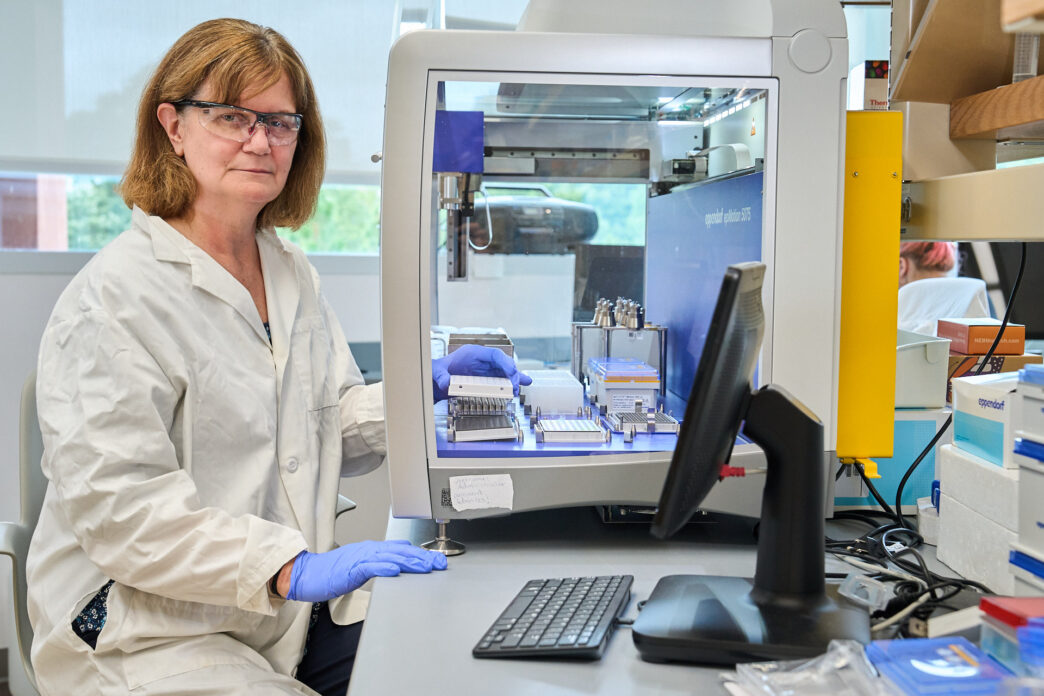
A new study that included Clemson University microbiologist Barbara Campbell suggests that one poorly described group in particular — giant viruses — may be important participants in ecosystems ranging from ocean and freshwater systems to soil.

A collaborative international research team created the largest catalog yet of giant virus genomes. The collection includes 18,727 metagenome-assembled genomes, which are genetic reconstructions made from environmental samples from marine and freshwater systems, soil, rock, thermal springs, plant-associated environments and landfills.
After comparing the genomes, the researchers identified 8,508 species-level representatives, 712 previously unknown genera, 13 new viral families and a proposed new order called Mycodnavirales.
The study, published in the journal Nature Microbiology, provides new clues about the diversity and possible ecological roles of giant viruses.
What roles do they play?
“We’re interested in what’s going on out there in the environment at the microbial scale,” said Campbell, much of whose research involves the Chesapeake and Delaware bays. Her group is especially interested in the ecological questions of “Who’s there? What are they doing? What and who are they interacting with?”
The study uses metagenomics to help answer those questions.
Most of the microbes in marine and estuarine environments are difficult to grow in the laboratory, and studying viruses depends on host cells. With metagenomics, scientists collect an environmental sample and sequence all the DNA in it. The genetic material comes from many organisms, and researchers use bioinformatic tools on high-performance computers such as Palmetto to assemble the fragments into larger sequences that can reveal the organisms’ identities.
“It allows us to look to see what’s in the environment without actually having to culture it,” Campbell said.

Size is relative
Despite their name, giant viruses can’t be seen by the human eye.
“They are giant, but giant is relative,” Campbell said. “You still need a microscope to see them.”
Bacteria are huge when compared to viruses. The smallest bacteria are about 0.4 microns in diameter, or one millionth of a meter. Viruses range in size from 0.02 to 0.25 microns. Most viruses are submicroscopic, meaning they are unable to be seen in an ordinary light microscope. They are typically studied with an electron microscope.
Genetic complexity
But some giant viruses are nearly the size of bacteria, and their genomes can exceed 2.5 million DNA base pairs. They may have hundreds of thousands of genes, including genes related to metabolism and protein production. That genetic complexity gives giant viruses the potential to influence the cells they infect in unusual ways.
Some giant viruses carry genes associated with producing proteins, a process other viruses leave to their hosts. Others contain genes connected to metabolism, stress responses and cell signaling.
“A lot of them have most everything needed to sustain life,” Campbell said.
That doesn’t mean they live independently. They still need host cells to reproduce. But their large genomes may allow them to manipulate host cells in more complicated ways than smaller viruses can.
According to the study, researchers found potential clues about the environmental roles of giant viruses, too. For instance, some groups contained genes associated with processing formaldehyde and breaking down aromatic compounds, including substances that can occur in industrial pollution.
The giant viruses in the study are generally host-specific and are not expected to infect humans. However, their impact could be felt by humans because they may help shape the health of oceans, bays, lakes and soil.
For Campbell, the results reinforce how much scientists still do not know about the smallest life forms in oceans and estuarine waters.

Microbial loop
Viruses are part of what scientists call the microbial loop. Many giant viruses infect microscopic organisms such as phytoplankton and protists. When viruses break open their hosts, nutrients inside the cells are released back into the environment where they can be used by other organisms.
In low-nutrient marine and estuarine environments, that recycling can be especially important. Estuarine and marine phytoplankton are essentially single-celled plants that absorb carbon dioxide and produce roughly half the Earth’s oxygen she said.
“So knowing more about what makes them tick, and how they survive and die, is important, and studies like this give us an excellent starting point,” Campbell said.