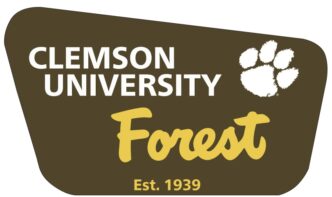

During its fall quarterly meetings, the Clemson University Board of Trustees approved renaming the Clemson Experimental Forest to the Clemson University Forest.
“The new name clarifies the Forest’s role as a vital University asset supporting teaching, research, recreation and outreach across multiple disciplines. This update will help eliminate confusion surrounding governance and ownership, reinforcing that the Forest belongs to the entire Clemson community,” the Board said in a statement.
The name change reinforces the forest’s full role as a University-managed resource that supports Clemson’s land-grant mission and also recognizes the forest’s value as a recreational and educational asset for the broader community, according to Rob Baldwin, executive director of the Clemson University Forest.
“While the Clemson University Forest will likely expand its role as a site for research, its previous name sometimes caused confusion about its multiple purposes and University management. We hope the new name more clearly represents its many uses and its connection to Clemson University.”
Rob Baldwin, CUF director
Signage will be updated to represent the name change but will maintain the same look and feel of the current signage.
“The Clemson Experimental Forest signs are iconic, and we have gone to great lengths to ensure that new signs will echo the Forest’s rich history. During the rebranding process, we sought and received the support of a number of stakeholders throughout the University and wider Clemson community,” Baldwin said.
Baldwin said the Forest is undergoing several infrastructure improvements, including historically accurate repairs to Willow Springs picnic area structures through a collaboration between Clemson Boy Scouts of America Troop 235 and Clemson University’s Department of Planning, Design and Construction.
Strategic Plan Positions Clemson University Forest as Model for Education, Research and Stewardship
The newly adopted Clemson University Forest Strategic Plan establishes a clear vision for the Forest’s future as an essential University-managed asset supporting Clemson’s land-grant mission. Developed under the leadership of Executive Vice President and Provost Robert H. Jones, Vice President for Public Service and Agriculture and Dean of the College of Agriculture, Forestry and Life Sciences Matt Holt, and Executive Director of the Clemson University Forest Rob Baldwin, the plan outlines a comprehensive framework for stewardship, education, research and community engagement.
Rooted in the priorities of Clemson Elevate, the University’s overarching strategic plan, the Forest Strategic Plan directly advances Clemson University’s three institutional pillars: the No. 1 Student Experience, Research Ascension, and Transforming Lives.
The Forest plan enhances opportunities for hands-on learning and research, strengthens collaboration across disciplines and communities, and reinforces the University’s role as a national leader in sustainability and environmental education.
The plan calls for expanding the Forest’s role as a living laboratory that provides unparalleled opportunities for students and faculty in environmental science, forestry, and sustainability.
The plan also emphasizes responsible land management practices that protect and enhance the Forest’s 19,200 acres for future generations, through strategic goals including community engagement, research growth, operational excellence, sustainable funding, and strategic communications.
“The Clemson University Forest strategic plan ensures that the Forest will remain a cornerstone of experiential education and a model for sustainable university land management,” Baldwin said. By elevating the Forest’s visibility and integrating its operations across academic, research, and outreach missions, Clemson University is reaffirming its commitment to Thomas Green Clemson’s vision of a University that serves as a “high seminary of learning” that develops the material, intellectual, and environmental resources of South Carolina and beyond.