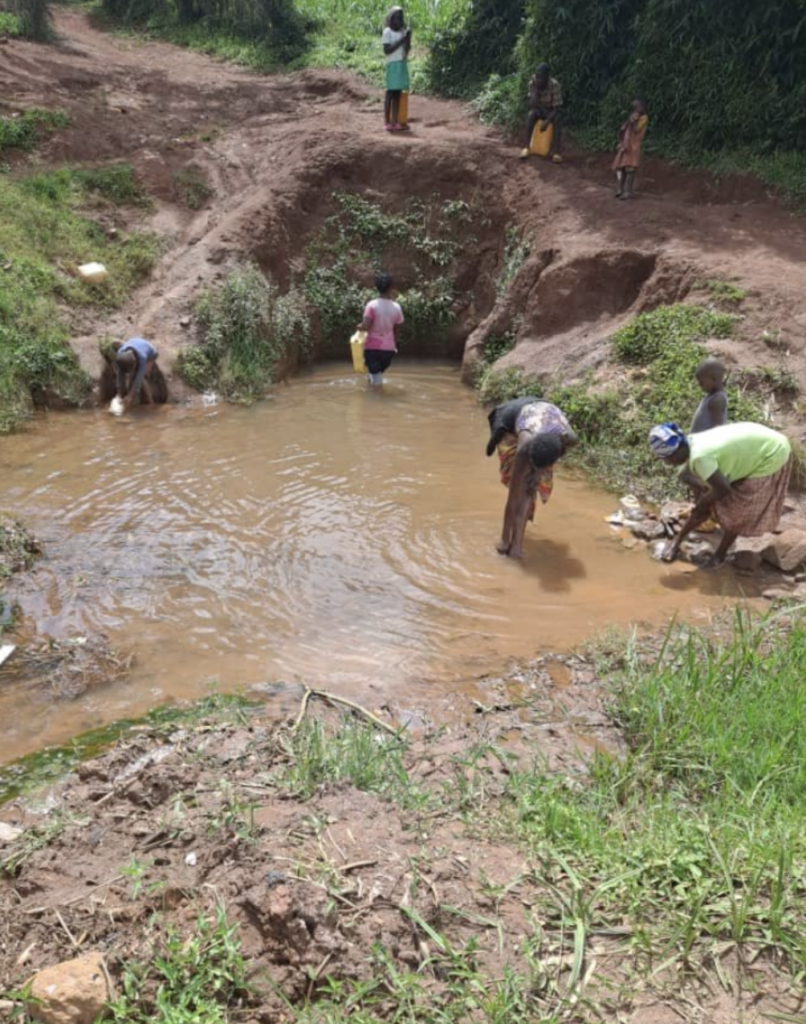
The residents of Kagarama, Rwanda used to wade into a brown, spring-fed pool at the bottom of an agricultural valley to collect drinking water in jerry cans. Sometimes the water made them sick, especially the children.
The conditions inspired students in the Clemson University chapter of Engineers Without Borders to design a system that has been supplying clean water to an area of about 1,500 people since last year.
Now the team is turning its attention to another clean-water project for a nearby school serving about 4,000 students. A 5K on Nov. 7 in Clemson is aimed at raising funds to support the team’s efforts.
Along the way, the Clemson students are gaining experience in areas that include leadership, engineering design, project management and teamwork.
They are skills that students might not fully appreciate until they launch their careers, said Mark Schlautman, longtime chapter advisor and a professor of environmental engineering in the School of Civil and Environmental Engineering and Earth Sciences.
“There are not many places where students get to essentially run the show,” he said. “They make decisions, they learn to lead and they learn to collaborate across disciplines.”
Sia Dighade, a junior majoring in environmental engineering, said the work gives students a chance to apply classroom lessons.
“It’s a great way to learn how things are done in industry, because when you graduate and you go to a consulting firm, these are the skills that will set you apart,” she said.
Engineers Without Borders USA, a nonprofit humanitarian organization, matched the Clemson chapter with Kagarama in 2023. Students assessed the problem in the community, which is about 45 minutes from the Rwandan capital, Kigali, and then returned to Clemson to design a solution.
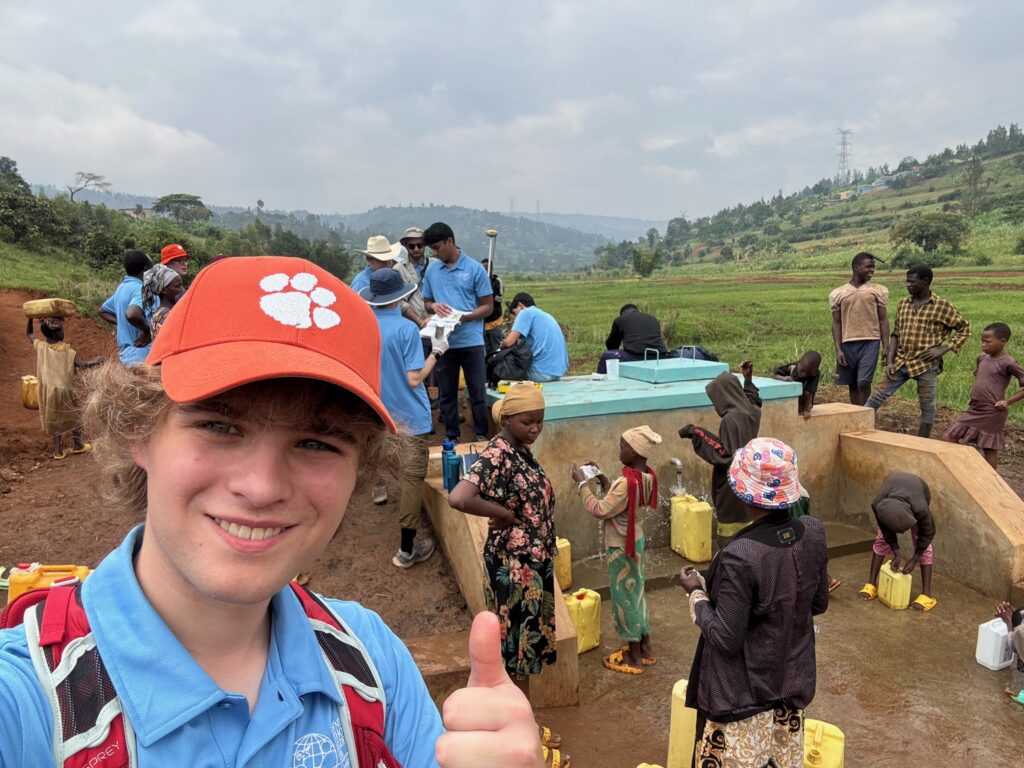
The team found E. coli and high turbidity in the water. Students determined that much of the contamination was entering from the surrounding environment, including people, livestock and washing done in the spring.
The team designed a network of perforated pipes and gravel to collect the spring water underground, then covered the area to keep out surface water and other contaminants.
The water is piped downhill to a tank and three taps.
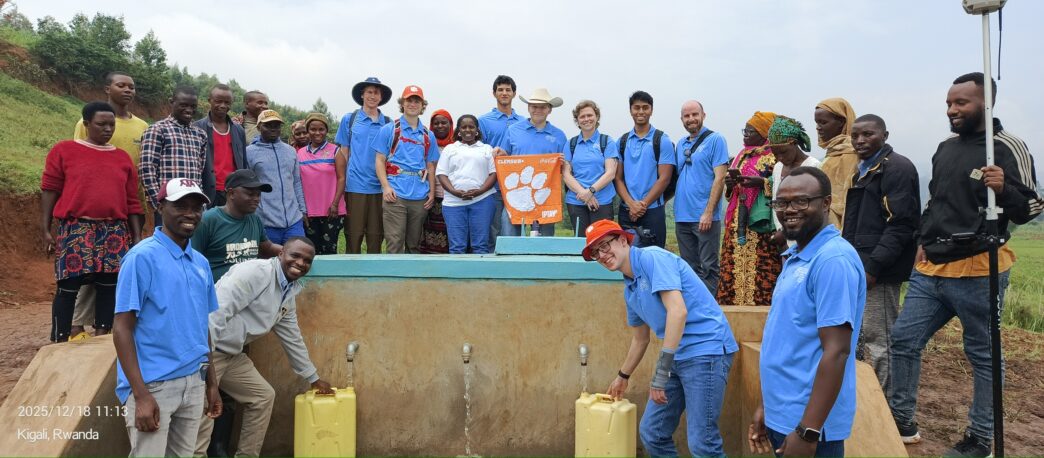
Funding delays kept the students from returning to Kagarama to help build the system, but they were able to go in December 2025 to inspect it. They found the system was delivering about 6.5 liters of water per second, and their tests showed no E. coli colonies.
“We saw these families that were around this tap stand collecting their water and carrying it back for their families’ needs– you can’t really describe the feeling,” said Will Ramsey, a senior majoring in mechanical engineering.
The experience led directly to a second challenge. During work in Kagarama, G.S. Musave, a nearby school, asked the group for help with its own water problems.
Students are now designing a system that would use solar power to pump water about 1.5 kilometers from the spring area to the school, which sits about 100 meters higher in elevation.
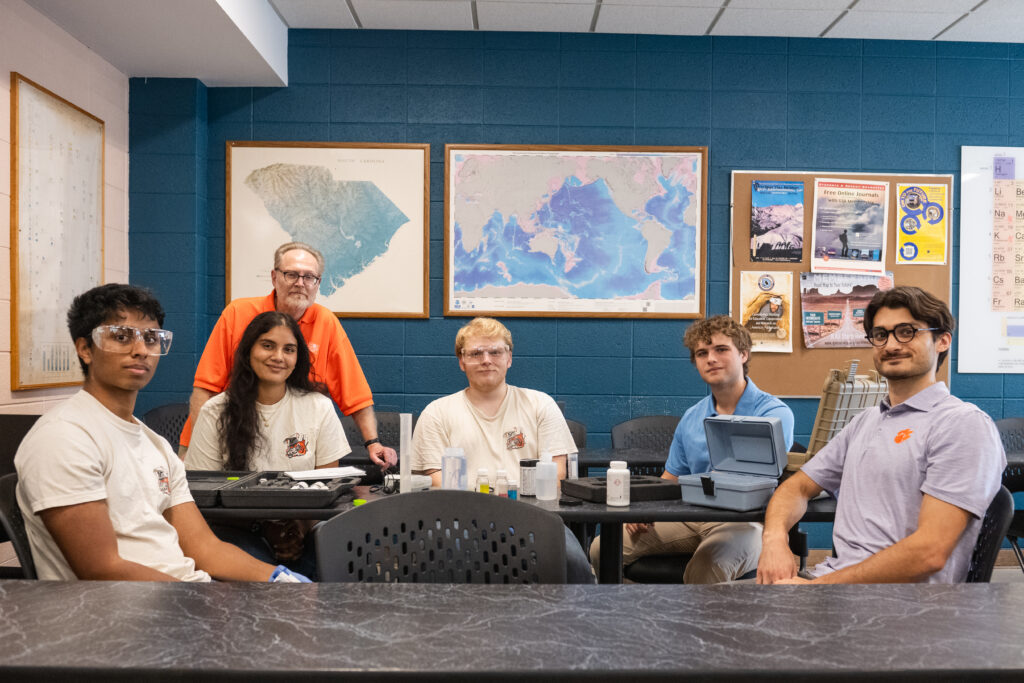
About 50 students are active in the Clemson chapter. Beyond Rwanda, members take on local service projects, including at Twelve Mile Recreation Area, at Lake Greenwood State Park and in the Clemson Experimental Forest.
The students also raise money to support their work.
Ranitha Kumurasinghe, a junior in biomedical engineering and chapter president, said students are drawn to the chance to make a tangible difference.
“I think my biggest job as president is not only to help the people in Rwanda but it’s also giving our members the confidence that they have the capability to make an impact in the world,” he said. “Our 50 members are future engineers. They are going to go into the workforce and try to change the world. But the thing is, they need to have the confidence and they need to know they have the capability to do that.”
For Caleb Beckley, a senior in industrial engineering, the appeal is combining service and professional growth
“One of the greatest things about EWB has been the opportunity to apply myself in a way that’s going to help other people,” he said. “This work in Rwanda ended up being a great opportunity to work on project management skills, actually working with other people to facilitate a solution like this.”
David Kahn, a lecturer in the Department of General Engineering who is transitioning into a faculty advisor role, said students will continue to shape the chapter’s future.
“The students’ opinions are what matter,” Kahn said. “Really, as the mentors, we’re there to make sure that they don’t make too many mistakes and help guide them back on track if they do make mistakes.”
For those who are drinking clean water thanks to the students’ efforts, their work is right on target.
How you can help: Lace up and support the chapter at its Run for Rwanda 5K, beginning at 9:30 a.m. on Nov. 7 at Nettles Park in Clemson. Registration is $15 without a T-shirt or $25 with one, and every entry helps the chapter move toward its $3,000 fundraising goal. Sign up here.
Acknowledgements: The Clemson chapter of Engineers Without Borders recognizes professional mentors Erin Kinsey and Rob Will, who play key roles in the chapter’s design, implementation and review processes. Kinsey earned a master’s degree in hydrogeology from Clemson and is a project manager at SynTerra Corp., and Will is a project manager at McGill Associates.
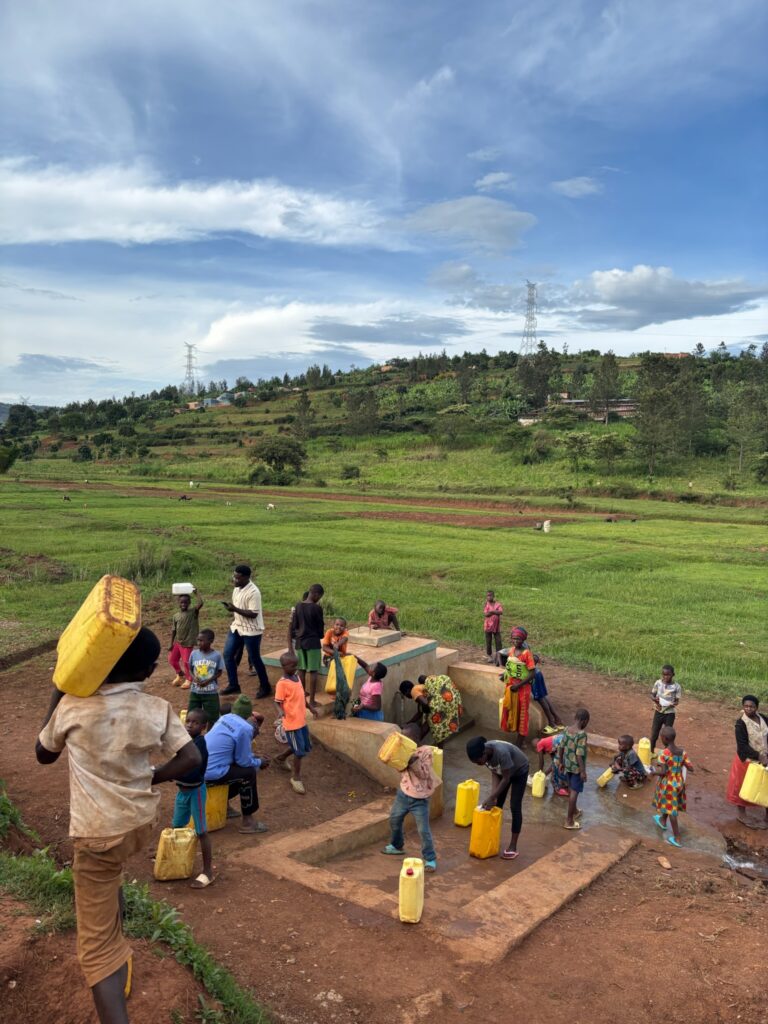
Kagarama residents fill up jerry cans at the spring-water collection system designed by the Clemson University chapter of Engineers Without Borders. 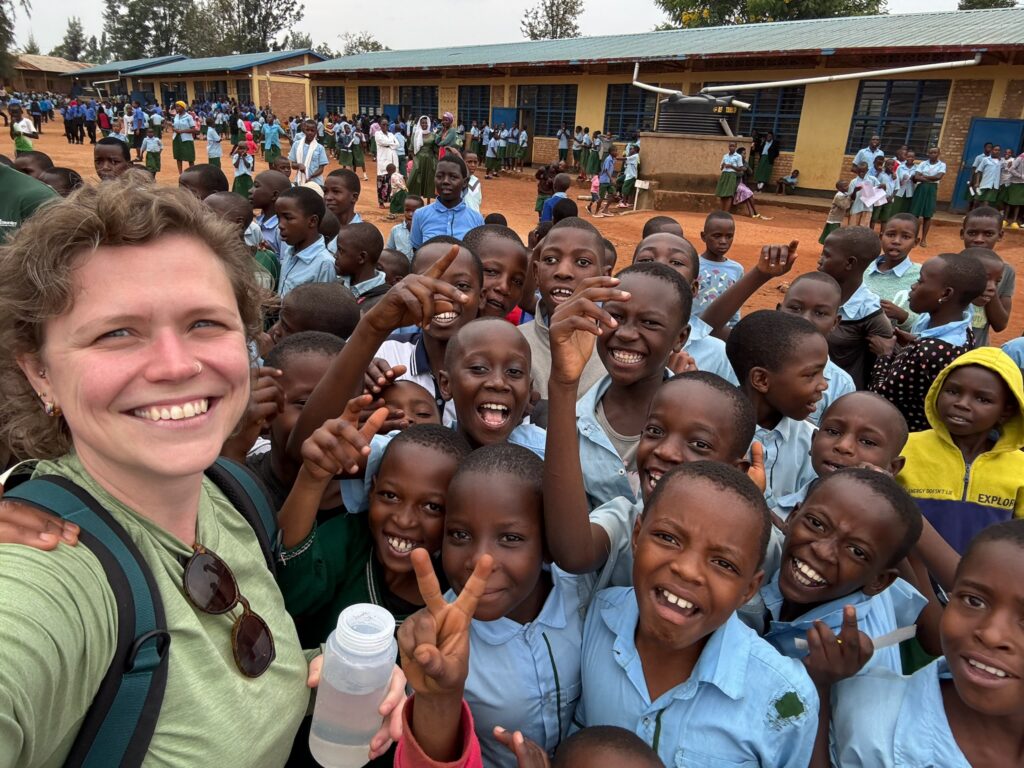
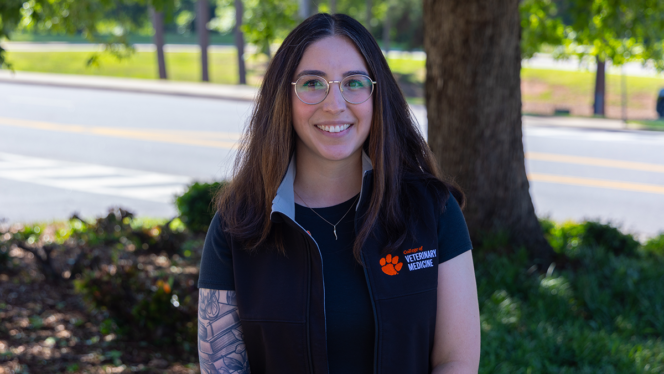
Erin Kinsey, who holds a master’s in hydrogeology from Clemson, is now a project manager at SynTerra Corp. and a key advisor on the work in Rwanda. 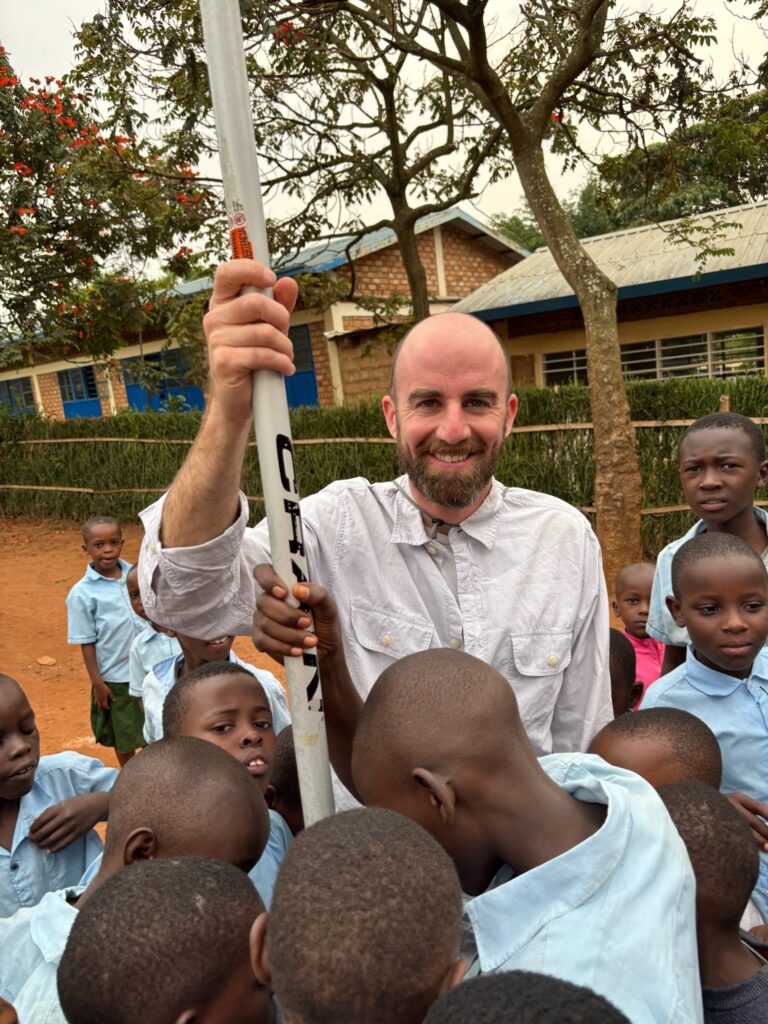
Rob Will, a project manager at McGill Associates, served as an important advisor on the Rwanda clean-water project. 
Students developed initial concepts and drawings for the Kagarama spring-water collection system. 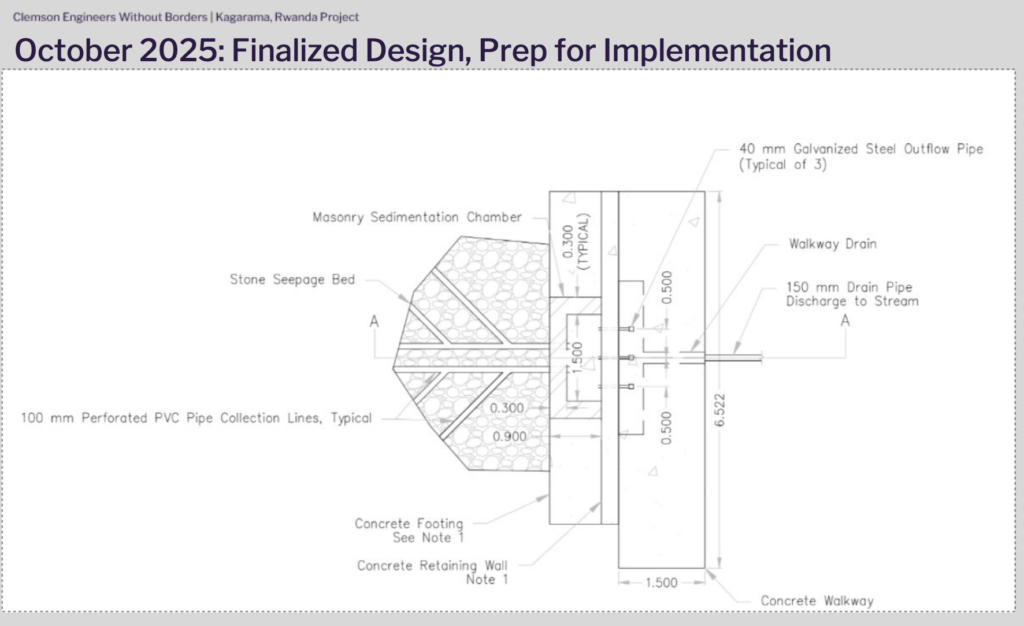
Students finalized the design of the spring-water collection system and prepared it for implementation in Kagarama. 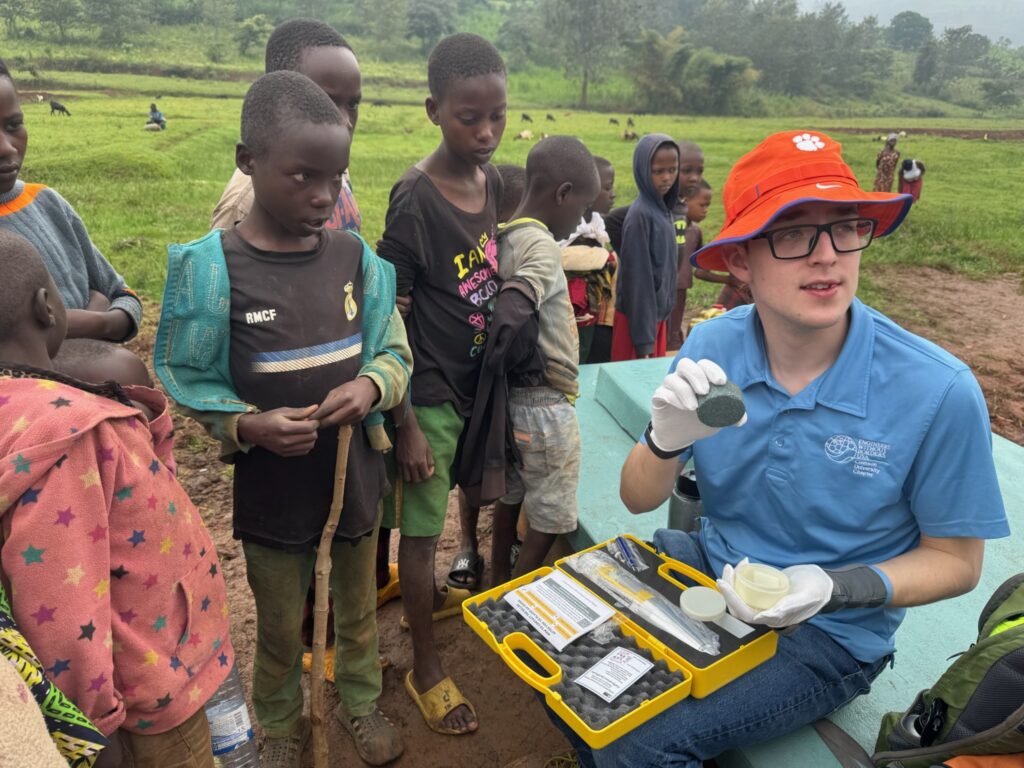
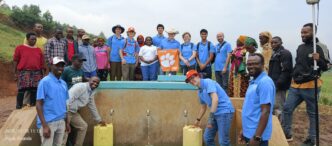
Members of the Clemson chapter, including Owen Branch, made two trips to Kagarama, Rwanda as part of a project that began to take shape in 2023. Branch, the Kagarama Technical Lead, is a senior mechanical engineering major. 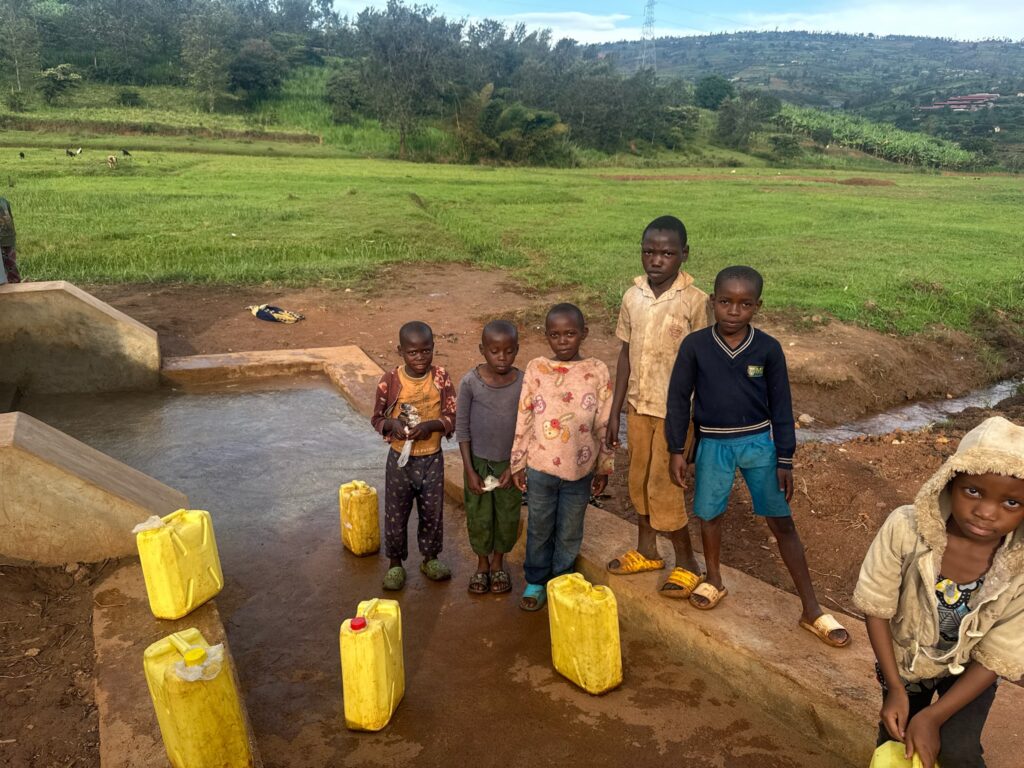
Children in Kagarama gather at the new tap stand, where the Clemson-designed system now provides clean water for the community. 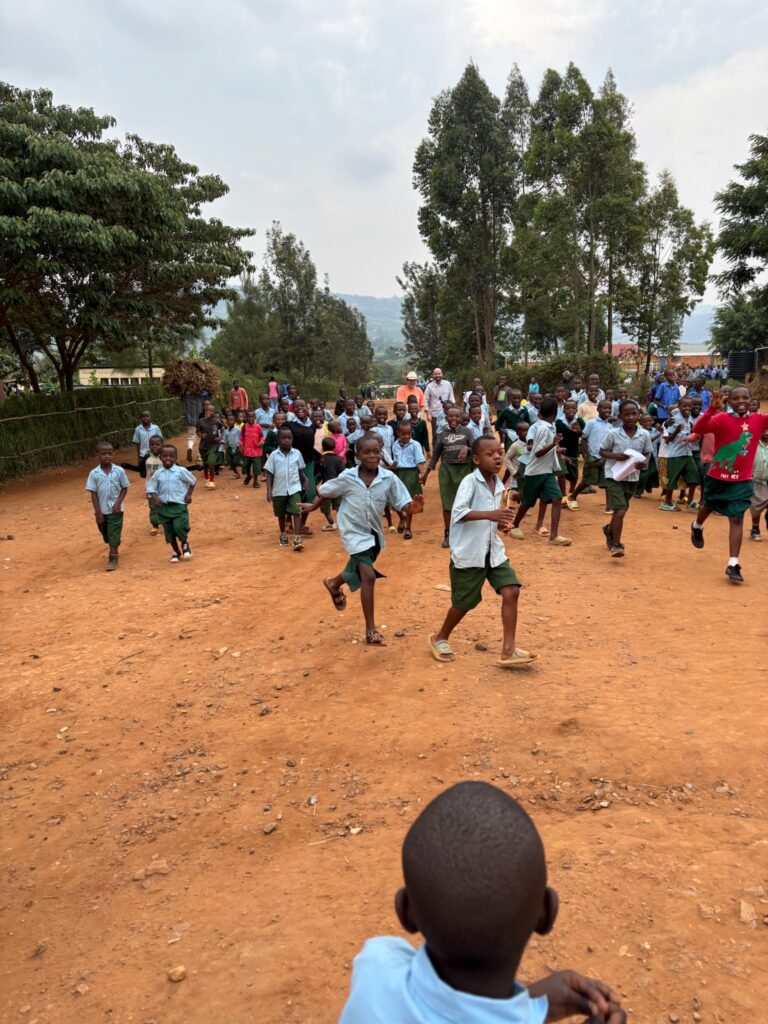
Students at G.S. Musave gather on campus, where Clemson Engineers Without Borders is now designing its next clean-water project. 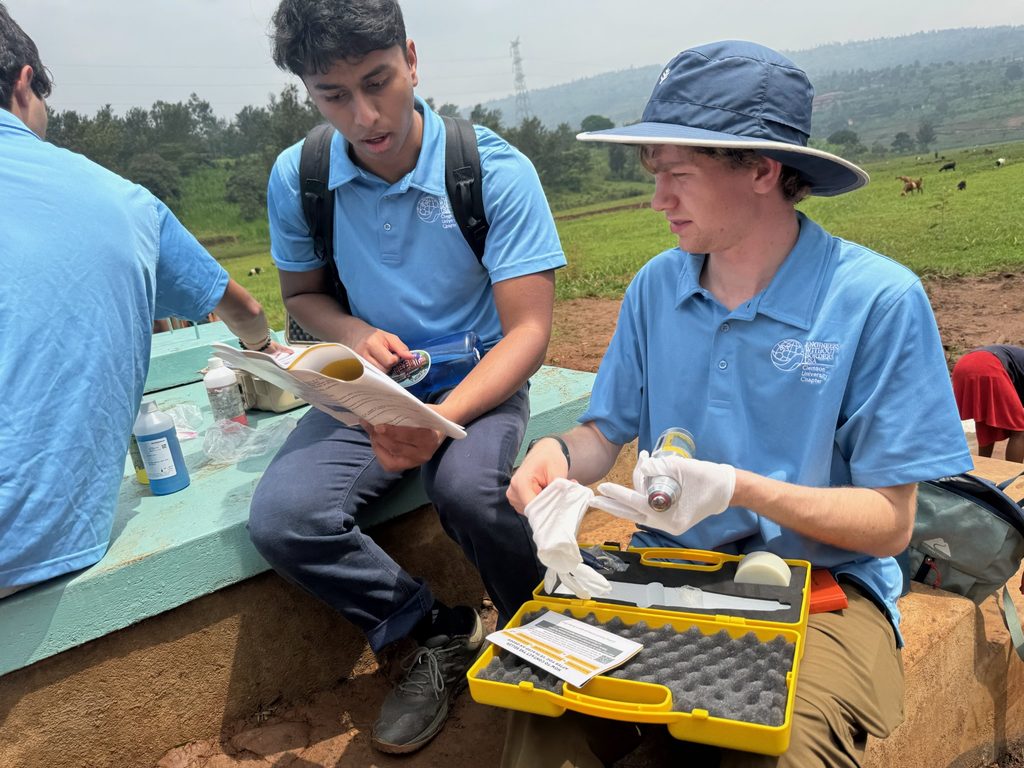
Among the Clemson students to travel to Rwanda were Ranitha Kumurasinghe (left), the Engineers Without Borders Clemson chapter president, and Simon Draper, the chapter’s former vice president, who graduated in spring 2026 with a Bachelor of Science in mechanical engineering.