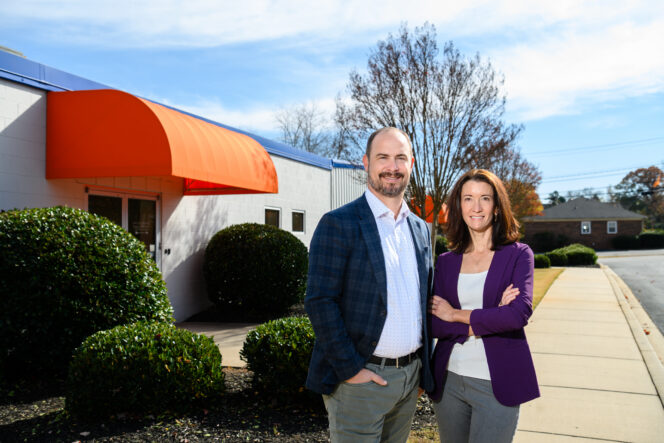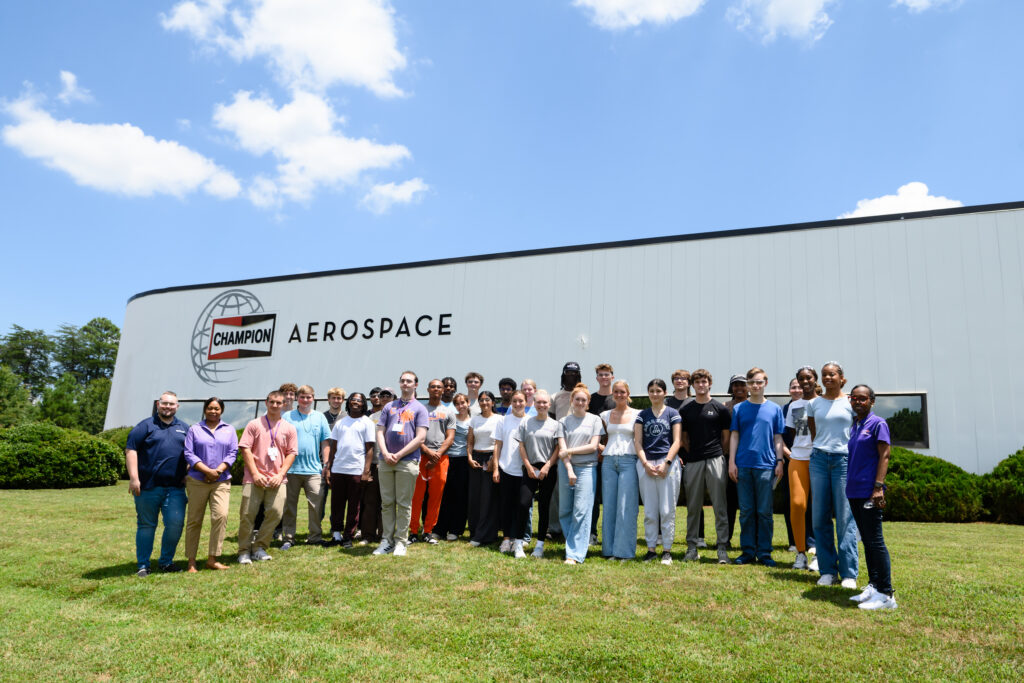
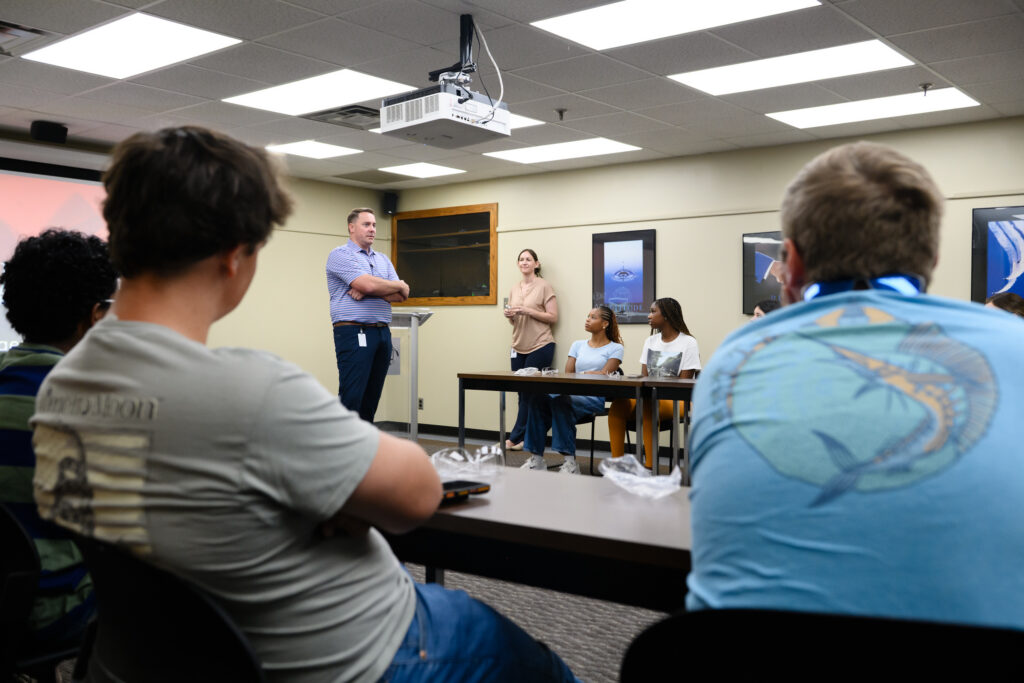
During the PEER Welcome Experience, students stepped off Clemson buses at Champion Aerospace’s Piedmont, South Carolina, facility, where they were welcomed by human resources manager Alison Pruitt and members of the Champion Aerospace leadership team. The visit began with an introduction from company leaders, who shared Champion Aerospace’s history, its role within TransDigm Group and the impact its products have on the aviation industry, before students watched a brief overview of the company.
Students then split into smaller groups to tour the manufacturing facility, where they observed the precision and collaboration required to produce aerospace components. As they moved through the production floor, they visited multiple manufacturing stations, including the ceramics area, where components undergo a 14-hour kiln process before advancing through production. From learning about the company’s role in aviation to observing the attention to detail required to manufacture aircraft components, the visit offered students an early look at careers they may one day pursue.
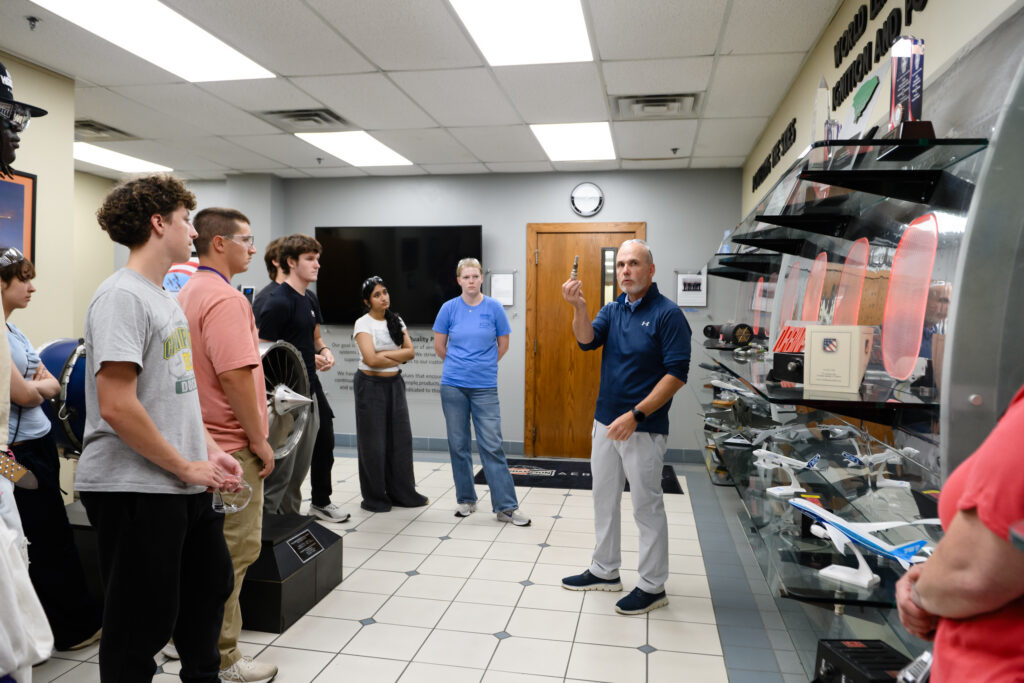
The tour concluded in Champion Aerospace’s display area, where students viewed products and historical artifacts representing the company’s contributions to the aerospace industry. Among them was technology used aboard US Airways Flight 1549, the aircraft Capt. Chesley “Sully” Sullenberger famously landed on the Hudson River in 2009, saving all 155 people on board after both engines failed. Students also explored displays featuring products designed for commercial aviation, military applications and space exploration.
Hear what students have to say about the program:
“It was cool to see how much work goes into building just the little parts and how accurate they have to be to make everything work,” said Reagen Junior, a civil engineering student from Columbia, South Carolina.

Mohammed Alam, an industrial engineering student from Forsyth, Georgia, said one of the highlights of the visit was “seeing real engineers work in real time” and learning how Champion Aerospace’s work impacts the aviation industry.
Champion Aerospace is part of TransDigm Group, a global aerospace manufacturing company with businesses specializing in highly engineered aircraft components. Through its partnership with Clemson University, including support of the Doug Peacock Scholarship Program and experiences like the PEER WISE tour, TransDigm helps students connect classroom learning with real-world engineering opportunities while building relationships with future industry leaders.
Sean Keenan, vice president of engineering at Champion Aerospace, said introducing students to the industry early is an important step in helping them recognize the opportunities available to them. “Champion Aerospace has hired Clemson graduates in various engineering roles, most recently ceramic development engineering,” Keenan said. “As the aviation world expands and drives innovation, Champion knows the importance of showing Clemson students early in their college career the impact they can make. This visit is among the first steps to helping guide the students to their best potential.”
Peter Williams, president of Champion Aerospace, said the company values its relationship with Clemson and enjoys introducing students to careers in aerospace. “The visit was a great opportunity for Champion to educate new students on all of the exciting opportunities in the aerospace industry and see firsthand what that looks like,” Williams said. “We look forward to continuing to build upon the strong relationship with Clemson.”
James Mullens, vice president of operations, echoed that sentiment. “One of the things I enjoy most about my job is showing others the great work we do at Champion Aerospace,” Mullens said. “I hope seeing our work firsthand and interacting with our team sparks their interest in engineering, manufacturing and aerospace.”
As students prepare to begin their first semester at Clemson, experiences like the Champion Aerospace tour provide more than a glimpse inside an aerospace manufacturer — they help students connect their education to the possibilities that lie ahead. For many, the visit transformed engineering from something they will study in the classroom into something they can already imagine themselves doing.