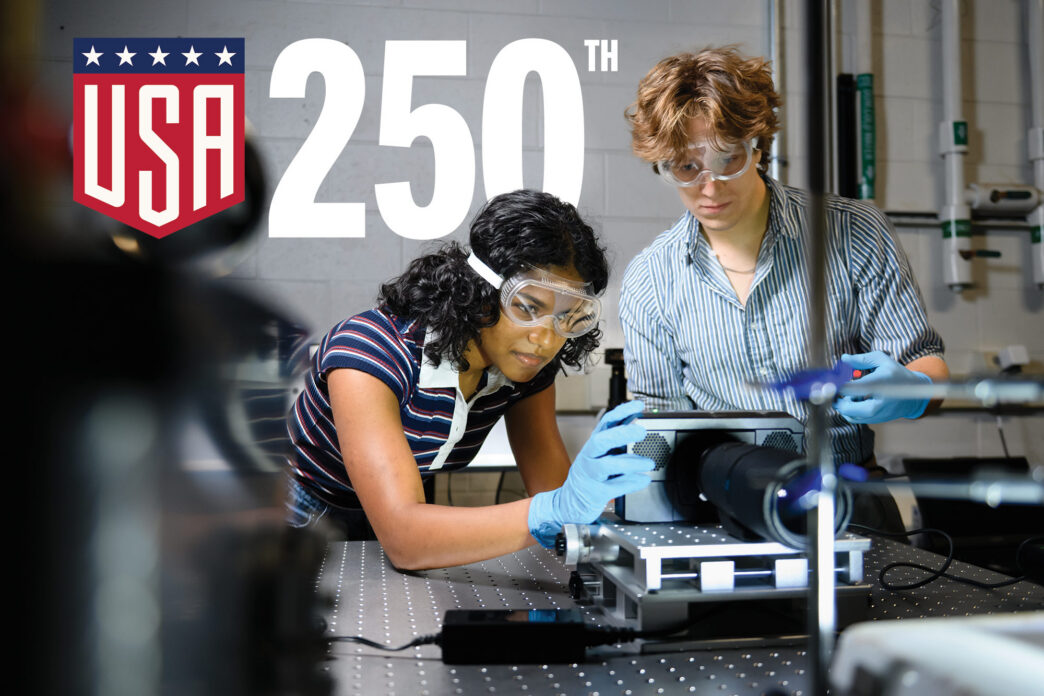
For more than half the nation’s history, Clemson University’s engineers and scientists have played distinguished roles in shaping the United States, helping turn an experiment in democracy into the world’s grandest hub of innovation, the globe’s most powerful economic juggernaut and a shining beacon of freedom.
The College of Engineering, Computing and Applied Sciences is taking this opportunity as the nation marks its 250th year to reflect on how Tigers have helped strengthen industries and find innovative solutions to some of the country’s most difficult challenges.
Anand Gramopadhye, dean of the college, said that as it celebrates its past, it is also helping define a new era of innovation, shape the future workforce and drive economic development.
“Clemson’s impact has always extended far beyond our campus, and our alumni have been essential to that legacy,”
Anand Gramopadhye, Dean
“Across generations, they have carried a spirit of innovation, service and leadership into industries, the military, government, academia and communities throughout the nation and the world. Their accomplishments reflect the strength of a Clemson education and the enduring value of engineering and science in improving lives. As we honor this history, we are also preparing the next generation of Tigers to develop bold solutions and help shape America’s future.”
While there is no way to recognize every faculty member, student and alumnus in 137 years of history, we have identified 10 themes that show how Clemson engineers and scientists have played an important role in strengthening the land of the free, home of the brave, all the way back to the University’s founding in 1889.


In the beginning: Engineering and science were in Clemson’s DNA from the start. Founded in 1889 as Clemson Agricultural College, the institution opened in 1893 with a mission rooted in practical education for agriculture and the mechanical arts. In that first year, there were 446 students and 15 faculty. Engineering quickly became a cornerstone of the curriculum. Of the 37 students in Clemson’s first graduating class in 1896, 22 completed engineering courses and 15 studied agriculture.


From textiles to advanced materials: In 1898, Clemson opened the South’s first textile school and only the third in the nation, helping educate the workforce and advance an industry that transformed the South’s economy. That foundation grew into a broader strength in materials science and engineering, ranging from advanced fibers and polymers to ceramics and photonic materials. Now, Clemson is helping drive South Carolina’s advanced materials economy with the help of facilities such as the new Advanced Materials Innovation Complex and the Advanced Materials Research Laboratory, where researchers work with industry to develop next-generation materials and prepare the workforce that will bring them to market.


Defending the nation: Clemson was founded as a military college and ever since has helped strengthen the nation’s defense by educating military leaders, preparing a highly skilled workforce and advancing technologies for national security. In the present day, Clemson researchers work with the U.S. military and defense industry to develop advanced materials, digital engineering tools, hypersonic technologies and artificial intelligence that enhance readiness, improve mobility and strengthen critical infrastructure. With generations of graduates serving in the armed forces and defense industries, they continue a tradition of innovation that helps keep the United States and its allies safe.
Building and connecting America: Since its earliest years, Clemson has been preparing engineers and scientists to design and maintain the infrastructure that undergirds modern life. Clemson graduates have helped build roads, bridges, buildings, transportation networks and water systems. That work continues today with faculty and students in the School of Civil and Environmental Engineering and Earth Sciences. They are advancing materials, technologies and design approaches that make infrastructure safer, smarter, more sustainable and more resilient.
Pioneers in biomaterials: Clemson played a central role in establishing biomaterials as a field of engineering. The University’s bioengineering program, one of the world’s oldest, launched its doctoral program in 1963 and hosted the International Biomaterials Symposium, which led to the founding of the Society For Biomaterials in 1974. Clemson continues to advance the field through its Department of Bioengineering, based in the Rhodes Engineering Research Center, and at the Clemson University Biomedical Engineering Innovation Campus (CUBEInC) in Greenville, where researchers work with physicians, hospitals and industry to develop new materials, medical devices and regenerative therapies that improve patient care.
Revving up the auto industry: Clemson has also redefined automotive engineering as a distinct academic discipline. The University launched the nation’s first Ph.D. program in automotive engineering in 2006, followed by the first bachelor’s degree program in the field in 2023. The programs are based out of the Clemson University International Center for Automotive Research (CU-ICAR), which was founded in Greenville in 2007. Students, faculty and industry partners come together at CU-ICAR to collaborate on research in vehicle systems, manufacturing and mobility. Programs such as Deep Orange give students hands-on experience designing and building concept vehicles while working alongside automotive manufacturers and suppliers to develop technologies for the future.
Reaching for the stars: From the Space Race to the Artemis era, Clemson engineers have helped expand humankind’s reach into space while blazing trails here on Earth. Clemson alumni include Vanessa Wyche, the first African American woman to lead a NASA center as director of Johnson Space Center, and Charlie Blackwell-Thompson, NASA’s first female launch director, who led launch operations for the Artemis I and Artemis II missions. Clemson alumni have also helped design, build and launch spacecraft and satellites at NASA and across the commercial space industry. They reflect Clemson’s enduring role in advancing space exploration and the talent and technologies that make it possible.
Shaping the workforce: Across generations, Clemson has awarded tens of thousands of degrees in engineering, computing and applied sciences, including 17,947 in the past 10 years alone. It’s no wonder Clemson is the state’s largest producer of engineers, graduating more than all other South Carolina institutions combined. By working closely with industry, the college helps anticipate workforce needs and prepares students for careers in advanced manufacturing, automotive engineering, energy, computing, advanced materials and other critical fields. That commitment begins well before college through STEM camps and outreach programs that introduce thousands of K–12 and technical college students to engineering each year.
Securing our energy future: As America’s demand for energy rises, Clemson engineers are working with utilities, industry, academia and other collaborators to help ensure electricity remains reliable, affordable and secure. Researchers are developing technologies to strengthen and modernize the electric grid, improve resilience and prepare the workforce to meet growing demand and changing needs. They are also advancing materials for energy generation and storage while supporting the safety and long-term sustainability of the nation’s nuclear energy infrastructure. The work led by Clemson is helping build a cleaner, more resilient and dependable energy future.

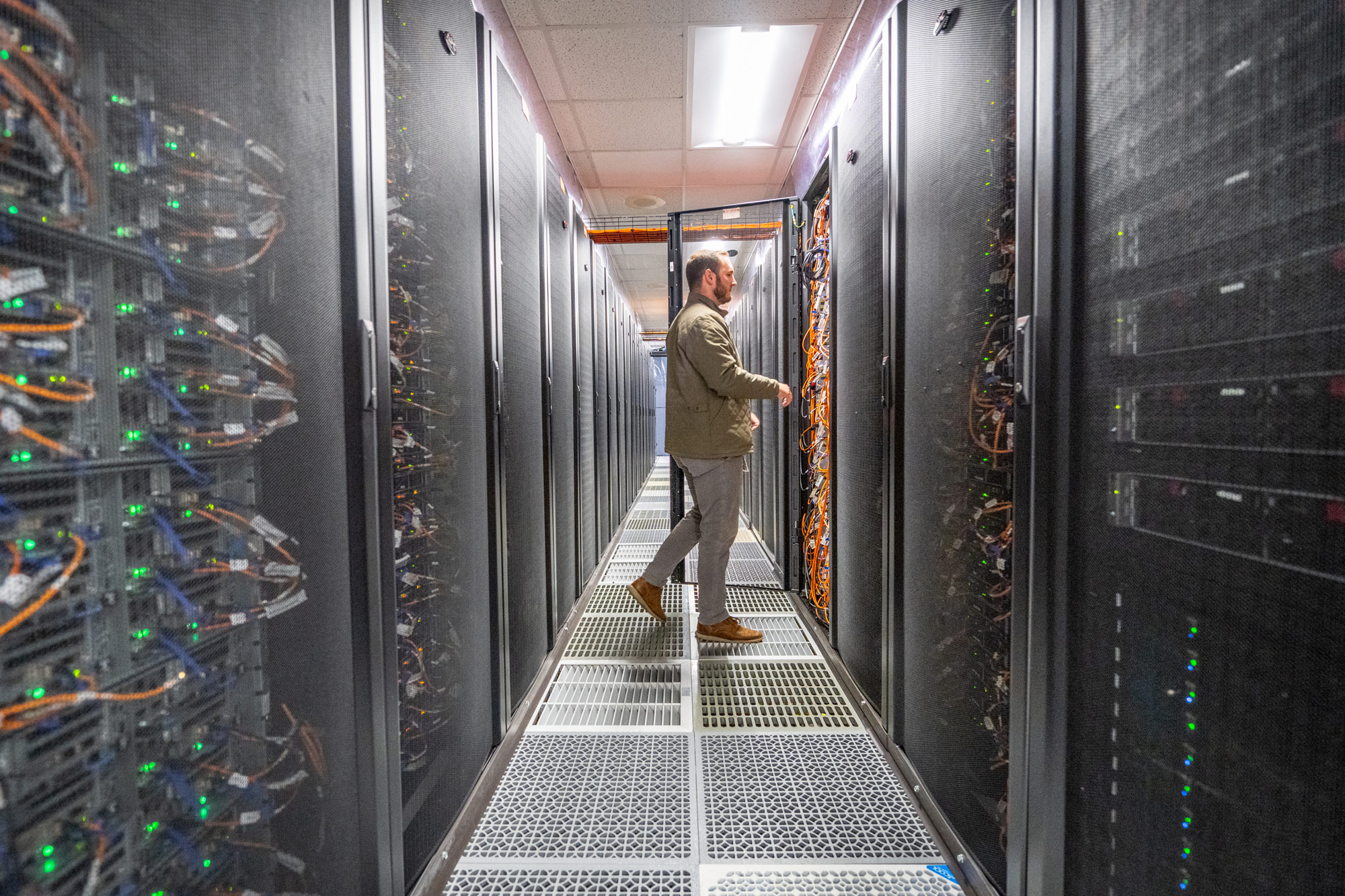
Powering the digital age: Clemson purchased its first computer in 1961, laying the groundwork for decades of growth in computing education and research. Today, researchers are working to ensure artificial intelligence develops in ways that benefit people while making the computing systems behind it more efficient, sustainable and secure. Faculty are advancing human-centered approaches to AI that emphasize trust and responsible use while developing new hardware, software and computing technologies to process growing volumes of data with greater speed and efficiency. Their work is helping lay the foundation for the next generation of AI and the computing infrastructure that will support it.
Archival photos provided by Clemson University Special Collections and Archives.