At a farmer’s market in Raleigh, North Carolina, a scientist with a small net collected fruit flies during peach season.
The tiny insects he collected became the foundation for a resource developed by Clemson University scientists Trudy Mackay and Robert Anholt and their research team that will help scientists worldwide to study questions relevant to human health.

After more than a decade of work, the Clemson researchers have assembled and analyzed a collection of more than 1,000 genetically distinct lines of the common fruit fly. Known as the Drosophila melanogaster Genetic Reference Panel Version 3, or DGRP3, the collection gives scientists a powerful way to investigate how differences in genes contribute to differences in traits.
The resource, described in an article published this week in the journal Cell Genomics, builds on an earlier panel of about 200 lines that has been used in research laboratories worldwide. The expanded collection offers a much larger sample of genetic diversity and a better chance of identifying genetic differences that influence traits.
“This is the beginning of many research projects, not the culmination of one,” said Mackay, the director of the Clemson Institute for Human Genetics (IHG) and the Self Family Endowed Chair of Human Genetics.
Those projects could examine subjects as varied as aging, responses to drugs and toxic substances, and the biological mechanisms involved in disease. The Clemson researchers are already pursuing several of those questions, while other researchers could use DGRP3 to explore traits of their own choosing.
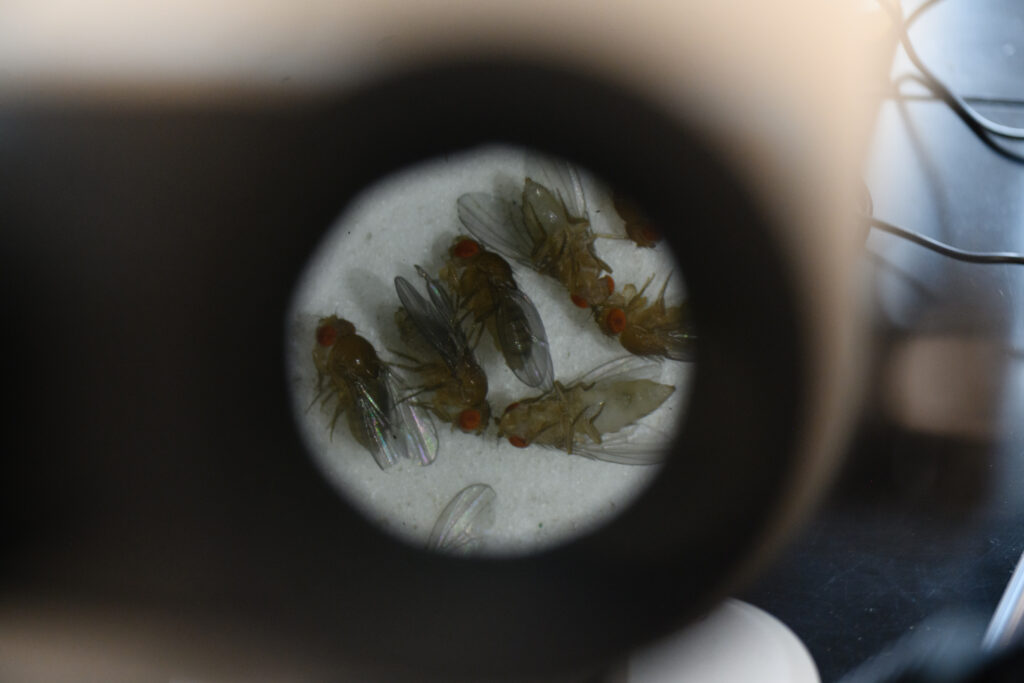
Why fruit flies?
The fruit fly may seem like an unlikely stand-in for a human, but scientists have used it for more than a century to study how genes work. Many genes involved in human disease have counterparts in fruit flies, and the insects are inexpensive to maintain, reproduce quickly and can be studied in large numbers.
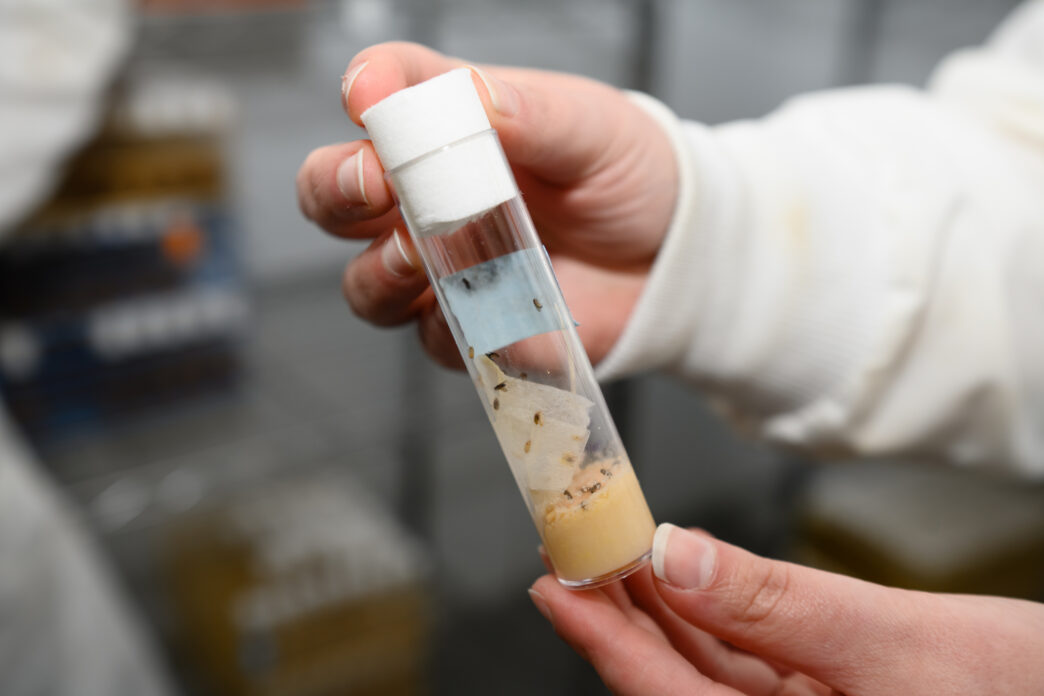
DGRP3’s value comes from the combination of two features. Each line is genetically distinct from the others, reflecting the natural variation present in the original wild population. And the flies within each line are nearly genetically identical to each other.
That allows scientists to study the same genetic background repeatedly, measuring many flies from a line under the same conditions or comparing them under different conditions. Researchers can also investigate different traits in flies with the same genetic background.
Years in the making
Creating that consistency required patience. The team bred brothers and sisters for 20 generations to establish each line. Many lines did not survive the inbreeding process.
Richard Lyman, the senior research scientist who collected the fruit flies for the DGRP3 at the farmers market between 2015 and 2017, played a central role in the effort. The researchers began with more than 3,000 lines.

“It’s an incredibly difficult procedure because they die,” said Mackay of the inbreeding process. “They don’t like to be inbred.”
The project began before Mackay and Anholt, who is the Provost Distinguished Professor of Genetics and Biochemistry, came to Clemson and became a major focus of their work at the IHG in Greenwood.
Rachel Lyman, Richard’s daughter, performed the sequencing, while Vijay Shankar, who directs the IHG’s bioinformatics and statistics core, conducted the bioinformatics and genome analyses.
“It was a team effort that involved many contributors,” Mackay said.
The panel includes 1,037 viable lines, including newly developed lines and re-inbred and re-sequenced lines from the previous panel. Across the sequenced lines, the team identified approximately 8.76 million genetic variations. Some are small changes in the DNA sequence. Others involve larger structural changes.
Finding genetic clues
The size of the collection matters because many traits are influenced by multiple genes, each potentially contributing only a small part of the effect.
Knowing the genetic makeup of each line allows scientists to compare genetic differences with measurable characteristics. A researcher might, for example, measure how long flies live or how they respond to a particular substance, then look for genetic variants associated with the differences.
The expanded panel makes those comparisons more powerful. With many more lines, researchers have a better opportunity to study variants found in only a small portion of the population. In a collection of 200 lines, a less common variant might appear in too few lines to analyze effectively. A larger panel increases the number of opportunities to observe and study it.
The larger collection also can be divided. Researchers could use one group of lines to identify a possible genetic association and another to test whether those relationships hold up, Mackay said.
To make such comparisons, scientists measure a trait in the flies and use the known genome sequences to look for genetic differences associated with the results. The analysis can identify promising genes or variants for further study. Additional experiments would be needed to establish how those genetic differences affect the trait.

Connection to human health
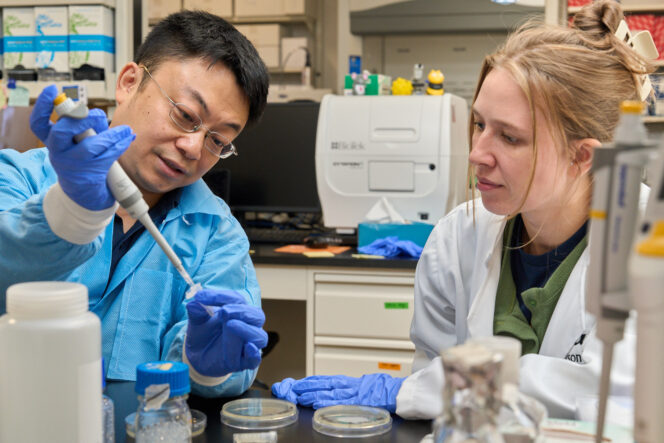
At Clemson, Mackay and Anholt are already using fruit flies to investigate questions relevant to human health, including aging and responses to cocaine and other substances.
People differ in their susceptibility to substance use disorders, but identifying the reasons is complicated. People have different genetic backgrounds, life experiences and environmental exposures. Human studies can be complicated to conduct.
In flies, researchers can compare known genetic backgrounds under controlled conditions. They can compare males and females, study young and old animals, and examine how different genetic backgrounds respond to an exposure.
Such experiments may reveal biological clues and genetic relationships that can be investigated further in other animal models and, eventually, in people.
The Mackay and Anholt lab is also studying aging. Another project uses fly models of rare genetic diseases to look for genes that may lessen or worsen a disease’s effects. Such work could provide clues about potential approaches to treatment.
Beyond a parts list
Mackay said that identifying genes associated with a trait gives researchers something akin to a parts list.
But the panel’s potential goes beyond that. Mackay and Anholt also want to understand how genes and the molecules they influence work together by examining other layers of biology, such as which genes are active and how molecular products vary. By studying those layers together, researchers can build a fuller picture of the pathways linking DNA to an observable trait.
That could help scientists interpret findings from human genetic studies, Anholt said.
Resource for researchers
Mackay said public access was central to the project from the start.
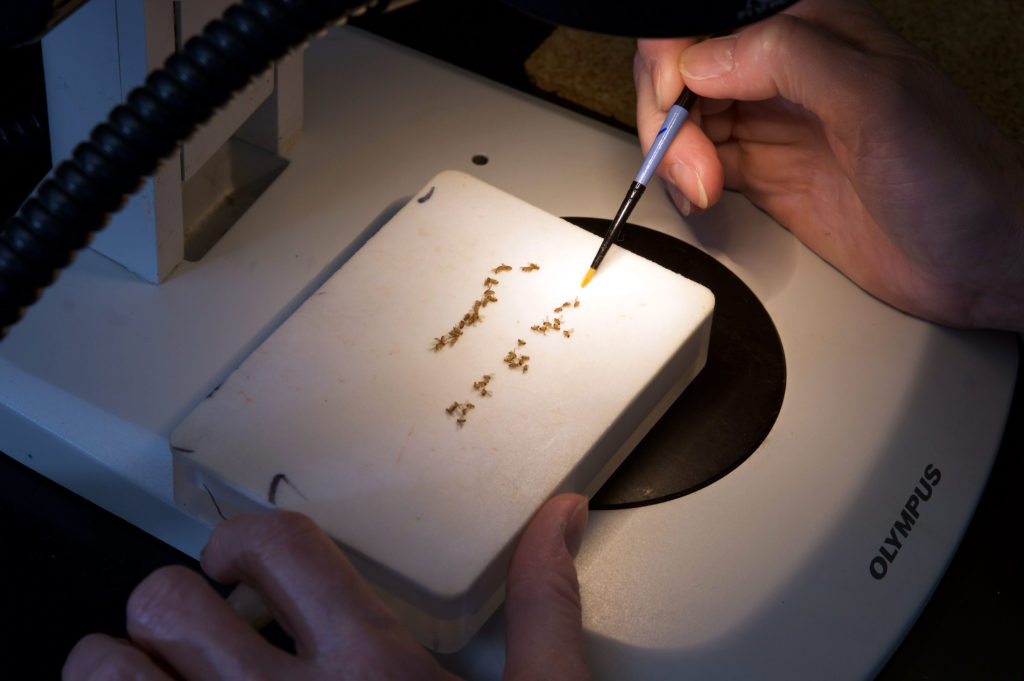
Scientists can obtain living fruit flies from each line from the Bloomington Drosophila Stock Center in Indiana. Their genome sequences are publicly available.
That access could be especially valuable to researchers who have expertise in measuring a particular trait but lack the resources to create and sequence such a large collection themselves.
The flies can also be used to introduce students to genetics in classrooms and laboratories.
The work was supported in part by the National Institutes of Health and Clemson IHG resources.
“The whole idea of this was to be a public resource,” Mackay said.
Anholt said developing the panel was an accomplishment in and of itself, but its full value will come from scientists using the collection to pursue their own questions and making discoveries the Clemson team may never have imagined.