On May 8, 2026, Jason LeMay will walk across the stage and receive a diploma from Clemson University — a feat he set out to accomplish almost 28 years ago. Life didn’t come easy, raising challenges freshman LeMay never could have predicted. Nevertheless, he persevered, and his graduation symbolizes the power of resilience, recovery, and true, unwavering loyalty to the school where his journey first began.
Raised by a single mother in Black Mountain, North Carolina — he lost his father to suicide at 2 years old — LeMay was no stranger to adversity. Football was his escape. As a seventh grader, he attended his first college football game ever at Memorial Stadium, piquing an interest in Clemson that would stick with him for years to come. His skills on the field as a tight end earned him the attention of several big schools, but the Clemson choice was an easy one.
LeMay was immediately impressed with the Clemson Football program’s commitment to him.
“The coaches’ in-home visit was the same day as my small-town high school football banquet, and head coach Tommy West showed up and actually spoke at the event,” LeMay recalls. “It was unexpected, but it showed me great respect and loyalty. I knew I wanted to be a part of the team.”
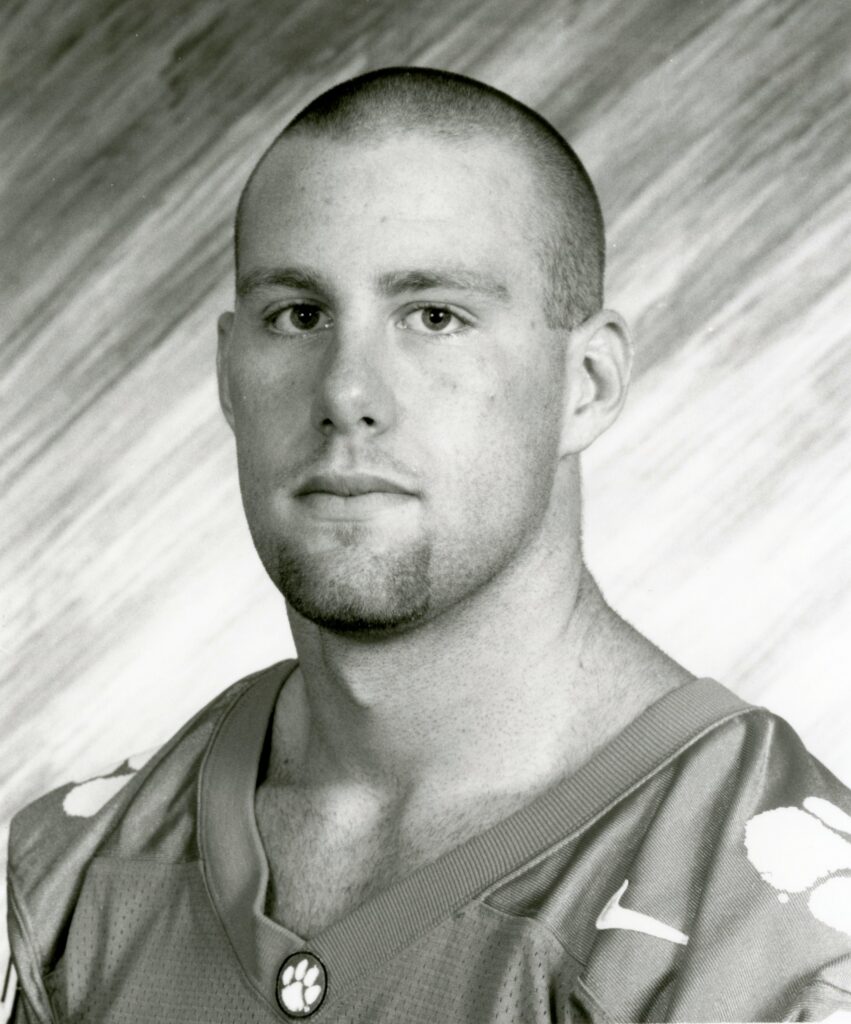
When he arrived at Clemson in 1998, LeMay instantly began growing, both as a player and as a person. He built relationships with teammates, including Clemson Football’s current defensive tackles coach Nick Eason, who would be an important connection down the road. LeMay redshirted his freshman year and started on the field as a sophomore, all while juggling academics and a part-time job as a bouncer. Eventually, he made the difficult decision to transfer to Appalachian State, losing almost a year’s worth of credits in the process. After sustaining several serious injuries during the two years he was on the field, LeMay decided it was best to close the football chapter of his life and move on.
Without a degree, LeMay’s options were limited. He spent the next few years in his hometown, digging concrete footers for a construction company owned by his former t-ball coach. When LeMay was 28 years old, he lost his job to the 2008 recession and was forced to move back in with his mother. He submitted over 50 applications to a variety of companies but could not find a position anywhere. Eventually, LeMay took a friend’s advice and enlisted in the U.S. Navy.
In 2010, LeMay began the rigorous journey to becoming a Navy Seal. He began the Basic Underwater Demolition/SEAL (BUD/S) training — a grueling training designed to test the physical and mental limits of its participants. During BUD/S, LeMay’s age was both an advantage and a burden. He was able to form important connections with his superiors — even being the fourth roommate to three of the highest officers in the program.
“I’ve always been very respectful of and compatible with leaders,” LeMay says. “I think football made me that way, as well as the values my mother instilled in me.”
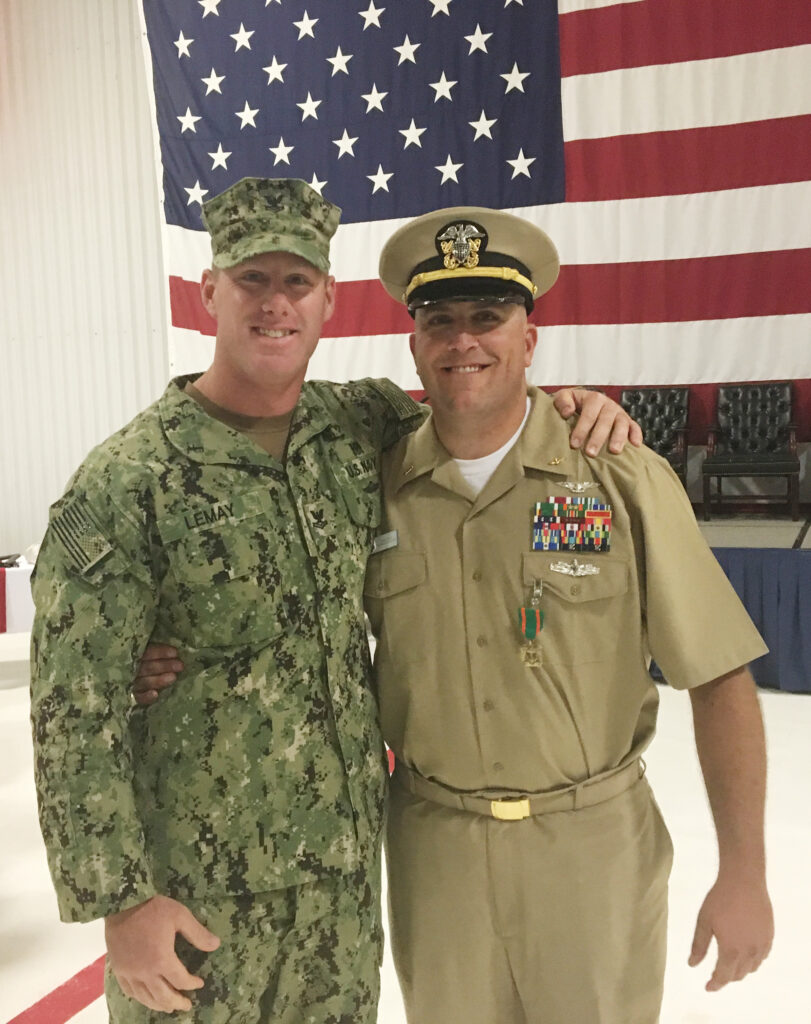
In learning from these leaders, LeMay also earned his own authority, serving as the appointed lead of the recruits for the entire duration of BUD/S. Typically, this position is refreshed three to four times throughout the boot camp process; however, LeMay — possessing a natural aptitude for leadership — proved to be irreplaceable.
LeMay’s age, in addition to other underlying health conditions, forced him to “wash out” of BUD/S. He worked in the BUD/S medical clinic for a few months before receiving orders to the USS Harry S. Truman — one of the most advanced warships in the U.S. Navy. While on board the aircraft carrier, his respectful, hardworking demeanor helped him navigate the situation until he was able to earn orders to Navy Corpsman school. He worked as a hospital corpsman, picking up rank while assisting at Portsmouth Naval Hospital. From there, he attended and graduated Navy Dive School and screened for the Naval Special Development Warfare Group, where he served four of his 10-year military career.
Late in his military career, LeMay began developing severe mental health issues. His coping mechanisms — alcohol and drugs — only made matters worse. One fateful day, he intended to commit suicide, going so far as to holding a rifle to his chest — the same way his father had committed suicide. Suddenly, his dog Dip Stick leaped onto the bed. At that moment, he lowered the rifle and saved his life. It was the sign LeMay needed to seek help.
He began seeing a psychiatrist, who inspired him to pursue Eye Movement Desensitization and Reprocessing therapy (EMDR), a structured program designed to alleviate distress from traumatic memories and treat conditions such as PTSD, anxiety and depression.
“My conversations with the psychiatrist were rooted in trust. We spent about three months together before I went to treatment, having honest conversations and helping me learn myself,” LeMay says.
He concluded his Navy career and spent over a year and a half in treatment, which made a tremendous difference. However, he had not considered his next steps. LeMay was cohabitating in his home in Chesapeake with his soon to be ex-wife, and military disability checks were his only source of income. Luckily, he found support from those closest to him.
“My buddy called me and said, ‘All right, what you’re going to do is bring all your stuff here and stay with us.’ Then, once I needed to move, another friend of mine offered me his spare room. I am so incredibly grateful for their help during this time; they kept me afloat,” LeMay says.
At last, things were looking up — LeMay returned to his hometown, reconnected with his high school sweetheart, and began volunteering as a coach for his high school football and track teams. However, one goal was still unaccomplished — graduating college.
Naturally, there was only one school LeMay had in mind, but he still wanted to preserve his connection to football somehow. Then a friend gave him great advice — “Just call Nick!” LeMay phoned his former teammate Nick Eason on a Saturday and received an invitation to come to campus the following Monday. Eason welcomed him back with open arms and referred him to head coach Dabo Swinney, who was equally as welcoming and offered him a student coach position in the fall.

“Bringing him back to this program and introducing him to Coach Swinney was a no-brainer for me. Jason is a guy who exemplifies everything Clemson stands for, and I knew he would give one-thousand percent in whatever we asked him to do,” says Eason, fondly.
Upon LeMay’s return, he enrolled in classes toward a sociology degree and athletic leadership minor and began his work with Clemson Football in a particularly humble way. Working under former strength and conditioning coach Joey Batson — who was also LeMay’s coach when he was first at Clemson — he washed and folded towels, swept the weight room and began forming connections with the players, who quickly embraced his presence in the program.
“Once they found out I played, a bond developed immediately — we went from ‘Who is this guy?’ to ‘Oh, he’s one of us!’” LeMay says. “I love every single one of them because they are now who we were then.”
The next time LeMay saw Swinney was during a busy staff meeting, one where LeMay certainly didn’t expect to be recognized.
“He had probably seen a million people since we met, but he walked in and said, ‘Hey, Jason! Good to see you!’ I was shocked, but it really shows who he is as a human and what the Clemson Family truly represents.”

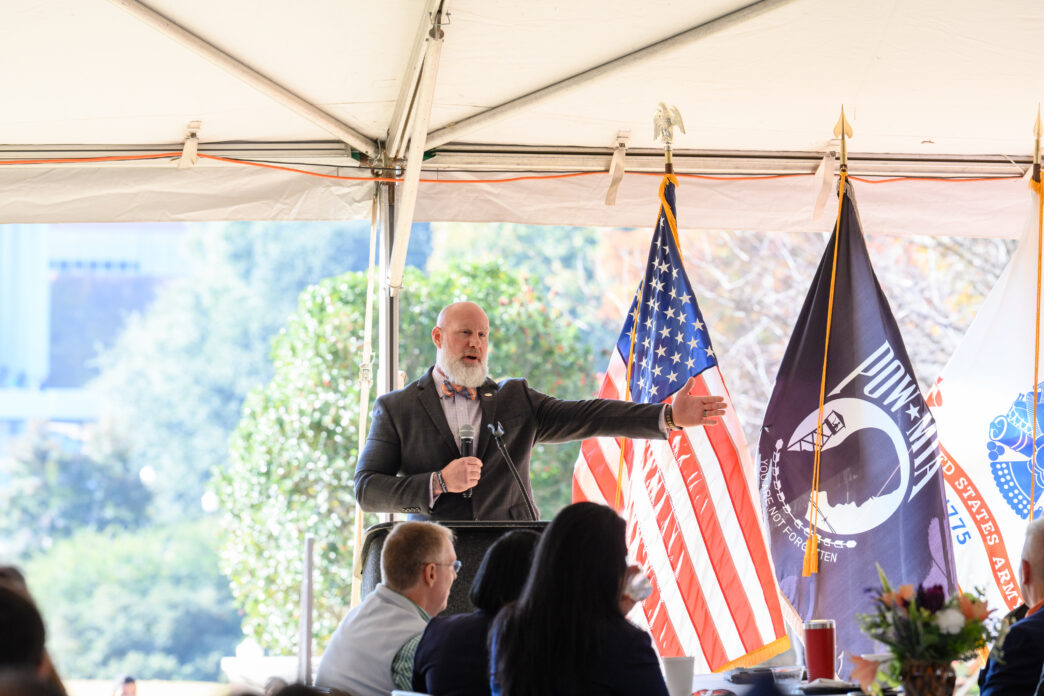
Since his return, LeMay has taken every opportunity to share his story, in the hopes of inspiring players on the team or others around Clemson’s campus. The team ran down the Hill in Memorial Stadium during Military Appreciation Day 2024 behind LeMay, who carried the American flag for the Tigers’ game against The Citadel. Last fall, he was the keynote speaker for the school’s Military Appreciation Brunch, attended heavily by University leaders, faculty, staff, veterans and other military VIPs.
“Jason’s journey is a powerful example of resilience and determination,” says Emily DaBruzzi, director of the Office of Military and Veteran Engagement. “Returning to Clemson after time away takes courage, and he has embraced that challenge with purpose. By connecting with the Student Veterans Association and our office, Jason has found a community that supports and uplifts him — one he strengthens through his own story. His willingness to share his experience will undoubtedly encourage other veterans to take that same step toward connection and success.”
As he prepares to walk the stage, LeMay reflects gratefully on all of the people at Clemson who have supported him throughout his time here, as well as the full-circle experience of returning to such a monumental piece of his story.
“To graduate from Clemson and be a part of Athletics — it doesn’t just change your life. It sets you on a completely different course,” says LeMay, who is moving into a graduate assistant position with the football team after graduation. “So many people here have poured into me, and now it’s my job to turn around and help the next person out.”