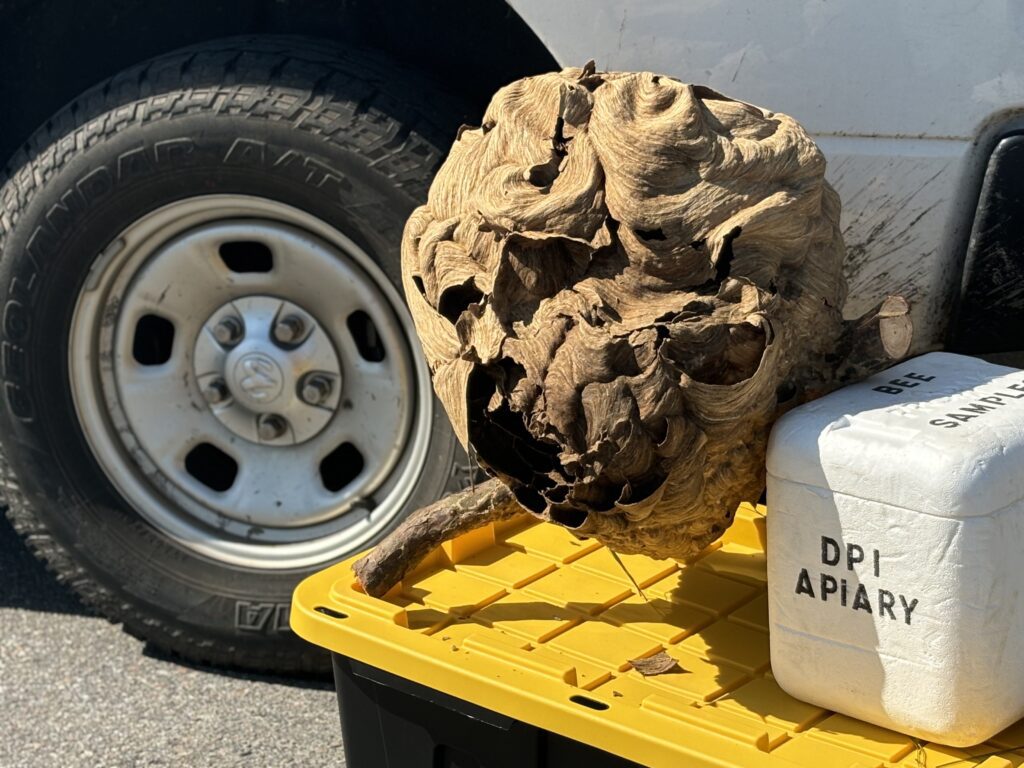
Officials with the Clemson University Department of Plant Industry (DPI) discovered an invasive yellow-legged hornet nest in York County on December 8 after a local beekeeper reported seeing a hornet preying on honey bees. The nest will be removed later this week.
This is the first detection of a yellow-legged hornet or nest in South Carolina outside the Lowcountry. DPI is asking York County residents to remain alert and report suspected hornets or nests.
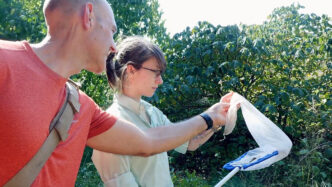
The beekeeper noticed unusually aggressive hornet behavior known as “hawking,” in which hornets hover near hives to capture bees. The beekeeper reported the activity to DPI, the state agency responsible for protecting South Carolina’s agricultural industries from invasive species. DPI inspectors then used trapping and tracking methods to locate the nest.
DPI has been working for more than two years to contain yellow-legged hornets in the Lowcountry. While the York County detection is concerning, Brad Cavin, coordinator of Clemson’s yellow-legged hornet response program, said public reporting remains one of the most effective early-warning tools.
“Thanks to this vigilant beekeeper detecting and reporting the hornet, we were able to quickly follow up and use a system of trapping and tracking to locate the nest,” Cavin said.
Cavin encouraged residents to support ongoing response efforts by reporting suspicious hornet activity and allowing inspectors access to their property. Inspectors can be identified by official badges or Clemson DPI-branded shirts and safety vests.
“We expect to be in the York area for at least the next year, trapping and surveying for any hornets we might have missed. If one of our inspectors knocks on your door, or you see them walking your property or neighborhoods, please remember that they are doing their jobs to protect the state from these hornets and the damage they can do to our beekeeping industry. This will be an ongoing effort,” Cavin said.
It is unclear if the hornets in York County originated from the Lowcountry infestations, but DPI Assistant Director Steven Long said the finding underscores how easily invasive species can spread.
“This latest detection in York County is an important reminder that invasive species are great travelers that can move long distances with the unwitting assistance of humans,” Long said. “This is why we are asking the public to help us in this fight by being engaged and reporting suspicious sightings.”
Anyone who finds a suspected nest or observes hornets “hawking” beehives should report it through DPI’s online reporting tool at clemson.edu/public/regulatory/plant-industry/invasive/ylh.html and include photos if possible. Nests should be left undisturbed, so trained inspectors can remove and dispose of them safely.
Regional partners are also increasing surveillance. The North Carolina Department of Agriculture and Consumer Services is expanding its yellow-legged hornet monitoring through agency-led surveys and a citizen science initiative. North Carolina residents can report suspected sightings at www.ncagr.gov/YLH.
“We are working closely with officials across the Southeast and the USDA to share information and resources in the fight against yellow-legged hornets and other invasive species,” said Stephen Cole, executive director of Clemson Regulatory Services.
The first known detection of a yellow-legged hornet in South Carolina occurred November 9, 2023. The discovery followed a collaborative effort between DPI’s Apiary Inspection Program and the Clemson Cooperative Extension Apiculture and Pollinator Program to establish a proactive trapping protocol designed to detect hornets early. A yellow-legged hornet queen was later trapped March 14, 2024, tested by Clemson’s Plant and Pest Diagnostic Clinic and confirmed by USDA’s Animal and Plant Health Inspection Service.
The yellow-legged hornet — which is not the same as the northern giant hornet — poses no greater risk to humans than other hornets. However, it has been observed nesting on homes and manmade structures.
The most serious concern with the yellow-legged hornet is its potential to damage the already embattled U.S. beekeeping industry.
Yellow-legged hornets are a principal pest of honey bees, having caused increased colony losses in western Europe since their detection in 2004. Their establishment and spread in the U.S. is alarming for beekeepers, who are already reeling from a year in which the nation’s colony loss rate was greater than 60 percent.
“This situation in York County emphasizes why it is critical for beekeepers to be aware of this new pest and how to recognize and report it. It also highlights the role the public plays in helping beekeepers by locating and reporting nests. These hornets do not obey property lines, and a nest that is attacking a beekeeper’s hives may be on a neighbor’s property,” said Benjamin Powell, coordinator of the Clemson Apiculture and Pollinator Program.
Native to Southeast Asia, the yellow-legged hornet builds egg-shaped paper nests above ground, often high in trees but sometimes on manmade structures. Mature nests can be large, containing thousands of workers. In addition to attacking bee hives, the hornet has been observed foraging on various other insects, animal carcasses, dead fish and shellfish, flower nectar, sugar syrups and ripening fruits.
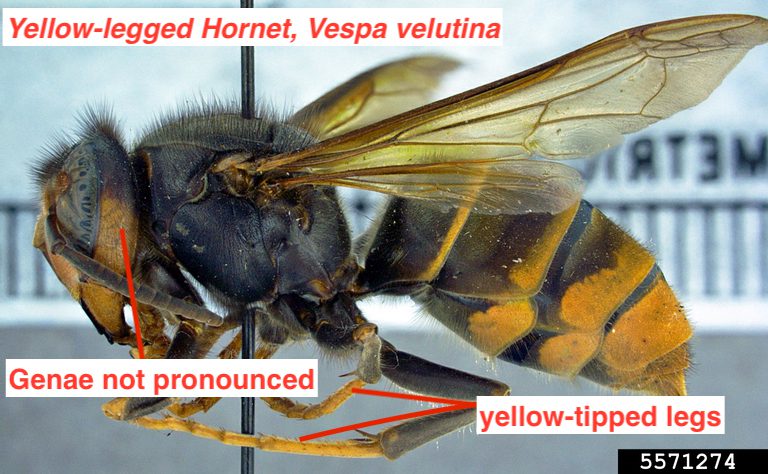
The hornet may be confused with several native insects, including cicada killer wasps, bald-faced hornets, paper wasps, queen yellowjackets, wood wasps, and robber flies, but is typically larger and marked with distinctive yellow legs. For more information on identification and reporting, visit Clemson University resources at clemson.edu/public/regulatory/plant-industry/invasive/ylh.html.