Article by Victoria Musheff
Clemson University Emeritus College
Thomas James Kuehn, Clemson University Professor Emeritus of History and renowned scholar of medieval and Renaissance Italy, is being celebrated by colleagues with the release of Law as Life in Italy, 1200-1800: Essays on Property, Gender, and Legal Practice in Honour of Thomas Kuehn (2026), a Festschrift published by The Centre for Renaissance and Reformation Studies (Victoria University in the University of Toronto).

Serving 39 years as a professor and scholar at Clemson, Kuehn, who retired in 2022, has continued to produce scholarship. Over the course of his career, he published six books, edited another four books, wrote thirty book chapters, crafted ten dictionary, encyclopedia, and bibliographic entries; and published twenty-nine journal articles, two review articles, and one hundred book reviews.
Editors of Kuehn’s Festschrift, William Caferro and Robert Fredona, characterize Kuehn’s body of interdisciplinary scholarship using terms such as unparalleled, discipline defining, and conceptually and methodologically groundbreaking. His work brings to light and life topics of emancipation, illegitimacy, arbitration, patriarchy, kinship, gender, and honor in Premodern Italy, especially Florence, and beyond.
Kuehn earned his Ph.D. under Julius Kirshner, Professor Emeritus of Medieval and Renaissance History at the University of Chicago. According to Caferro and Fredona, Kuehn became an indispensable member of the “Chicago School” of socio-legal history, which pioneered the use of legal texts, especially consilia, as windows into social practice and economic life – particularly in the lives of women. Kuehn is celebrated for his vibrant and inspiring vision and distinctive interpretative approach to law as life.
One-on-One with Thomas Kuehn
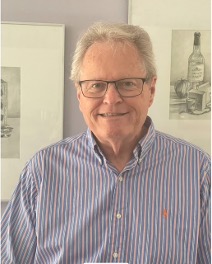
In a recent conversation with Kuehn, he shared that his initial interest in medieval history took hold at Carleton College during an undergraduate class with a history professor he remembered as inspirational and energetic. The intellectual challenge of studying medieval history became irresistible. Equipped with basic skills in the German language and his B.A in History, Kuehn entered the University of Chicago with the intention of training for a career focused on medieval Germany.
In 1974, German universities offered forty fellowships, but Kuehn, who had completed his comprehensive exams at the University of Chicago, bumped up against walls trying to obtain sound guidance from his university’s German scholars. Frustrated, he walked into Dr. Julius Kirshner’s office one afternoon to discuss his troubles.
Kirshner described the dissertation opportunities open to Kuehn in medieval Italy. As Kuehn listened, Kirshner’s idea to study the emancipation of children and the legal powers of the fathers in Italy immediately took root, and he shifted his specialty from Germany to Italy that day in Kirshner’s office. In the US, children reach adulthood at the age of 18. In medieval Italy, a man did not reach independence while his father was alive—unless he was emancipated. Kirshner became Kuehn’s mentor, served as his dissertation director, and authored one of the chapters in the Festschrift.
After receiving his Ph.D., Kuehn taught four years at Reed College in Portland, Oregon before accepting a tenure track position at Clemson University in 1981. In the Department of History, Kuehn served as Acting Chair, 1995-1996, and Chair, 2001-2015. His awards include a $40,000 Research Fellowship from the National Endowment for the Humanities (2003-2004), the Marraro Prize from the American Historical Association (2010) for his book titled Heirs, Kin and Creditors in Renaissance Florence, and the University Research, Scholarship, and Artistic Achievement Award from Clemson University (2018).
Kuehn reflected on his career and stated that he never had a moment as a professor or administrator where he thought, “I should have done something different.” He genuinely thrived, enjoying every aspect of being a professor and academic, finding mentoring others particularly rewarding. Developing lifelong relationships is something he values immensely.
In the late 1990s, Kuehn met the love of his life, Teresa, in Clemson. Teresa was an educator in School District of Oconee County. After a 13-year courtship they married in 2009 and combined their families, including Tom’s daughter Allison and Teresa’s children, Jessie, David, Timmy and Chelsea. Luckily, they didn’t all live with them at the same time! Both retired now, Teresa is still Tom’s most ardent supporter.
When asked about his reaction to receiving a Festschrift, he replied, “It is intensely gratifying to have one’s work and career honored by such a group of colleagues. And make no mistake, that is an impressive collection of renowned scholars—American, Canadian, and European.”
There will be a presentation event for the book at the annual Sixteenth Century Conference in Chicago at the end of October.