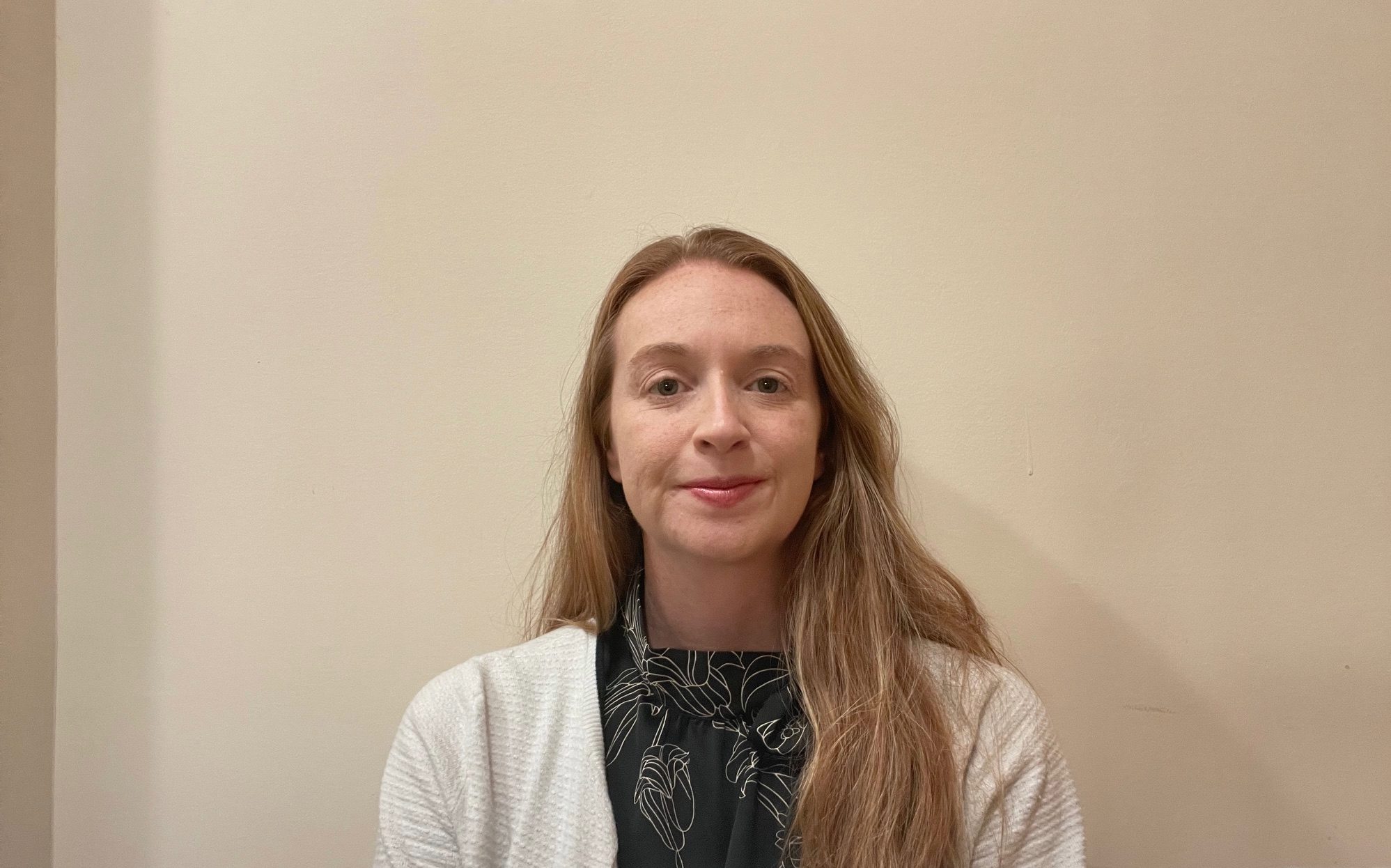


Tracy Fasolino, nursing professor and distinguished palliative care leader, has completed a year-long, residential Health and Aging Policy Fellows Program in Washington, D.C.
Fasolino was chosen for the residential program based on her commitment to making a positive difference in the lives of older Americans, leadership potential and interest in health policy. Funded by grants from the John A. Hartford Foundation, West Health and the Atlantic Philanthropies, the program provided a year of financial support, career and networking opportunities and immersive, hands-on experience in policy and decision making.
Fasolino spent six weeks in an interdisciplinary orientation designed to familiarize Fellows will all aspects of aging policy. After orientation, she was selected for a position in Senator Tim Kaine’s office through a competitive multi-interview process and served under the mentorship of Samantha Koehler, Kaine’s senior health policy advisor, for the remainder of the Fellowship.

In her role, Fasolino used her analytical skills and clinical experience to interpret legislation and became a subject matter expert on the Over-the-Counter Monograph Drug User Fee Program (OMUFA), reading 750 pages of legislation and conducting more than 180 constituent meetings. The bill passed the Health, Education, Labor and Pensions Committee (HELP) and was signed into a continuing resolution with bipartisan support.
“Serving as a Health and Aging Policy Fellow was a transformational experience. The year-long program pushed me to grow in ways I never anticipated – it deepened my understanding of complex aging and health issues, enhanced my leadership skills and bolstered my commitment to policy,” said Fasolino. “I left the program more confident, informed and determined to champion policies that improve the lives of older adults and the communities that support them nationwide.”
In addition to legislative work, Fasolino said she considered the legacy of her Fellowship and the influence of health policy in rural America. Drawing from her strengths as a nurse practitioner and professor working in rural Appalachia, she embarked on a policy mapping analysis project in partnership with the National Rural Health Association, examining bills related to rural health care and workforce shortages and categorizing them by theme. She is currently working on a manuscript about the project for the Journal of Advanced Nursing.
“Dr. Fasolino is an incredible scholar and leader in the field of nursing, and her unwavering commitment to rural communities, aging populations and high-quality patient care drives her passion for health policy,” said John Whitcomb, director and chief academic nursing officer of the Clemson University School of Nursing. “She accomplished much during her time as a Fellow, and I am confident her work will continue to make a positive difference in the lives of people and communities across South Carolina and beyond for many years to come.”
The School of Nursing is a part of the College of Behavioral, Social and Health Sciences. Established in July 2016, CBSHS is a 21st-century, land-grant college that combines work in nine disciplines – communication; nursing; parks, recreation and tourism management; political science; psychology; public health sciences; sociology, anthropology and criminal justice – to further its mission of “building people and communities” in South Carolina and beyond.