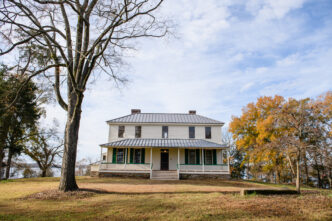


Two of Clemson’s historic properties — Hanover House and Hopewell Plantation and Treaty Site — have been named to the Liberty Trail, a network of historic sites along the east coast designated by the American Battlefield Trust that commemorate the upcoming 250th anniversary of the American Revolution.
Hanover and Hopewell were added to the trail after two visits from representatives from the American Battlefield Trust. These trips included tours of Hopewell Planation and the Treaty Oak site, Hanover House, Fort Rutledge, and Old Stone Church. Historic Properties staff as well as history professors Josh Catalano and Rod Andrew helped contextualize the history of these properties.
“As we head into the semiquincentennial, it’s exciting to see Hanover House and Hopewell added to the Liberty Trail. These sites help tell the story of the Upstate’s role in the American Revolution and being added to the trail puts that history directly into people’s hands,” said Naomi Gerakios Mucci, director of historic properties. “The Liberty Trail app creates an easily accessible opportunity for statewide storytelling, highlighting South Carolina’s role in the revolution. Our sites help tell the story of colonial America through the early Republic. I am proud that this partnership allows us to highlight the University’s stewardship of its Revolutionary landscapes and structures.”
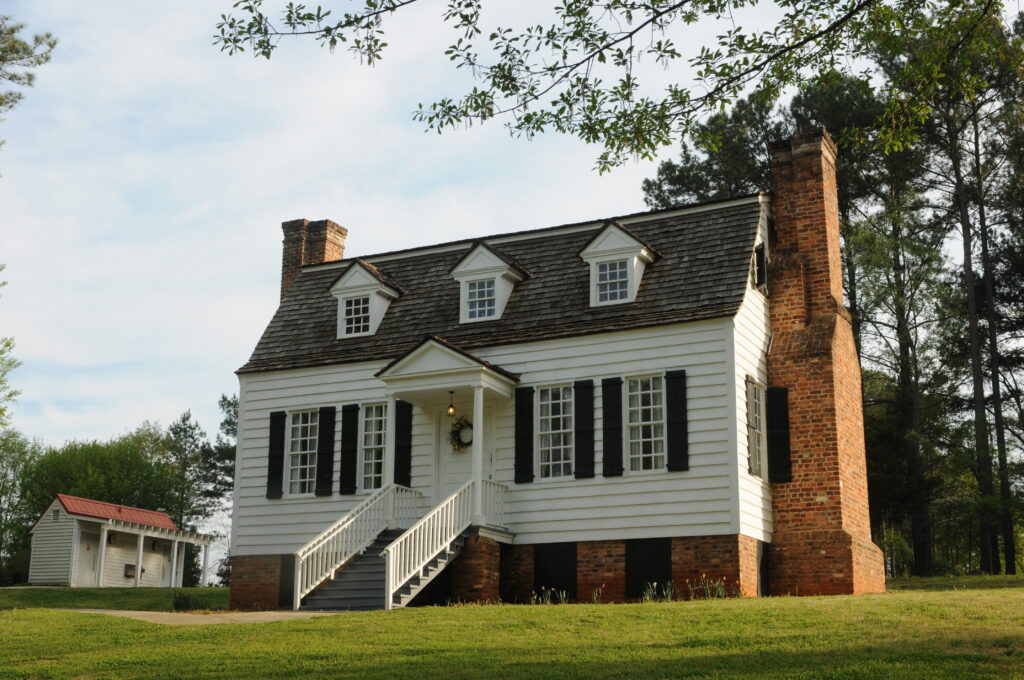
Hanover House was built between 1716 and 1730 for French Huguenot Paul de St. Julien in Berkeley County, South Carolina. It is one of the oldest examples of an early French Huguenot colonial house still standing in the country. In the 1940s when the Cooper River was dammed to create Lake Moultrie, the house was dismantled and moved to the campus of Clemson University to save it. In 1994, it was moved to its current location in the South Carolina Botanical Garden where it was opened to the public as a museum. Hanover House is listed on the National Register of Historic Places. Hanover House is open Monday to Saturday (except for home football game days) from 10 a.m. to noon and 1 to 4:30 p.m. and on Sunday from 2 to 4:30 p.m.
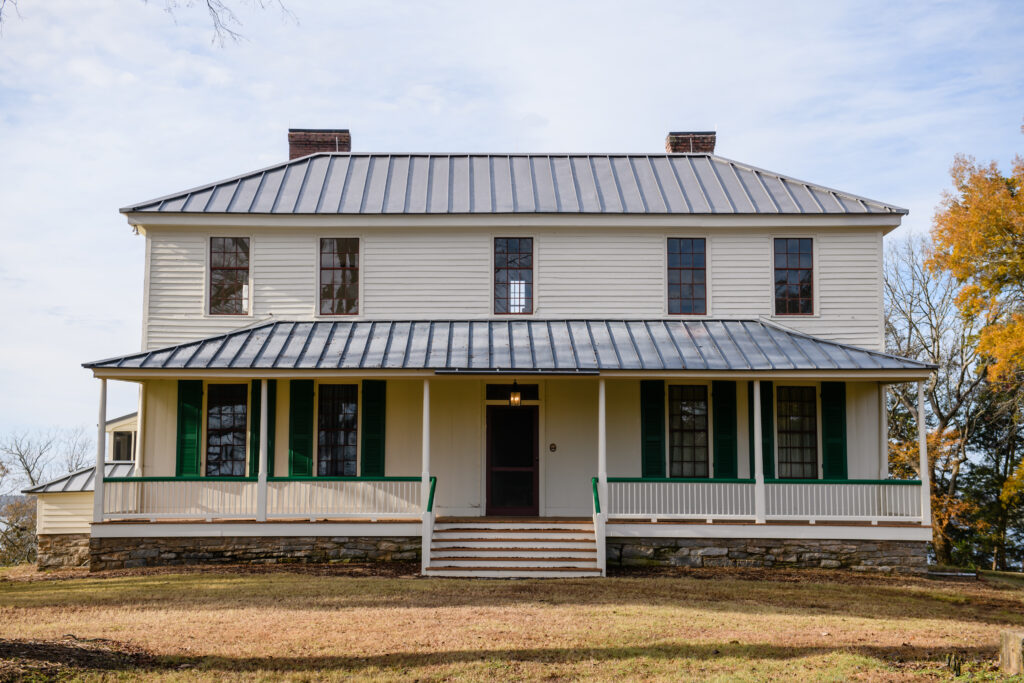
Hopewell Plantation and Treaty Oak site is located on land once home to the Cherokee Lower Town of Esseneca. The Hopewell landscape is a significant revolutionary site in the Upstate’s history. Around 1785, General Andrew Pickens built a log cabin structure near the present-day Hopewell house. He is credited with naming his home and the land, “Hopewell.” While this home is no longer standing, it was where his family lived when the Hopewell Treaties were signed between the United States of America and the Cherokee (November 28, 1785), the Choctaw (January 3, 1786), and the Chickasaw (January 10, 1786), respectively. The current house was built around 1815 by his son and South Carolina Governor Andrew Pickens Jr. Visitors are welcome to visit the grounds of Hopewell, and tours of the home are available by appointment only.
Founded in South Carolina in 2019, the Liberty Trail network has expanded to also include sites in Massachusetts, New Jersey and Virginia. The website and accompanying free mobile apps allow people to plan trip itineraries and tours to visit sites and learn from interpretive tools about the places they are visiting. Visit https://thelibertytrail.org to learn more.