
Are you curious about horseback riding or interested in getting back into riding? Are you considering adding a horse to your family? Dr. Nicki Wise, Associate Dean of Academic Affairs, explains the process, including the importance of the pre-purchase exam and why it is a vital step in this process.
Buying or leasing a horse can be one of the most rewarding experiences in a person’s life. Horses inspire confidence, reduce stress and offer a variety of ways to stay active while spending time with your 1000-pound best friend. Yet, horse ownership requires careful planning, financial commitment and an understanding of required ongoing care.
Whether you’re a first-time owner or an experienced rider considering a new mount, taking the right steps early can ensure a healthy partnership for both horse and human.
“Buying or leasing a horse isn’t just a financial decision,” said Dr. Wise, who is also an Equine Veterinarian. “It’s a commitment to stewardship and partnership. With careful preparation, sound veterinary advice and a strong support network, you’ll be ready to build a safe, healthy and rewarding relationship with your new companion.
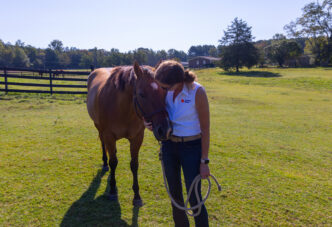
Dr. Wise recently decided to lease Rags, a 14-year-old Quarter Horse gelding for her family. “Once we knew that Rags’ experience, riding style and personality were a fit for us, the next step was to have him undergo a thorough pre-purchase exam.”

A pre-purchase exam, conducted by an equine veterinarian, gives you an objective assessment of the horse’s current health, soundness, and long-term potential. Typically, the future owner (buyer) is responsible for organizing the exam. If possible, it is ideal for both the current and future owner to be present during the exam.
Depending on your goals and the individual horse, you veterinarian may recommend:
- Review of previous medical records
- A full physical examination
- Lameness evaluation
- Bloodwork
- Diagnostic imaging (radiographs, ultrasound, endoscopy) if indicated
Additionally, your veterinarian may recommend that a farrier visit the horse as well to ensure there is a plan for ongoing hoof care.
“When purchasing a horse, the exam results allow the new owner to be fully informed about any ongoing or potential future health concerns the horse may have. For leases, the exam ensures both parties are clear about the horse’s current condition, allowing for management considerations to be included in the lease agreement.”

For help with Rags’ exam, Dr. Wise worked with Dr. Callie Fogle and Dr. Shawn Williamson to give an objective overview of the horse’s health. The buyer should be clear with the veterinarian about their goals for this horse.
“Going into this commitment, knowing Rags’ complete health picture is invaluable. He is now adored by our two kids who keep him very busy!”
More information about pre-purchase exams can be found at www.aaep.org