

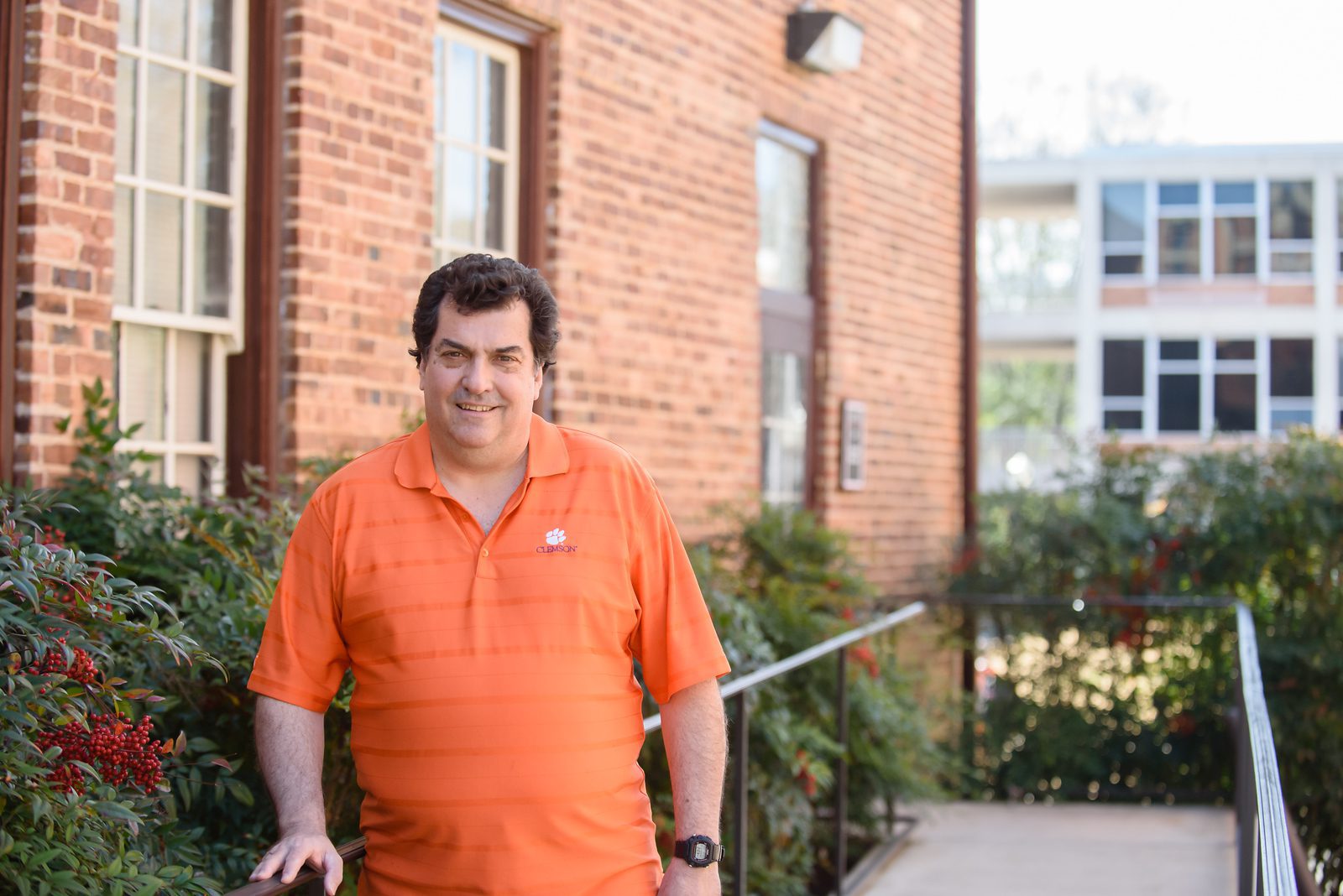
Clemson Expert Profile
Michael Childress
Associate Professor, Forestry and Environmental Conservation Department and Biological Sciences Department
At A Glance
Marine communities are one of the most threatened ecosystems on the planet, as changes in water quality and rising temperatures are having major impacts on these important communities and the fisheries they support. Coral reefs are becoming increasingly damaged, also known as coral bleaching. Clemson University expert Michael Childress provides in-depth insight into how marine heat waves impact the health and function of coral reefs and marine life. Childress’ research focuses on understanding the impact of habitat loss on the conservation of marine communities.
The oceans are really a very important balancing force in our planet. If it were not for the oceans, the planet would either be extremely hot or extremely cold and would cycle very rapidly between the two.
Bio
Michael Childress is an associate professor of biological sciences and environmental conservation at Clemson University. As an evolutionary behavioral ecologist, he studies the impact of behavioral adaptations in marine animals. He teaches courses in marine ecology and climate sustainability and supervises a marine science research program for graduate and undergraduate students in the Florida Keys National Marine Sanctuary located in Islamorada, Florida.
Childress’ teaching and research focus on understanding the impact of habitat loss and the conservation of marine communities. Additionally, he explores how marine heat waves impact the interactions between coral health and coral reef fishes as well as studies the impact of habitat loss and drought on blue crabs, lobsters and reef fishes along the southeastern US.
Through a combination of field surveys, manipulative experiments, laboratory behavioral observations and individual-based modeling, his research attempts to build models that can accurately forecast the response of these species to future changes in climate and habitat quality.
Highlights
- Marine life
- Ecology
- Oceans
- Coral Reefs
- Marine heat waves
Degrees, Institutions
- Ph.D. in Biological Sciences, Florida State University
- M.A. in Zoology, University of California at Berkeley
- B.S. in Biology and Marine Science, University of Tampa