Plastic plays a role in nearly every part of daily life. It protects food, cushions products during shipping and helps keep goods affordable and accessible. But once those products are used, many plastic materials end up in landfills, where they can remain for decades.
James Sternberg, an assistant professor in Clemson University’s Department of Food, Nutrition and Packaging Sciences, is working to help change that. His research focuses on creating packaging materials that not only perform well during use but also have a more sustainable future after disposal.
Supported by a five-year award from the National Science Foundation’s Faculty Early Career Development (CAREER) Program, Sternberg is leading a project that aims to develop biodegradable plastics, improve recycling technologies and prepare the next generation of scientists to create more sustainable materials.
“The way we design plastics has traditionally focused on how they perform during use,” Sternberg said. “We should also consider what happens to the material when its useful life is over.”
The challenge is significant. Global plastic waste has more than doubled during the past two decades, with packaging accounting for a large share of that waste. As consumers, businesses and communities seek ways to reduce environmental impacts, researchers are looking for packaging materials that can remain useful while generating less waste.
The National Science Foundation CAREER Program is the foundation’s most prestigious award for early-career faculty. It supports researchers who demonstrate the potential to serve as academic role models and leaders in research and education.
Breathing new life into packaging
Sternberg’s work centers on building a more circular economy, where materials are reused, recycled or composted instead of being discarded after a single use. Rather than following the traditional “make it, use it, throw it away” model, his team is designing materials with their entire life cycle in mind.
The project has three primary goals:
- Develop safer plastics from renewable resources that can biodegrade through composting.
- Create foams that can be manufactured more safely at room temperature.
- Improve the value and performance of recycled PET and PLA plastics.
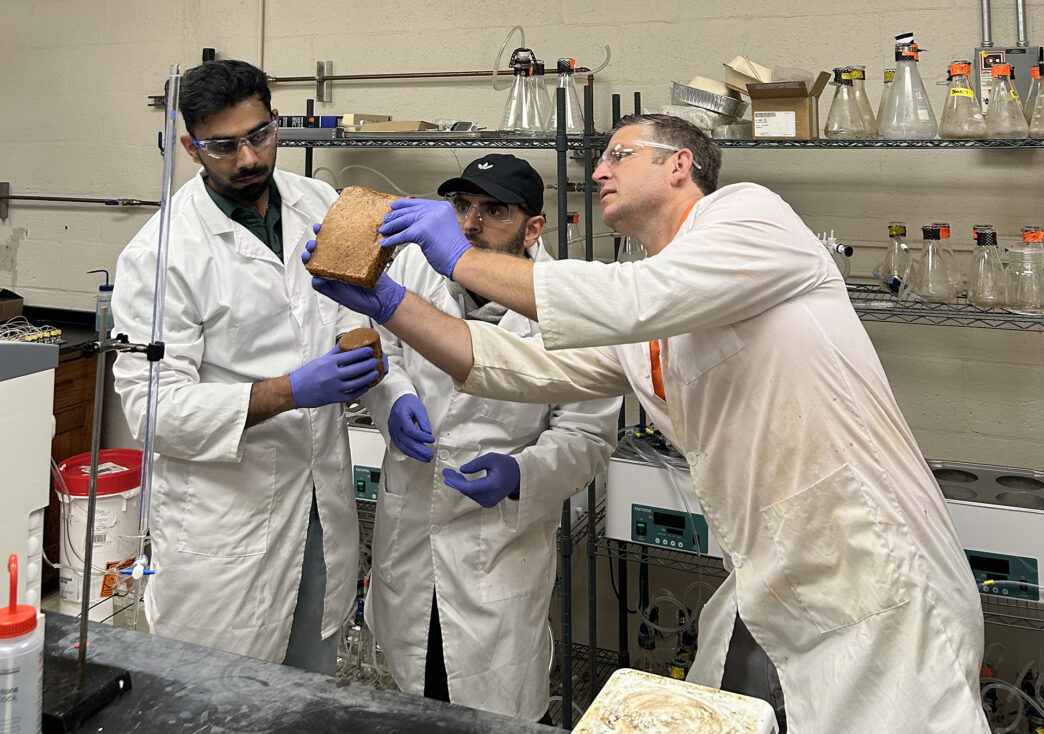
Researchers are exploring how materials derived from crops, vegetable oils, glycerol, lignin, cellulose and forestry products can be used to create new types of plastics for films, foams and adhesives. Their goal is to produce materials that work effectively during use and then break down in industrial or household composting systems.
“Packaging represents almost half of non-fiber plastic production,” Sternberg said. “After it’s used, it’s thrown into the trash and eventually ends up in landfills. During this study, we’re going to consider what happens to the material when its useful life is over.”
The team is also investigating ways to improve recycled polyethylene terephthalate, or PET, the material commonly used in many food and beverage containers. By replacing traditional recycling chemicals with alternatives derived from renewable resources, researchers hope to create recycled plastics with greater value and performance.
Those innovations could benefit more than the packaging industry. New uses for agricultural and forestry-based materials could create additional opportunities for producers while helping make recycled plastics more attractive to manufacturers.
“Turning discarded PET into better-performing materials could make recycled plastic more economically valuable,” Sternberg said.
Researchers are also seeking to improve PLA, a compostable plastic made from renewable resources. While PLA offers environmental advantages, it can be less durable than traditional plastics. Improving its performance could make it a practical option for a wider range of packaging applications.
Students drive sustainable solutions
The research is also giving Clemson students opportunities to tackle real-world challenges.
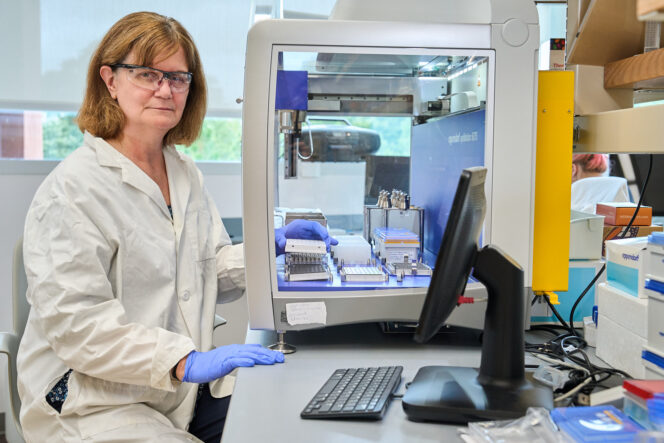
Doctoral student Marzieh Akrami is developing plant-based, biodegradable adhesives that could be used on produce labels. Her work focuses on ensuring the adhesives perform effectively while attached to fruits and vegetables and degrade more sustainably after disposal.
“I also test the materials to determine whether they can adhere effectively to fruit surfaces and be removed cleanly without leaving visible residue,” Akrami said.
She is studying how molecular structure influences biodegradation and exploring ways the technology could be applied to flexible food packaging.
Akrami said her research experience has allowed her to combine polymer science, packaging and sustainability while contributing to solutions that could have a broad impact.
“Because packaging is produced and discarded in such large quantities, even small improvements in materials can make a difference,” she said. “My current work on biodegradable adhesives reflects that goal, creating adhesives that perform effectively during use while leaving a smaller environmental footprint after they are discarded.”
Beyond the laboratory
A major part of this project involves training people, not just inventing materials.
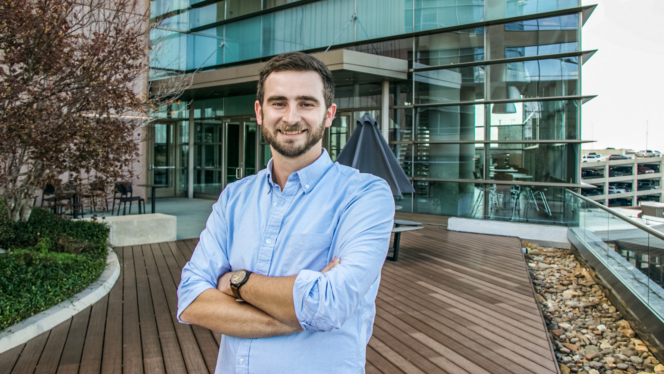
James Sternberg
Ramesh Jeganathan, chair of Clemson’s Department of Food, Nutrition and Packaging Sciences, says the collaboration between Sternberg and Akrami demonstrates the department’s commitment to combining research excellence with student development.
“I am particularly pleased to see how this project brings together cutting-edge research and student development,” Jeganathan said. “Dr. Sternberg is advancing important work in sustainable packaging while giving students like Marzieh meaningful opportunities to develop their research skills and contribute to solutions for real-world packaging challenges.”
The project’s impact extends beyond research. Plans include mentoring opportunities, webinars, educational resources for high school students and teachers, and hands-on research experiences for Clemson students. The team also intends to share findings with industry professionals and help companies learn more about reusable, recyclable and compostable packaging options.
“A major part of this project involves training people, not just inventing materials,” Sternberg said.
By focusing on both innovation and education, the Clemson team hopes to help shape a future in which packaging serves consumers effectively without becoming a long-term environmental burden.