
The Harvey S. Peeler Jr. College of Veterinary Medicine at Clemson University has been built on connections. The effort to build the state’s first college of veterinary medicine has brought Clemson, state lawmakers, veterinary professionals and aspiring veterinarians together to benefit people and their animals.
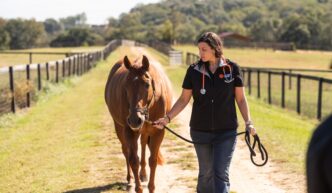
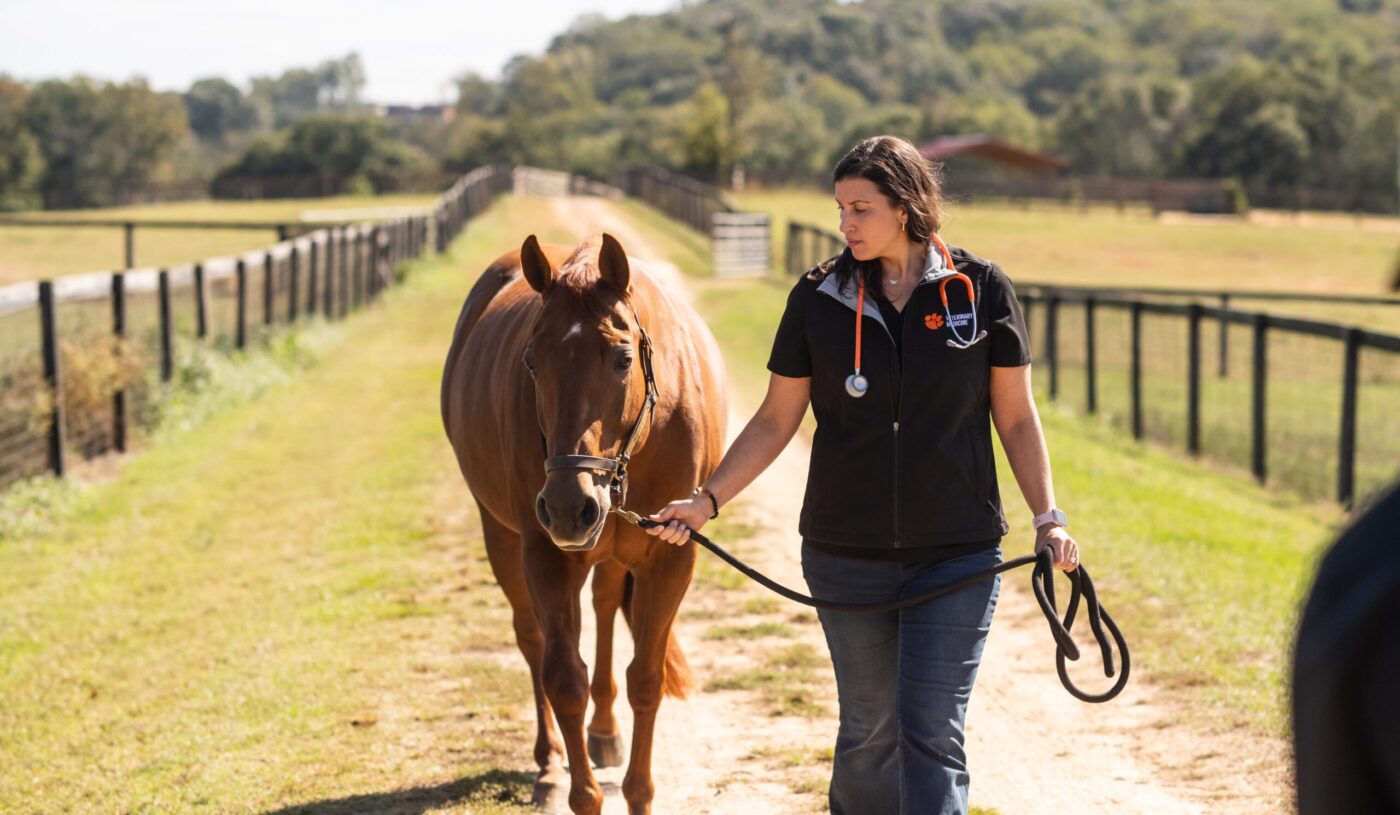
The effort wouldn’t be possible without dedicated faculty and staff working toward the same goal. Lisa Ebner is among the college’s founding faculty members. Ebner’s Clemson connection began while growing up in the Southeast. Raised in nearby Asheville, North Carolina, her love of animals was seeded by a thoroughbred ex-racehorse named Chief, who belonged to her family and faced recurring medical issues beginning when she was in sixth grade. Ebner devoted hours to his care at nearby Biltmore Estates barns, gaining early insight into the work, compassion and science of veterinary medicine.
“I saw early on how the veterinarian was so devoted and how gentle they were with my horse,” she recalls. “I really liked the interaction I had with our vets. If you could not only help the animal but help the people as well, it meant more.”

Ebner started shadowing at a small animal clinic and mucking barn stalls to pay for Chief’s boarding. Today, as a clinical professor, she is helping shape the College’s veterinary curriculum for the first class of South Carolina students. Her expertise is in anesthesia, acupuncture and rehabilitation as well as clinical consulting, bringing a combination of research and teaching experience to the College.
“The human-animal bond is core to everything we do,” Ebner explains. “Veterinarians are trained to recognize the signs of pain, distress and discomfort in all kinds of animals. We need to think critically, often outside of the box of the human understanding of pain and discomfort.”
Build something new
The Harvey S. Peeler Jr. College of Veterinary Medicine is the first in South Carolina and will welcome its inaugural class of 80 students in 2026. By 2029, these students will enter their clinical training year, serving communities statewide. They will spend the clinical year rotating to different veterinary clinics and specialty hospitals, refining their skills in a real-world setting.
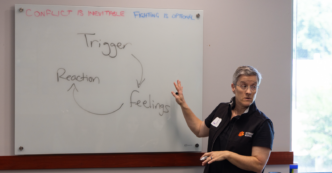
For Ebner, this role is the culmination of years of preparation. She taught in the Caribbean, launched a new veterinary program in east Tennessee, taught in west Texas, and has consulted and worked in practices across the South. Few people have the opportunity to build a vet school from scratch once, much less more than once, Ebner says. She can’t wait to take what she learned from her past experiences to improve veterinary education and elevate Clemson University by establishing a professional program on campus.
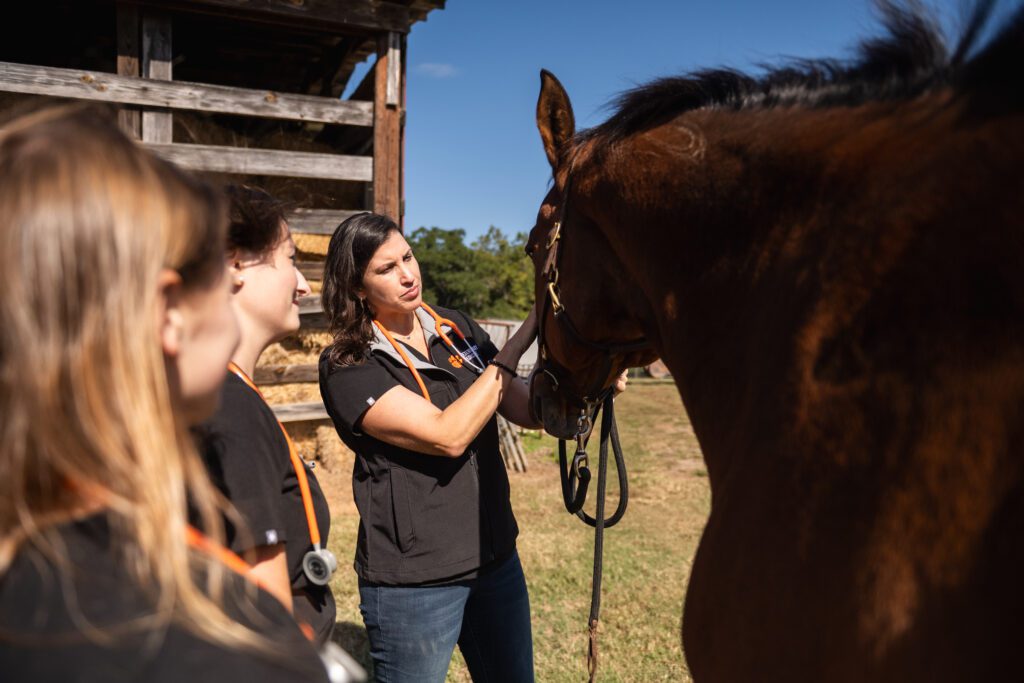
“This is my dream job,” she says. “At Clemson, we’re in a year of creative flow, bringing together an amazing team. There’s so much I’m ready to teach. I know why I’m here.”
Lisa’s Journey
- Grew up in Asheville, North Carolina, inspired by caring for her horse, Chief, a chestnut thoroughbred and ex-racehorse
- Earned her DVM and M.S., became board-certified in anesthesiology (DACVAA)
- Practices acupuncture and integrative medicine
- Helped launch a new veterinary program in east Tennessee and in west Texas.
- Now a clinical professor at Clemson’s Harvey S. Peeler Jr. College of Veterinary Medicine
- Husband, Andrew; daughter, Sadie
- Animals: Three cats (MJ, Lola and Pickles), one dog (a Scottish Terrier named Archie) and one rabbit (named Wednesday), who is currently being treated for glaucoma
- Hobbies: Exploring new hiking trails, kayaking and biking; yoga; drinking coffee with friends; and cultivating plants and food finds from local farmers markets
Mission beyond medicine
Veterinary medicine isn’t just about treating animals. It’s about helping families, supporting farmers and communities, and protecting public health. South Carolina has a shortage of veterinarians, particularly in rural areas. Clemson’s program is designed to meet that need, preparing graduates to enter underserved regions, large animal practices and community-based clinics.
The program will combine lectures, labs and hands-on active learning in a state-of-the-art facility on a new Pendleton, South Carolina-based campus, adjacent to the Clemson Equine Center. Ebner emphasizes the importance of balance for veterinary students.
“Veterinary medicine curriculum is rigorous and vast. That challenge pushes students to grow,” she says. “The faculty and staff will model resilience and well-being to our students. You have to take care of yourself to be there for animals and the people who depend on you.”
Well-being initiatives will be tailored to fit the needs of students. That could look like hosting a yoga class on the new campus or having a paint-your-pet group social event to building consistency in the scheduling so that there is built-in time that allows for flexibility for students to take care of life outside of their studies. Prioritizing balance is an important part of the student experience and just one of many things to be excited about as the College begins accepting applications.
“Being the first class is a really exciting opportunity to be part of shaping history,” Ebner says. “Hopefully, our students will go back into their communities and do exactly what we need in South Carolina, benefiting undeserved areas with people who want to be there and who want to help.”
With leaders like Ebner, Clemson’s Harvey S. Peeler Jr. College of Veterinary Medicine is more than a new academic program. It’s a promise to serve and protect the people of South Carolina.
“This school will be a resource not just for students but for veterinarians and communities across the state,” Ebner says “Our large animal ambulatory (mobile) services will be able to help farms in the area, and our small animal community clinic will help those with income challenges care for their pets. We are excited to soon be able to help support the care of large and small animals in the area while providing learning opportunities for students.”
The Harvey S. Peeler Jr. College of Veterinary Medicine at Clemson University. Because the future belongs to those who care for it.

Impact for South Carolina
Clemson’s Harvey S. Peeler Jr. College of Veterinary Medicine will provide lasting benefits across the state:
Improved access to care: More veterinarians will practice in underserved and rural regions.
Clinical partnerships: Local veterinarians can collaborate with Clemson faculty on complex cases.
Research innovation: Translational work will inform treatments for both animals and humans.