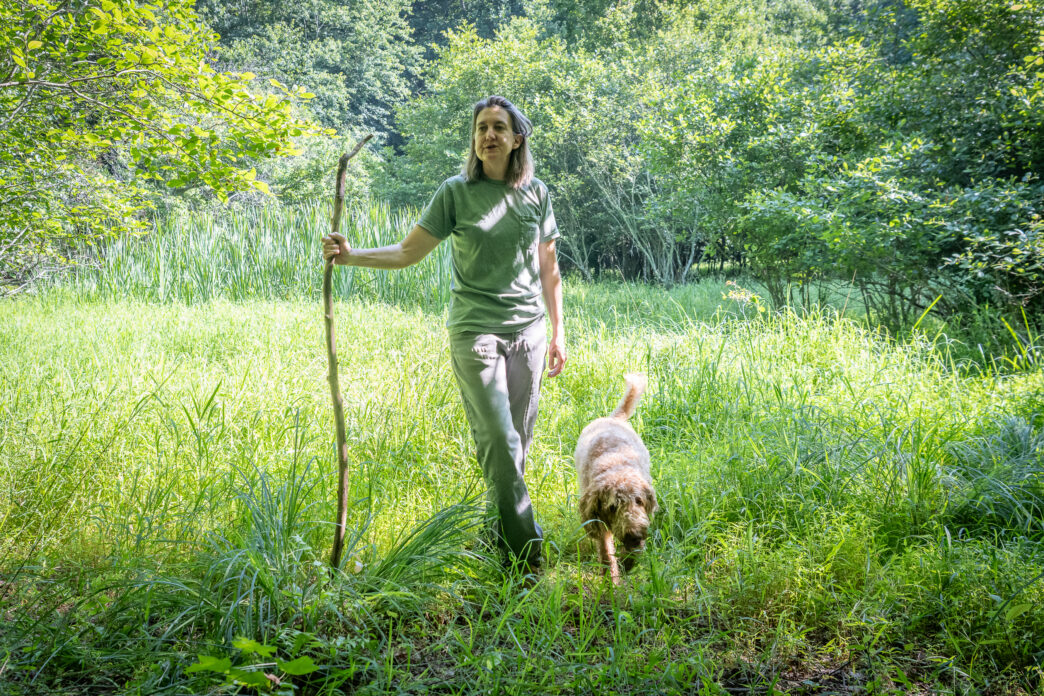
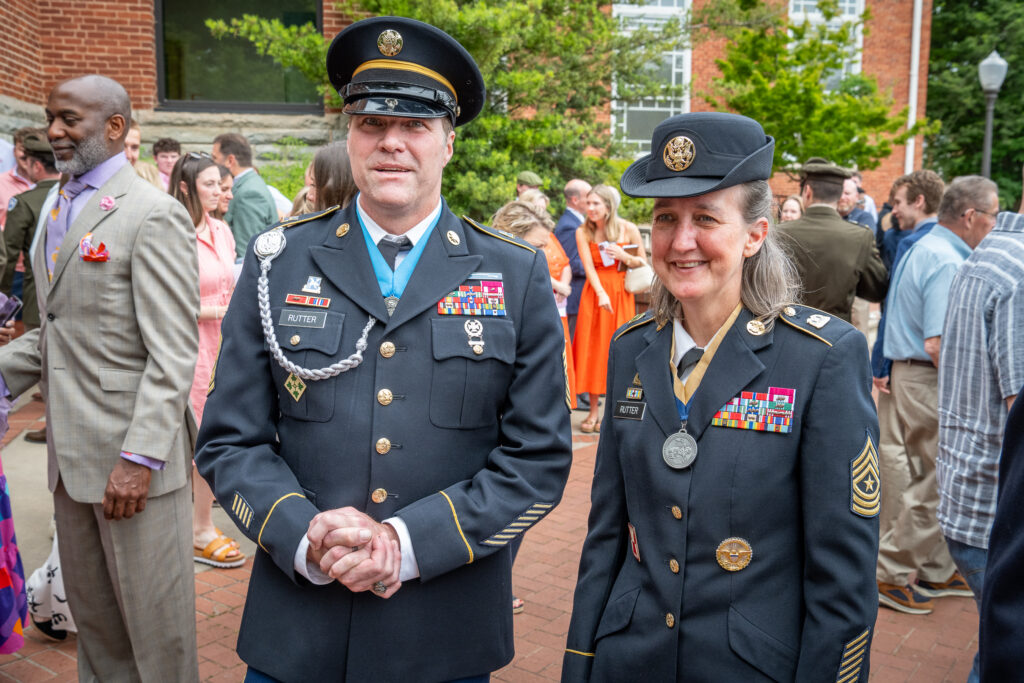
Matt M’22 and Kara Rutter both are retired U.S. Army veterans. He was a command sergeant major — the second-highest enlisted rank in the Army (only the Sergeant Major of the Army being higher), and she served as a sergeant major. Combined, they gave more than 45 years of service to their country, including five deployments to war zones in Kosovo, Iraq and Afghanistan.
Today, they continue to serve their fellow veterans, but in a wholly new way: by teaching them how to succeed as farmers.
The couple, both current Ph.D. candidates at Clemson (he is pursuing a degree in Policy Studies in the Department of Political Science, and she is studying agritourism in Parks, Recreation and Tourism Management), fell into farming by accident during the COVID-19 shutdowns in 2020, the same year they both retired to a small ranch in Aiken, South Carolina.
“Matt’s change of responsibility ceremony (during COVID) should have had a whole battalion there, but it was just eight of us,” says Kara. “We had a huge retirement party planned, and we had to cancel all of that. And we had three teenagers in the house!”
Kara’s daughter, Maura, and Matt’s nephew, Evan, were both 17 and juniors in high school. Kara’s son Rob, 20, came down from New York to join them during the lockdown, and suddenly there were three young people under their roof with a lot of time on their hands.
“We had to find something to keep them busy and engaged, so we started building a fence,” Kara explains. “We built like five miles of fence around our place in Aiken and went from there.”
Once the fence was done, they bought some “practice animals,” six goats, five pigs and some quail to add to the chickens and ducks they already had, to keep the teens busy and engaged.
Before they knew it, they were helming a legitimate farming operation. Their lockdown journey was going great, but as two brand-new retired veterans, something was missing.
“Halfway through the summer, we realized that we missed our brothers and sisters in arms, the people that we were more comfortable around,” says Matt. “We were a farm, one of the only things open, so we just started inviting veterans out, just to have coffee and do a few chores. And that’s how this whole thing started.”
Purpose-driven producers
Those spontaneous meet-ups soon took on a deeper meaning. Matt and Kara began to see profound changes in the veterans they invited to their ranch. Something about the routine and physical labor of a farm clicked with many of them.
They began researching the little-known world of veteran-led farms. What they found was a landscape full of possibilities.
According to the USDA 2022 Census of Agriculture, the average age of U.S. farmers is 58, creating a critical shortage of people entering the agriculture industry. At the same time, approximately 200,000 U.S. service members leave the military and transition back into civilian life each year following two decades of sustained war. Many of those veterans have followed a calling to be stewards of the land they risked their lives to protect.
“A lot of us [veterans] get out of the service, and we isolate ourselves, and the loneliness that comes with that can be dangerous,” says Matt. “It’s not good for the soul. But working the land is good for the soul, and we wanted to give more veterans a chance to make their living doing it.”
The Rutters moved from Aiken to a 75-acre plot of forested land that butts up against Lake Hartwell to be closer to Clemson in December 2021, named it Rutter’s Ranch, and doubled down on their commitment to helping veteran farmers.
The business of farming
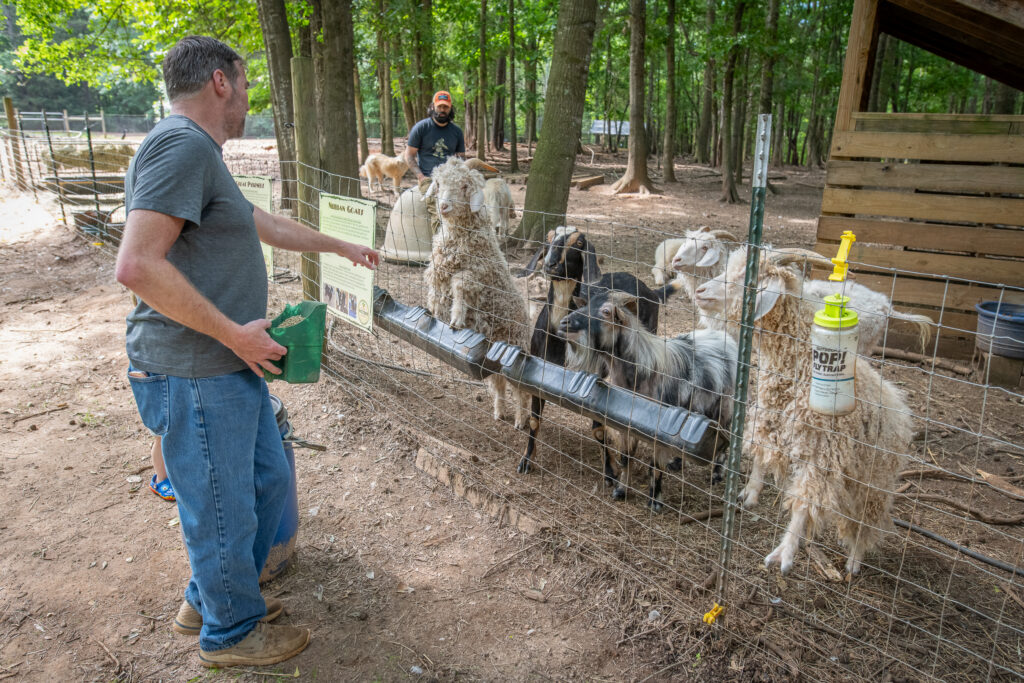
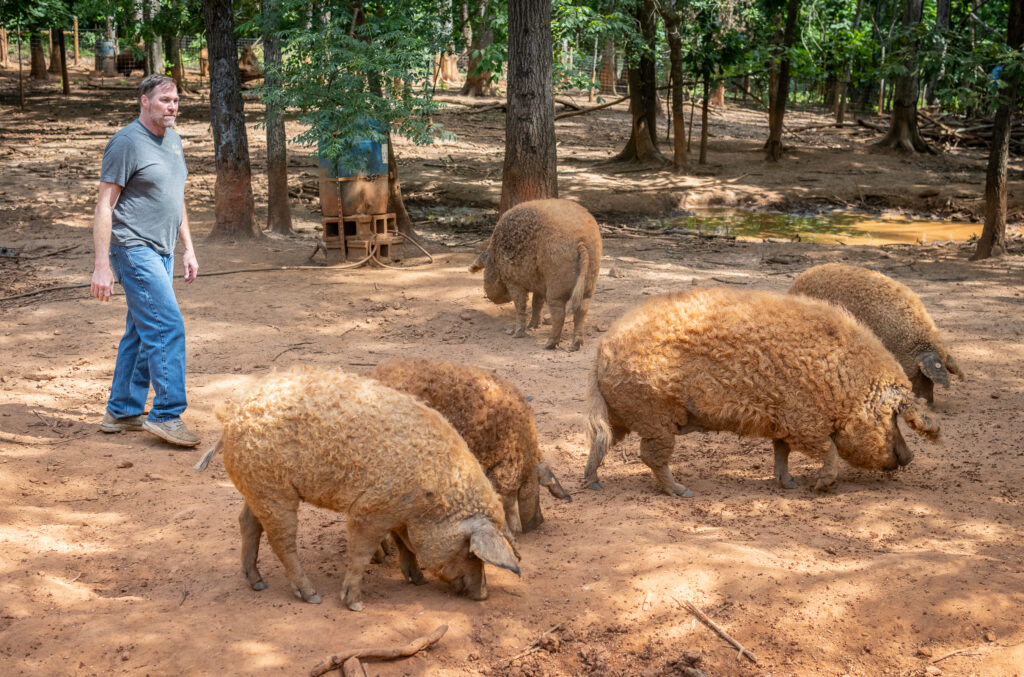
Rutter’s Ranch is an unexpected oasis at the end of a narrow country road that weaves through corn fields and alfalfa pastures just off Interstate Highway 85. Miles of country roads snake across the property through lush groves of oak and pine trees. A stroll from the main house takes you up a dirt road, past a Clemson Orange barn and through a grassy field flanked by an expansive corral that holds the Rutters’ herd of gigantic woolly Mangalica pigs on one side; another holds goats, turkeys, ducks and a cantankerous alpaca named Charlie on the other side.
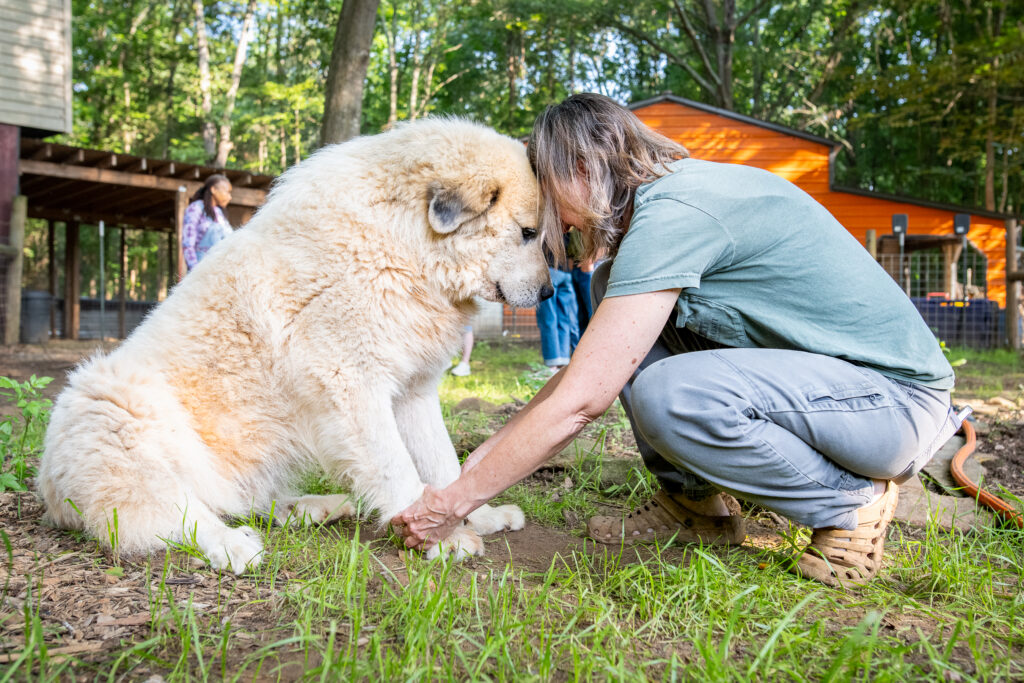
This is where Matt and Kara combine their considerable skills in agricultural education, land management, tourism and leadership to provide world-class, hands-on learning for veterans interested in making a living in the agricultural sector. The most important lessons are learned in the window-filled classroom they’ve constructed on the side of their house. Business planning and marketing are at the top of the syllabi for almost all the programs offered at Rutters Ranch, and for good reason.
“I’m not going to say it’s easy, but most veterans who try getting into farming can tend to animals and grow a crop, but they’re not good at the business part of it,” explains Matt, whose father, Eric Rutter, earned a degree in poultry science from Clemson in 1977. “Nobody becomes a farmer because they like doing paperwork. So, we teach them that side of it and show them it’s not as daunting as they might think it is.”
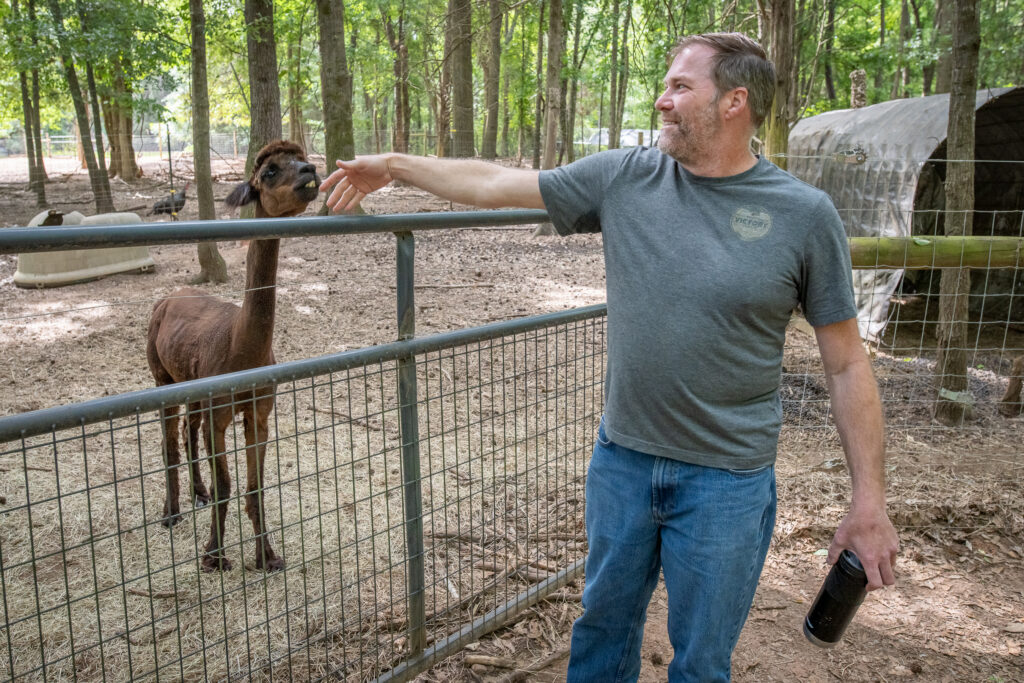
The Rutters operate several different outreach programs from their farm, which are funded in part through a grant from the USDA that includes a sub-grant with Clemson Extension:
Project Victory Gardens, a veteran-led non-profit that teaches resiliency, healing and renewed purpose through agritherapy, animal therapy and agricultural education. It aims to foster community, restore confidence and reignite the drive and mission that defines military service by connecting veterans with meaningful agricultural opportunities.
Farms of the Brave, a national certification program that certifies farms owned by veterans to run agritourism businesses on their properties.
Palmetto Veterans in Agribusiness, which provides hands-on learning, mentorship and business support for veterans who want to turn their farms into profitable businesses.
Collectively, these programs offer a comprehensive learning structure to help veterans succeed in the agricultural business.
“The biggest risks to farms happen in the first five years,” says Matt. “We teach them how to supplement their income, budget, and plan so they can get past those first years and thrive.”
Dan Greco
Dan Greco ’26, a former U.S. Army explosive ordnance device (EOD) technician from Miami, discovered Rutters Ranch after he enrolled in Clemson’s horticulture program, after nearly a decade of working for a rifle optic manufacturer and after getting out of the military.
“I needed a change,” he explains. “I was a veteran going nowhere, with no upward mobility, and during COVID, I really fell in love with gardening. I had an acre of land about an hour outside of Washington, D.C., so I started to look into what schools offer the best horticulture programs.”
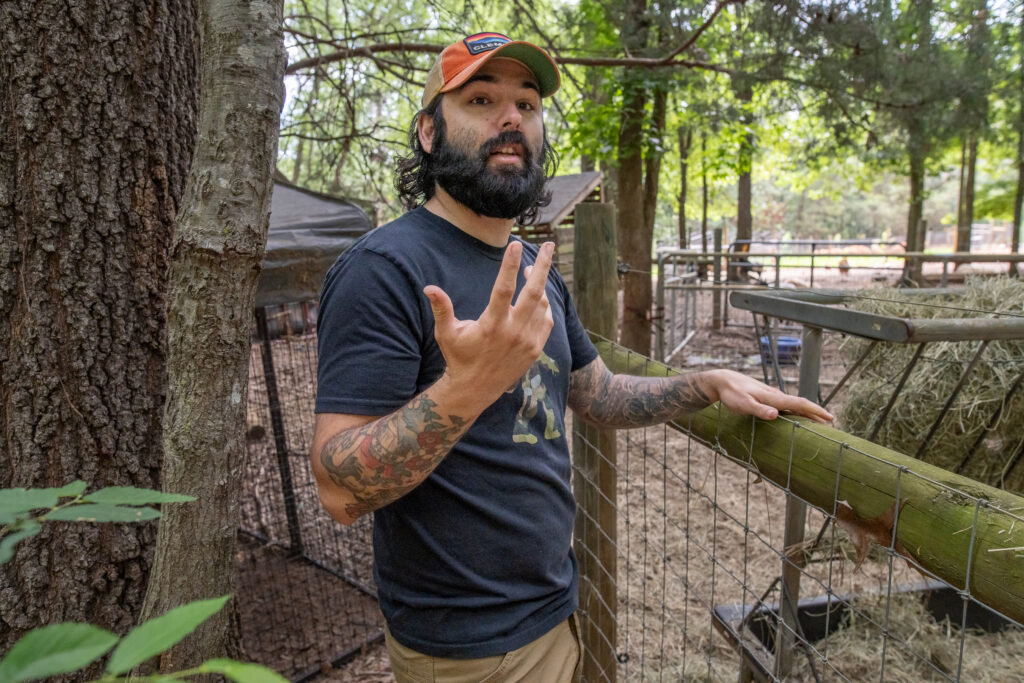
Greco applied to Clemson’s top-ranked horticulture program and, with a confidence perhaps acquired from years of walking towards bombs, quit his job and put his house on the market before receiving his acceptance letter.
“I was all in,” he laughs. “Fortunately, I was accepted and really just dived into the whole Clemson culture and the community around its Military and Veteran Engagement Center. My first semester, a group of us from the MVEC came out and did some work in their food forest, and I was hooked.”
Greco became so involved with Rutter’s Ranch that Matt and Kara tapped him to run the entire operation for three months while they were in Scotland writing their dissertations this year.
He plans to continue his education at Clemson and earn a master’s degree, after which he hopes to start a pig farm. He says the things he’s worked on at Rutter’s Ranch will be invaluable in that endeavor.
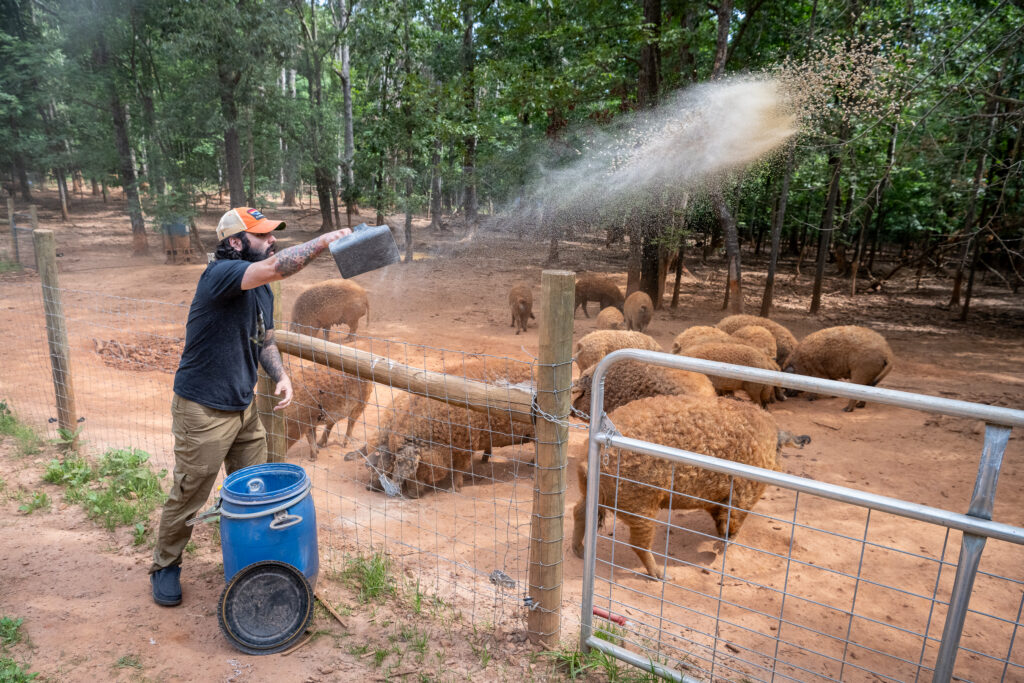
“You learn things you wouldn’t think about, like how much it is per linear foot for fencing? How much of your property should you fence, and which fencing should you use to get NRCS grants, to do cost share? There are so many small, nuanced things that go into running a farm. This place basically consolidates all that information into a one-stop shop for everything an aspiring farmer needs to know.”
Dirt therapy
With so many outreach programs anchored to the place, Rutters Ranch is a beehive of activity on any given day:
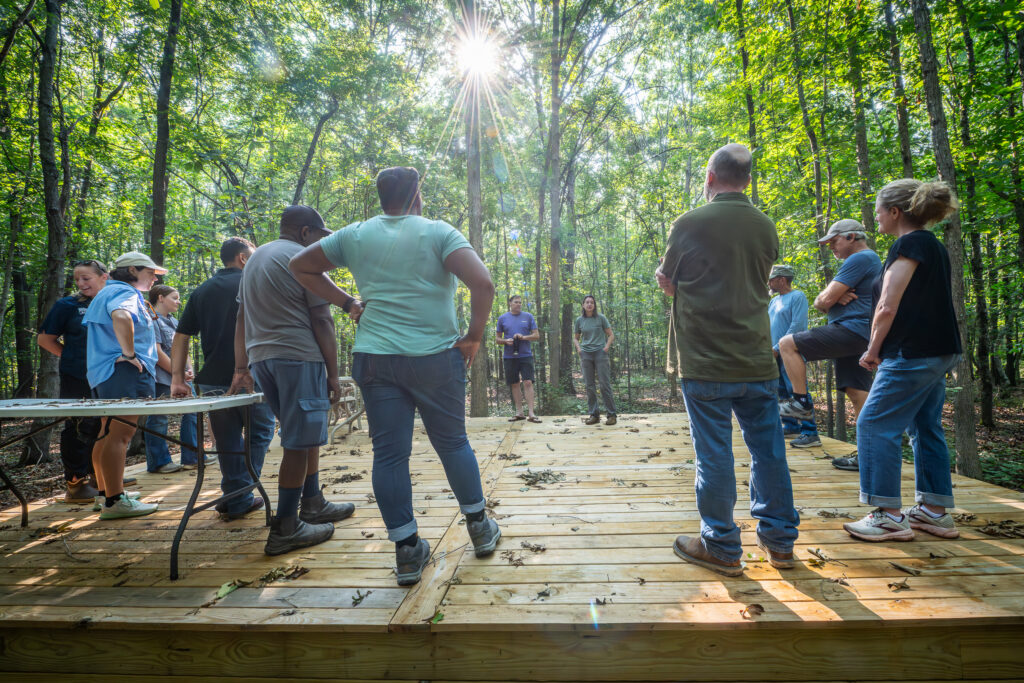
- At a recent Farms of the Brave agritourism incubator event, a dozen veteran South Carolina farm owners gathered to learn how to turn their farms into vacation destinations.
- In the mornings, during the Coffee and Chores sessions, veterans spend time outdoors, complete light farm tasks, sip hot drinks and connect.
- Participants from states across the U.S., including North Carolina, Georgia, Tennessee, Alabama, Virginia and Arizona, attend workshops in the Farmers Bootcamp program.
- At any given time, veterans can be seen spending time in the paddocks, tending to the animals or simply observing them during animal therapy sessions. Others will get their hands dirty working in raised-bed gardens, orchards and greenhouses during agritherapy, aka “dirt therapy” sessions.
- Community members stop by the farm store next to the house to purchase pork cuts and charcuterie, herbs, eggs, honey, yarn, soap and other products made at the ranch.
- The Sunday before Thanksgiving, Rutters Ranch hosts a turkey processing class where people can bring their families to process their own Thanksgiving turkeys. More than 40 families participated in last year’s event.
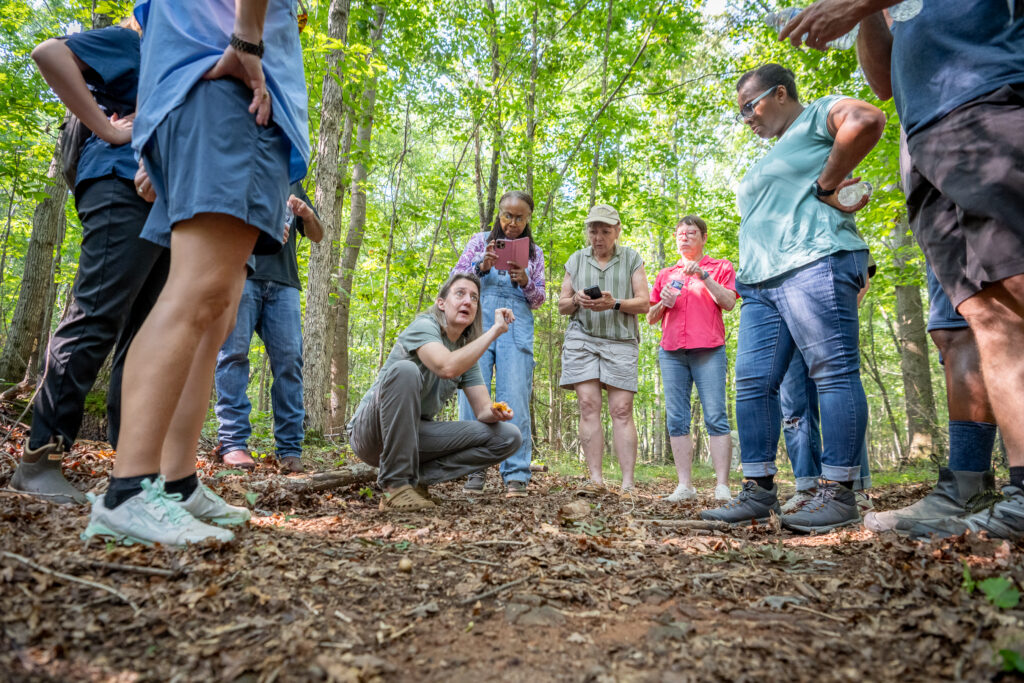
“Matt and Kara Rutter have been incredible friends, mentors, and champions for our student veterans,” said Emily DaBruzzi, director of military and veteran engagement for Clemson’s Division of Student Affairs. “Through their work with Project Victory Gardens, they have created meaningful opportunities for the Clemson Family to connect and learn alongside the local community, from the highly attended annual Thanksgiving Farm to Table experience and the formal Farm to Table Dinner to Chick Days and the Farms of the Brave Ag + Art Tour and Coffee and Chores series. Their genuine commitment to fellow veterans and the community they have built has made an unmatched impact in South Carolina.”
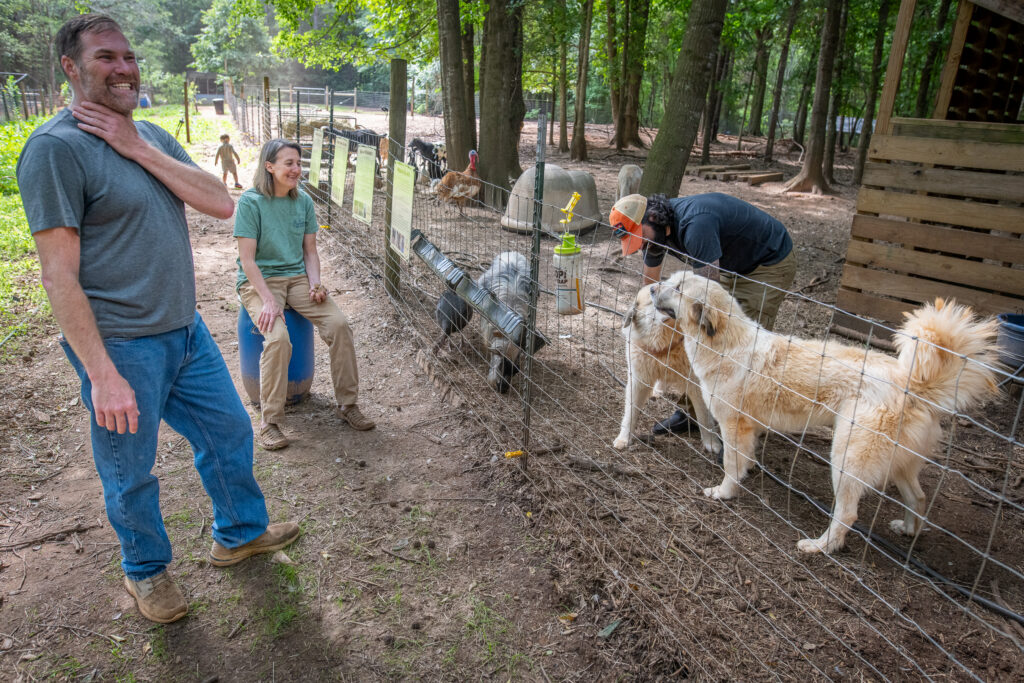
The number of veteran farmers attending the Rutters’ programs continues to grow. To date, 80 have completed their SkillBridge internship; some 200 have attended Farmers Bootcamp; another 20 have attended the Agritourism Incubator; and more than 100 have started their day with Coffee and Chores.
“I would say that 75 to 85 percent of the veterans who have come to us are still in some stage of farming, whether they have an off-site job or not,” says Matt. “And what’s really nice is, the ones that aren’t are still a success for us. They didn’t sink a million dollars into property and infrastructure, only to decide they didn’t like farming. They decided it on our farm.”