
For years, it was a vision for Clemson University and the state of South Carolina. On August 17, that vision became reality.
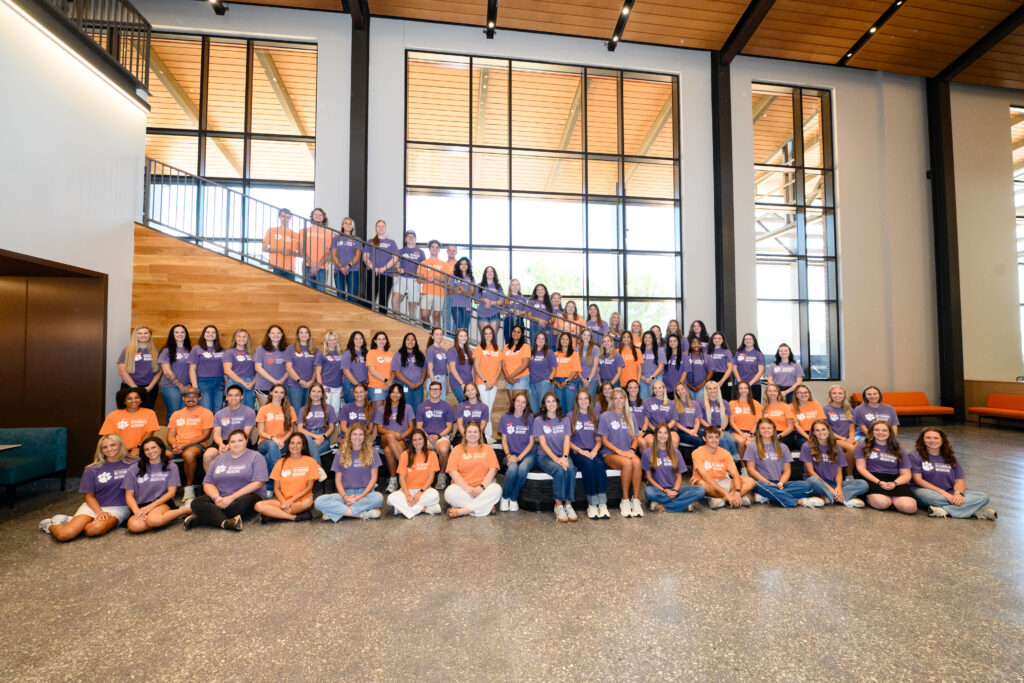
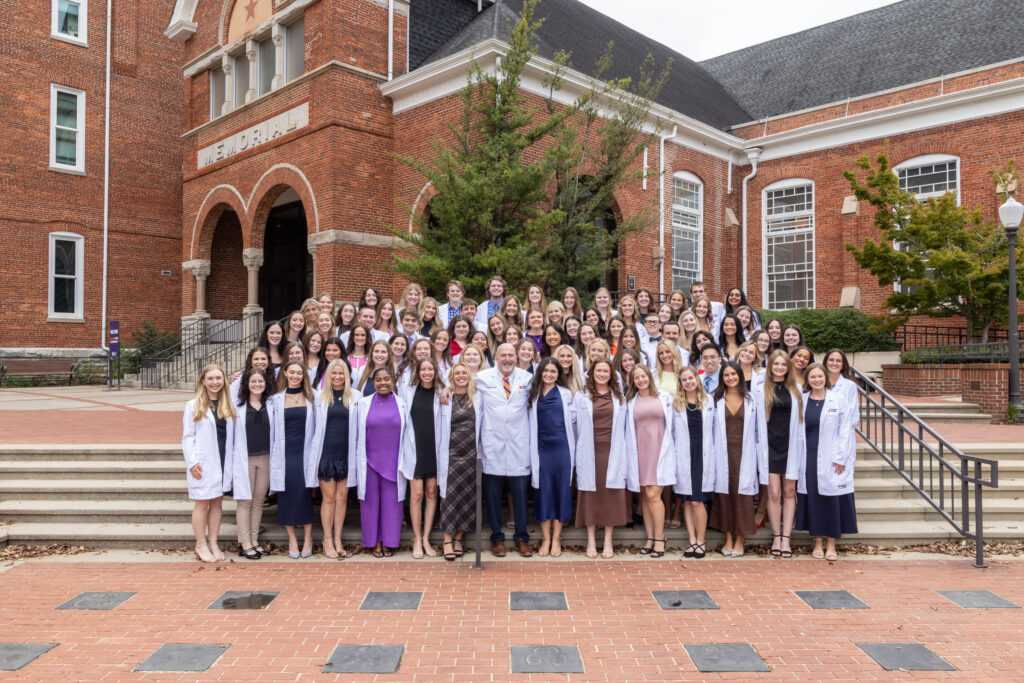
The Harvey S. Peeler Jr., College of Veterinary Medicine (PCVM) welcomed its inaugural Doctor of Veterinary Medicine class. These 80 students (60 in-state and 20 out-of-state) hold a unique place in Clemson’s history as the first students to begin their journey toward becoming veterinarians. The Class of 2030 officially began its journey with the college’s first-ever orientation, followed by the first day of class and the inaugural White Coat Ceremony on Saturday, August 22.
“This is a moment that has been dreamed about, planned for and worked toward for many years,” said Founding Dean Steven Marks. “As we welcome our inaugural class of veterinary students, we are doing more than opening the doors to a new college. We are beginning a legacy that will shape Clemson University, the state of South Carolina and the veterinary profession for generations to come.”
A Week of “Firsts”
The inaugural class began orientation with opportunities to get to know one another and build friendships with several collaborative activities. Students participated in team-building activities at the Clemson Outdoor Lab, completed a scavenger hunt to familiarize themselves with the new campus, they wrote thank-you notes to scholarship donors and penned letters to their future selves, capturing their thoughts and excitement at the beginning of an experience they will remember for the rest of their lives.
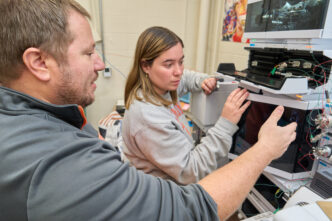
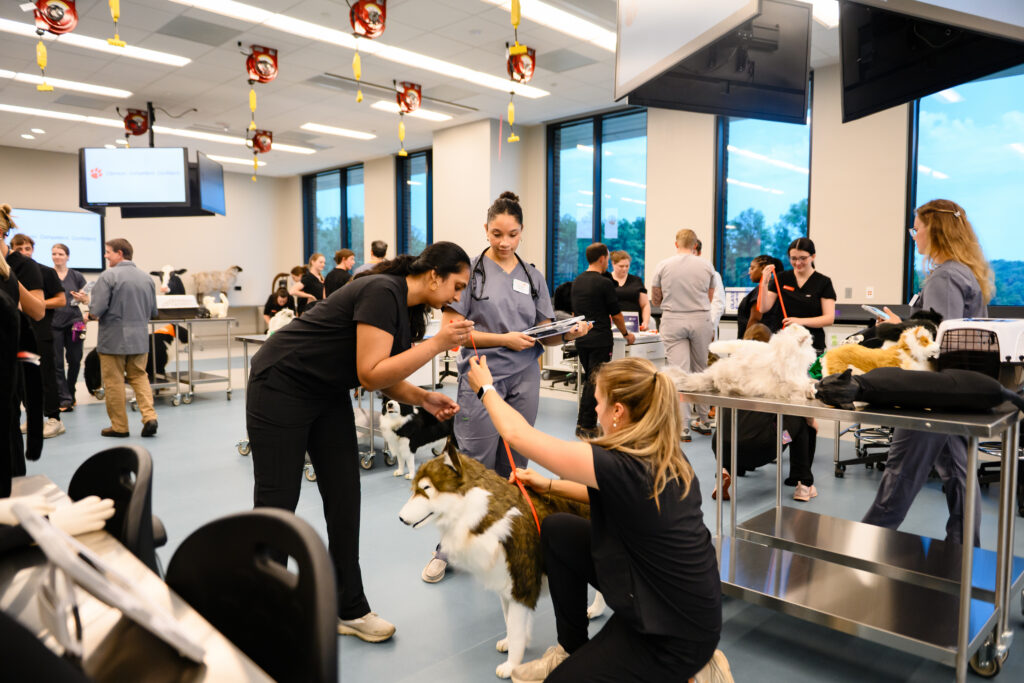
On Thursday, August 20, students experienced their first academic lecture with Dr. Josep “Pep” Rutllant and later that day, their first clinical skills lab, where they began developing foundational skills in safely handling small animals.
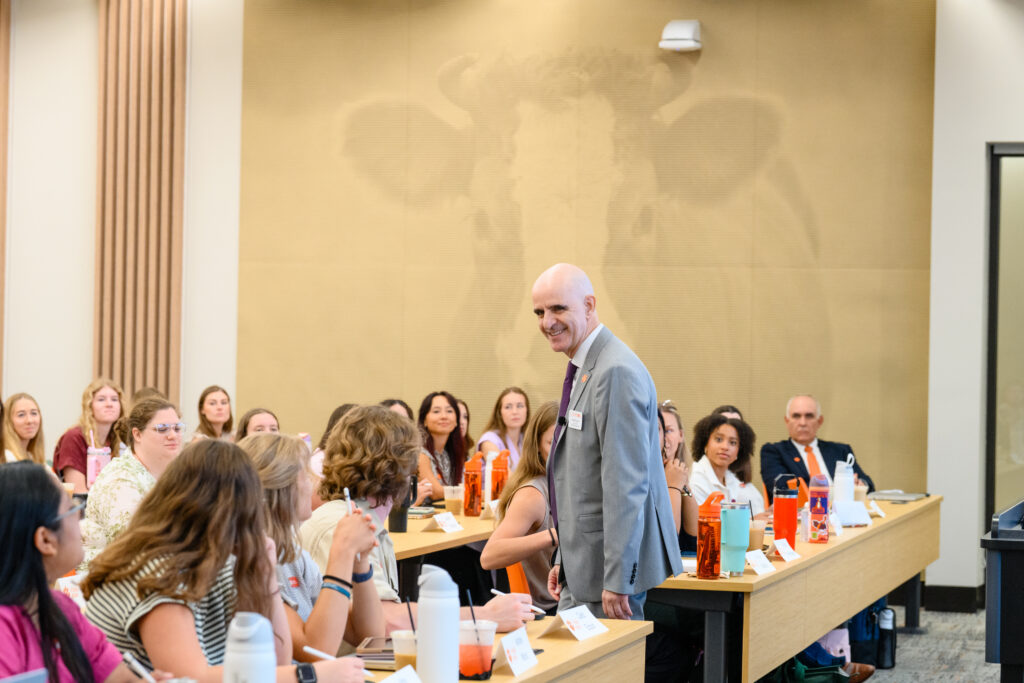
For students, faculty and staff, each of those moments represented something larger: the transformation of a new college from a vision into a living, learning community.
The week culminated Saturday with the college’s inaugural White Coat Ceremony. After preparing for the ceremony and trying on their coats earlier in the week, the students crossed the stage wearing the white coats that symbolize their commitment to the veterinary profession.
The creation of Clemson’s veterinary college comes at an important time for South Carolina.
“The state, like much of the nation, faces a shortage of veterinarians, with particular needs in rural communities and in large-animal and food-animal medicine,” said Dean Marks. “Clemson’s DVM program was created, in part, to help address those needs by preparing graduates who are ready to serve the diverse veterinary needs of the state.”
The college’s mission extends beyond simply educating future veterinarians. Students will have opportunities throughout the program to develop the clinical, professional, and practical skills needed to become day-one-ready veterinarians.
This training includes an emphasis on large-animal and rural veterinary medicine, preparing students to serve farms, animal agriculture operations and communities where access to veterinary care can be especially important.
“We have an obligation to South Carolina to educate veterinarians who are prepared to meet the needs of our state,” Marks said. “That means preparing students to care for companion animals but also ensuring they have the knowledge and skills to serve our agricultural communities and the production animal industries that are so important to South Carolina.”
One of the defining features of Clemson’s DVM curriculum will come during students’ fourth year, when they will take their education beyond the walls of the college through a distributive clinical education model. PCVM students will refine their skills through clinical rotations with veterinary practices and partners throughout South Carolina. This model will give students the opportunity to learn directly from practicing veterinarians in communities across the state while gaining experience with the variety of patients, practices and veterinary needs they will encounter after graduation.
History in the Making
For the Class of 2030, the first week of veterinary school was filled with milestones that no future Clemson veterinary class will experience in quite the same way.
“These students are pioneers,” said Nicki Wise, Associate Dean of Academic Affairs. “They have tremendous opportunity before them, but they also carry a great responsibility. They are helping establish what the Harvey S. Peeler Jr. College of Veterinary Medicine will become. Our team has worked tirelessly to ensure this class has everything they need to be successful, and we’re so excited to join them on this historic journey.”
For Clemson University, the Class of 2030 represents the beginning of a new chapter. For South Carolina, it represents a long-term investment in the veterinary workforce and the health and well-being of the animals, people and communities that make up the state.
The legacy has begun and this journey belongs to all of us! Go Tigers!
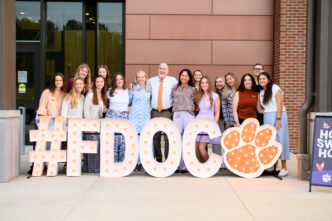
Here’s a look at photos from the students’ FDOC.
Thanks to Nutramax Laboratories for sponsoring Orientation and the White Coat Ceremony.