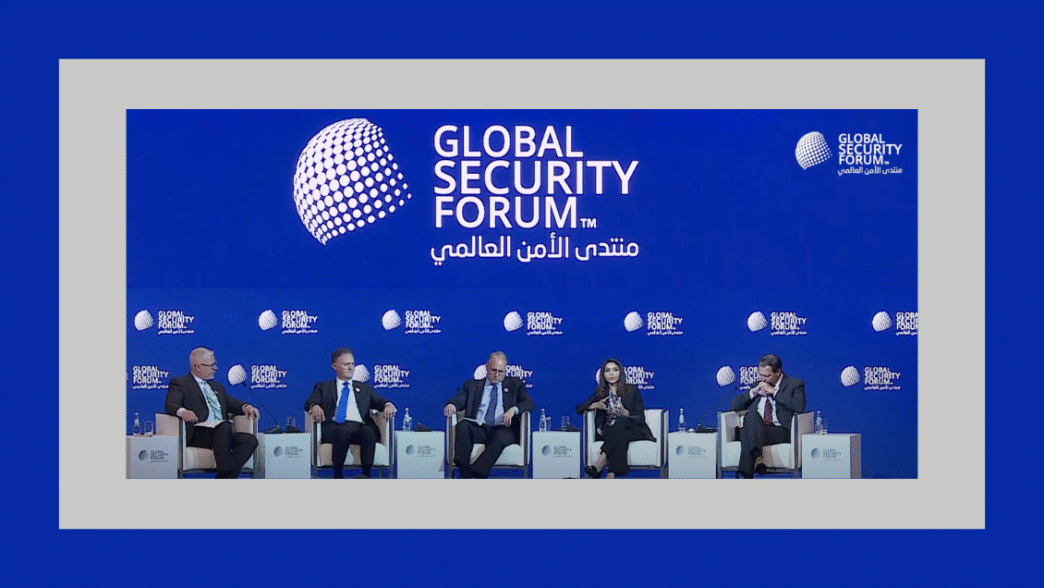
Amira Jadoon, associate professor in the Clemson University Department of Political Science, has received the Harry Frank Guggenheim (HFG) Distinguished Scholar Award from the Harry Frank Guggenheim Foundation.

HFG Distinguished Scholar Awards recognize leading scholars and support high-impact research on the causes, dynamics and control of violence and aggression. These prestigious awards are nationally competitive, project-based research grants and are widely regarded as a significant distinction in political science, international security and related fields.
Jadoon’s research explores the multifaceted consequences of international security tools and counterterrorism strategies, examining their connections to political violence, extremism and the strategic dissemination of disinformation. More specifically, she explores how security policies – ranging from coercive diplomacy and partner capacity building to militant leadership decapitation – shape the political beliefs and behaviors of state and violent non-state actors in partner countries across South and Central Asia, the United States and the world.
“It is an honor and a career highlight to join the 2026 cohort of HFG Distinguished Scholars. This award underscores the importance of empirically grounded research on conflict, peace and governance, particularly in regions where these questions carry profound consequences for communities and states alike. I look forward to advancing this work and mentoring emerging scholars in the field,” said Jadoon.
Jadoon’s HFG-funded project, Mapping Visions of Peace: Communities, Civil Society and State Perspectives on Violence, Grievances and Reconciliation in Pakistan’s Conflict Zones, seeks to understand why Pakistan’s dual insurgencies persist despite decades of counterterrorism efforts. By examining how different stakeholders – conflict-affected communities, civil society advocates and state officials – perceive the conflicts and envision peace, Jadoon will explore why insurgencies persist, when violence is perceived as justified or unjustified and what constitutes meaningful reconciliation between the state and its citizens in Balochistan and Khyber Puktunkhwa.
Jadoon said the project is timely because militancy continues to grow in Pakistan, and as the government’s kinetic counterterrorism operations show limited efficacy, social movements among citizen groups are on the rise.
“If the government and citizens are misaligned, counterterrorism efforts will never be effective,” said Jadoon. “Repression and heavy-handed military operations create a cycle of terrorism and grievances, so we must better understand perceived problems and solutions between stakeholder groups.”
The project will consist of two parts: a computational text analysis and fieldwork. Jadoon and her team will review existing research materials and conduct interviews with government officials, military personnel, civilians and civil society actors such as journalists and community and non-governmental organization leaders.
“Dr. Jadoon is an exceptional scholar whose work contributes to critical counterterrorism and stabilization efforts worldwide,” said Leslie Hossfeld, dean of the College of Behavioral, Social and Health Sciences. “I am immensely proud to see her contributions honored nationally by the Harry Frank Guggenheim Foundation and look forward to how her research continues to shape international policy and practice.”
The Department of Political Science is part of the University’s College of Behavioral, Social and Health Sciences (CBSHS). Established in July 2016, CBSHS is a 21st-century, land-grant college that combines work in seven disciplines – communication; nursing; parks, recreation and tourism management; political science; psychology; public health sciences; sociology, anthropology and criminal justice – to further its mission of “building people and communities” in South Carolina and beyond.