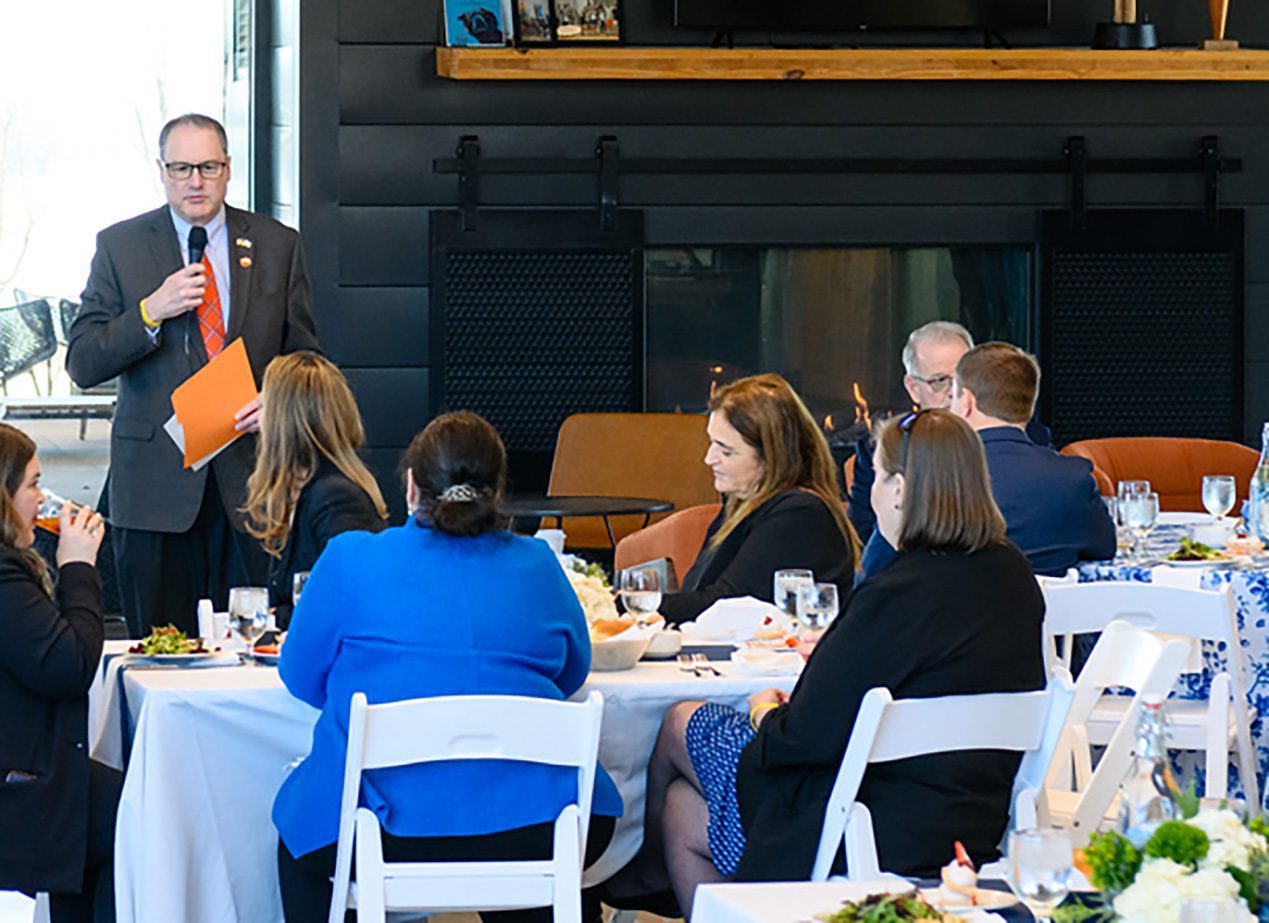
The monthly “Elevate Well-Being” blog series shares thoughts and reflections of Clemson Well-Being Council members and University faculty, staff and students. Our January 2026 blog is courtesy Sarah Winslow, Ph.D., dean of the Clemson University Honors College.
Early in my career, well-meaning mentors taught me professional success meant leaving the rest of my life at the door.
When I was finishing graduate school, I was given very explicit advice not to indicate anything about my life outside of work during my upcoming job search. In fact, at a private party during our annual professional conference, an acquaintance in graduate school noticed my engagement ring and said (with horror), “You’re not wearing that to your conference interviews, are you?!?” Having been thoroughly convinced of the necessity of only presenting my “academic” self, I did not.
Why am I sharing this anecdote? While we, of course, must ensure fair hiring processes in which we’re not asking potential employees about non-employment criteria, it’s also critical to create workplaces that acknowledge the wholeness of employees’ lives. As a leader, I’ve made a point to explicitly discuss my life outside of work as it’s relevant and appropriate. Sometimes this is as simple as talking about what I did or plan to do over the weekend with friends and loved ones. Right now, as we have all returned to the office after the winter break, it often means we’re sharing stories about holiday trips, time with family or quiet moments of relaxation (and naps!).
Importantly, when my work is interrupted by family responsibilities, I don’t hide it. In fact, I make a conscious effort to name it because I want to model the type of work-life integration and prioritization I hope my employees will practice. Although boundaries are very important and I encourage everyone to know and enforce theirs, we also must acknowledge that we often can’t, don’t and shouldn’t expect to draw perfect lines between work and life. More importantly, some days will be more seamless than others. Sometimes we are wizards who can perfectly execute every task at work, maintain our own self-care plans, engage fully with our loved ones and family, and attend to all of life’s other obligations. And sometimes we’re all just Dory from Finding Nemo as we “just keep swimming.”
Twenty-plus years ago, the version of myself who was told to leave my personal life at the office door genuinely believed two things. First, that there was absolutely no overlap between the personal and professional. And second, that my professional success would be predicated on my ability to maintain a single-minded focus on work.
But leadership is about people and relationships. It’s about understanding your colleagues’ and employees’ priorities — and your own! — and recognizing and appreciating the whole being that they and you bring to work each day. That’s also a key part of building an organizational culture that supports growth, innovation and commitment. As a leader in a complex organization, there are often limits on the formal mechanisms of recognition and reward we can offer to employees. And that makes it even more important to appreciate people in all the ways we can control — by acknowledging their successes, supporting their priorities and building a culture where people feel seen, trusted and valued.
Clemson provides several resources to help us do that, including the Employee Assistance Program, which provides access to numerous resources and on-demand trainings to help support you and your team’s well-being. The Ombuds Office also provides training options that help supervisors build a more productive and supportive work environment, including how to combat burnout. The Clemson Well-Being Council also provides online training resources to anyone on campus.
Today, when someone asks me for professional or leadership advice, I’m quick to point out that our lives outside of work shape how we lead, collaborate and contribute on the job. I also urge others to look for and create a culture that values not only their professional ability and potential, but their whole selves, since that is where both well-being and meaningful work are most likely to flourish. As leaders, it’s up to us to put those values into action.
Editor’s Note: Every Tiger deserves the opportunity to thrive. Your support for Clemson’s well-being initiatives helps create a campus where every student, faculty and staff member can live, learn and grow with purpose.
Support Clemson’s Culture of Well-Being