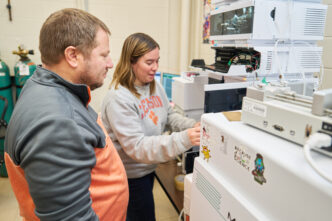
Susan and Jason Smith were in a Clemson University bioengineering lab as they leaned in to take a closer look at a wire-frame stent that researchers are developing to help save the lives of children born with heart defects.
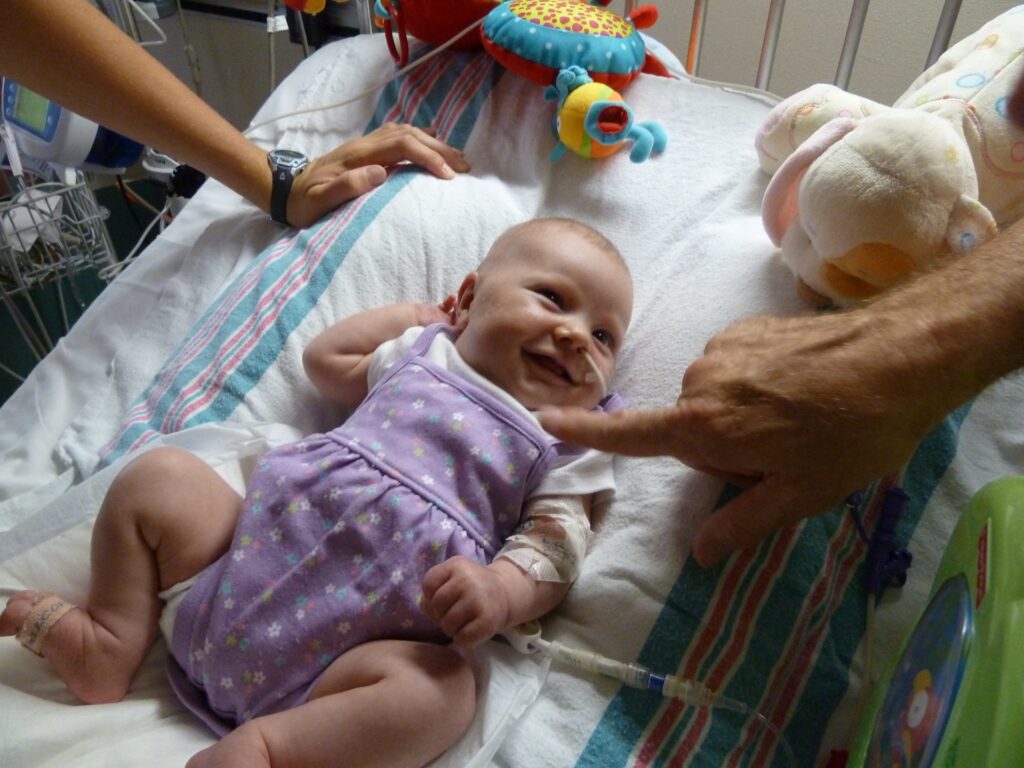
While the stent is in the early stages of development, it is providing hope that families in the future won’t have to go through what the Smiths did. Their first daughter, Emerson Rose, clung to life for 76 days in 2011 before succumbing to hypoplastic left heart syndrome, a complex congenital heart defect.
“You are making a difference in the lives of people who are not even born yet,” Susan said to the students huddled around her. “That’s what keeps us going.”
The seed funding provided through the nonprofit the Smiths founded, the Emerson Rose Heart Foundation, kicked off a series of research projects that led to the stent and underscores the power of philanthropy and collaboration.
The stent would be part of a heart valve implanted just weeks after birth and could be expanded as the heart grows, offering the chance to replace multiple surgeries with a single operation.
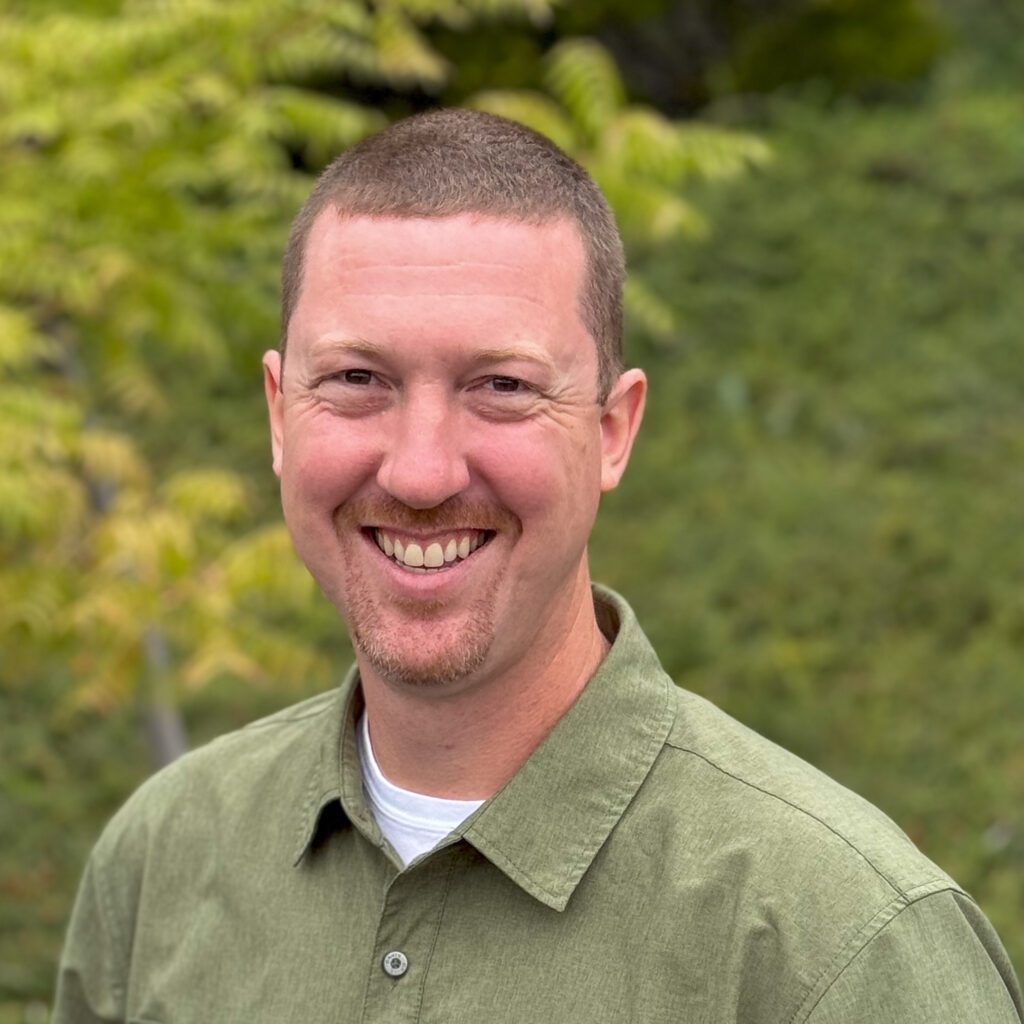
Leading the research from the beginning has been Lee Sierad, who holds a Master of Science and Ph.D. in bioengineering from Clemson and now works in the private sector in San Diego. He has been collaborating closely with his friend and former advisor Dan Simionescu, the Harriet and Jerry Dempsey Professor of Bioengineering.
Sierad said his work on the project has been an extension of his interest in heart valves, a passion he can trace back to his undergraduate years and through his work at Clemson with bioreactors and tissue engineering.
“Another big factor has been my spiritual walk,” Sierad said. “Thinking about kids with heart valve defects, I’m glad that we have some treatments now, but they are still so hard on the families. I want to alleviate pain. I want to serve them. I want to be able to provide something so they can go home and just enjoy life and ultimately have opportunities to meet Jesus.”
Growing hearts
Simionescu said the research strikes at a key challenge in pediatric medicine.
“What we do now is take adult devices and make them smaller,” Simionescu said. “That’s not enough. Hopefully somebody listens to this message. When children are born with heart defects, you need to implant something that will grow, because the child’s heart will double in size in about 20 years.”
Current options force families into grim trade-offs, including multiple open-heart surgeries, oversized implants or years of waiting until an adult valve can fit.
The team’s device, the ExpandValve, takes a different path. Surgeons would stitch thin sheets of specially processed bovine tissue into the stent. The tissue is biocompatible with humans and remarkably stretchy, capable of doubling in size without losing function.
The valve would be initially implanted through surgery. As the child grows, cardiologists would guide a balloon catheter through a vein, inflate it and expand the valve, with no major surgery required.
The process could be repeated several times, expanding from a 12-millimeter infant valve to a 24-millimeter adult valve, offering the possibility of one surgery for a lifetime of function.

Building the team
Moving that possibility closer to reality has been a long journey.
Sierad was nearing the end of his Ph.D. studies in 2013 when he founded Aptus Bioreactors to commercialize his research. He sold heart valve and vascular bioreactors around the world while continuing to work with Simionescu to seek funding for heart valve research.
Sierad said a friend from church was on the board of the Emerson Rose Heart Foundation and connected him with the Smiths. The $25,000 in seed funding the foundation provided in 2020 allowed Sierad to begin investigating what it would take to build a heart valve for children and to start designing one.
“Would it look like a metal stent that expands?” he remembered asking at the beginning of the project. “Would it look like a degradable stent that deteriorates as the child gets larger? Should we target a 1-month-old, 1-year-old, or 10-year-old?”
That work set the stage for Sierad to secure a $252,000 small-business grant from the National Institutes of Health (NIH) in 2021, allowing him to hire someone to design and manufacture a stent.
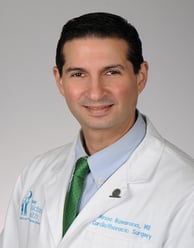
This year, the NIH approved an additional $322,000, setting the stage for more advanced testing led by Dr. Minoo N. Kavarana, who was Emerson Rose’s surgeon and now serves as Division Chief, Pediatric and Adult Congenital Cardiothoracic Surgery, at the Medical University of South Carolina (MUSC).
“I’m excited to be working alongside Lee and Dan to help bring this device closer to the children who need it most,” he said. “What makes this project especially meaningful is the Smiths’ vision and generosity, turning their family’s heartbreak into hope for countless others. That spirit is what drives us forward.” (See notes section at the bottom for collaborator list.)
‘She looked perfect’
Delphine Dean, chair of Clemson’s Department of Bioengineering, said the ExpandValve underscores the power of collaboration to address real-world needs.
“The ExpandValve reflects the best of Clemson bioengineering– innovation with purpose, collaboration across organizations, ongoing relationships between professors and alumni and a commitment to improving lives,” she said. “Projects like this show how our work today can change what’s possible for generations to come.”
The work also serves as an example of how deep Clemson Family roots can run. The Smiths live minutes from campus, and Susan holds a bachelor’s degree in secondary education and a master’s degree in counselor education, both from Clemson. She worked as an academic advisor in General Engineering at Clemson before Emerson Rose’s birth.
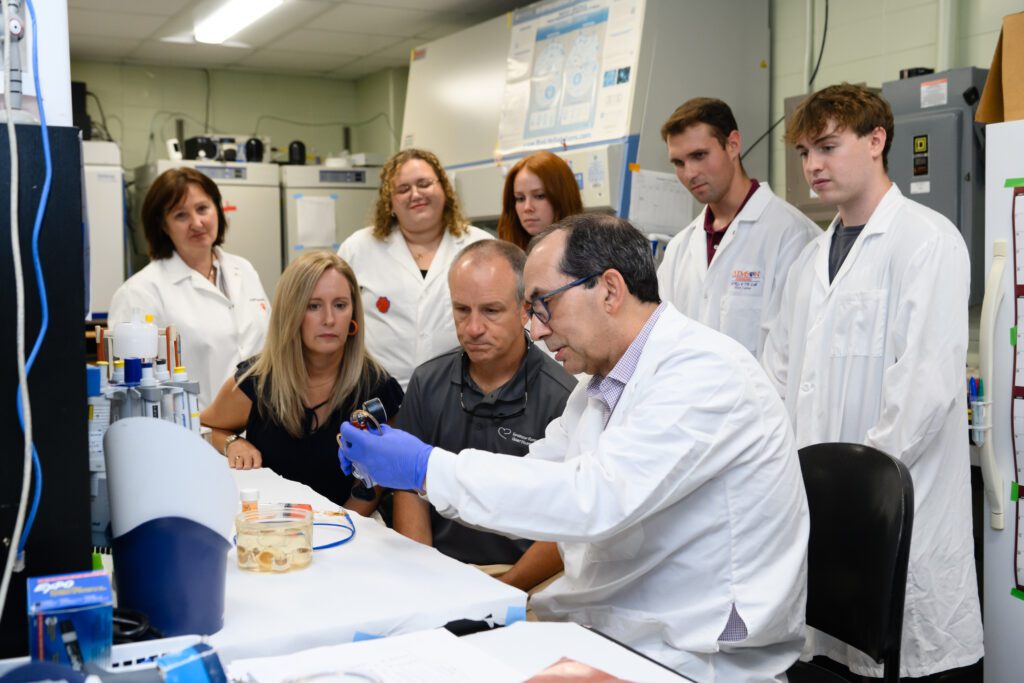
After touring Simionescu’s lab, Susan and Jason sat in his office and remembered the time they had with their daughter, who was born on April 11, 2011. Susan recalled looking at Emerson Rose, rubbing her leg and holding her hand.
She underwent surgery at MUSC at just 4 days old, the Smiths said.
“If you had removed the support that she had, she looked perfect, didn’t she?” Jason asked.
“You wouldn’t have known anything was wrong with her,” said Susan, who recalled feeling pure joy.
Raising Awareness
While Emerson Rose was treated in the pediatric ICU, the Smiths felt the urge to do something to help others struggling with congenital heart defects in children. Their desire only increased after she passed away, they said.
Since then, the Emerson Rose Heart Foundation has raised millions of dollars to fund research, raise awareness, and provide spiritual, emotional, and financial care to families. The Smiths also advocated for the Emerson Rose Act, a 2013 state law that requires all newborns to be screened for congenital heart defects at birth.
Last year alone, 60,000 newborns were screened, the Smiths said.
Susan said it is exciting to think that the heart valve research the foundation helped start could one day result in a device that is implanted in children.
“What touches me most is the connection between two places I love, Clemson University and MUSC, with Dr. Kavarana,” she said. “This is just incredible. It touches my heart.”
——–
Additional notes: Throughout the years, numerous consultants, students and other collaborators have participated in this project: Sam Pashneh-Tala, design engineer; Aggie Simionescu, tissue engineer; and Clemson bioengineering graduate students Erica Hoskins, Martin Lautenschlager, David Podolsky, Josh Wingold and Annelise Pagan.