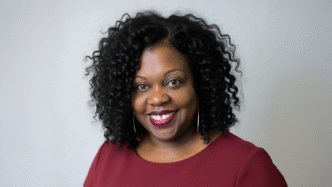
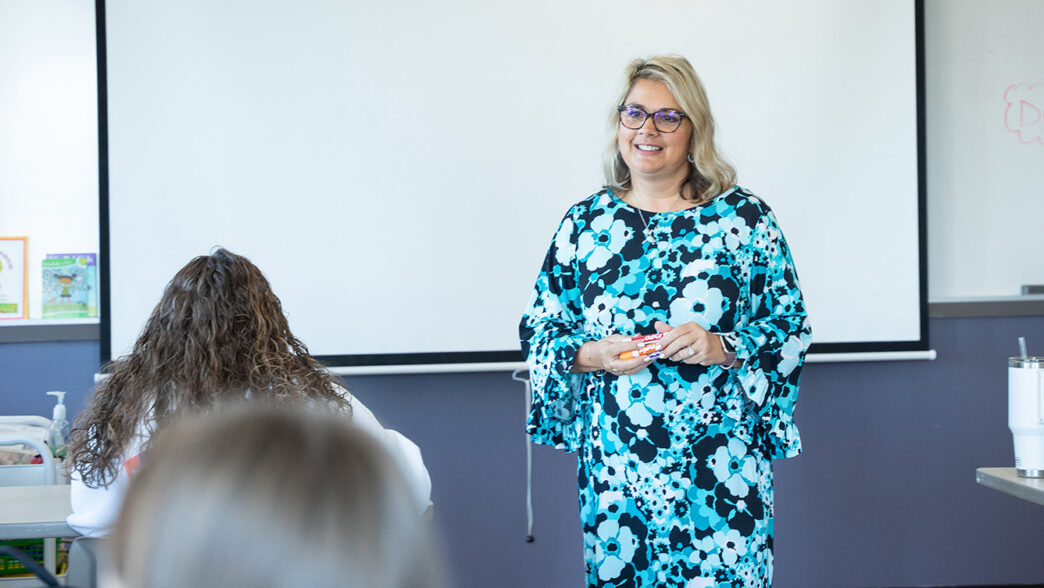
Jill Shelnut is a senior lecturer in the Department of Teaching and Learning at Clemson University. She focuses on providing preservice early childhood education teachers with the knowledge, skills and dispositions needed to support young children and their families from birth through age eight.
The South Carolina Association for the Education of Young Children (SCAEYC) recently awarded Shelnut with the Kevin J. Swick Excellence in Teacher Education Award for teaching excellence and contributions to the field of early childhood education. While she is comfortable at conferences and on the awards stage, she feels most at home in the College of Education. Her approach to the classroom aligns with the College’s mission and emphasizes practices that benefit all, ethical decision-making, reflective teaching and meaningful engagement with all communities.
We caught up with Shelnut to learn what it’s like to be a “triple Tiger” working at the University, how she feels connected to the Bahamas and how she finds success giving her students – and herself – permission to act like a five-year-old.
What does it take for a teacher to be successful with younger children? How do you teach that?
I believe effective early childhood educators must be prepared to work with children and families from varied cultural, linguistic and socioeconomic backgrounds. I create supportive, responsive learning environments that recognize the barriers college students face, including stress and varied educational experiences.
Grounded in constructivist theory, my teaching emphasizes active, collaborative learning. Courses are designed around hands-on activities, guided practice and structured discussion that encourage critical thinking and creativity. Preservice teachers engage deeply with child development, curriculum design, assessment and family engagement through interactive coursework rather than passive content delivery.

I prioritize authentic learning experiences to bridge theory and practice. When possible, students observe and analyze real-world early childhood classrooms, allowing them to apply course concepts, reflect on instructional practices and develop informed professional judgment. Ethical responsibility is foundational to my teaching. I integrate the National Association for the Education of Young Children (NAEYC) Code of Ethical Conduct through case studies, discussion and reflection, emphasizing professionalism, advocacy and ethical practice.
My goal is to prepare compassionate, reflective and competent early childhood educators who balance creativity with evidence-based practice and are equipped to positively impact children, families and communities.
Why do you love teaching?
I love teaching because it allows me to prepare future early childhood educators to make a meaningful, lasting impact on young children and their families. I am motivated by helping preservice teachers develop the knowledge, skills and ethical commitments needed to teach all learners effectively and reflectively.
Teaching gives me the opportunity to model supportive, learning environments and to help students overcome barriers, build confidence and connect theory to practice. I find it especially rewarding to see preservice teachers grow through hands-on learning and real-world experiences as they develop professional judgment and purpose.
Ultimately, I love teaching because of its ripple effect; by supporting preservice teachers, I contribute to positive outcomes for children, families and communities beyond my classroom.
Describe an effective approach you use in the classroom.
I try to model teaching strategies and activities with our preservice teachers that they can take and implement in their future classrooms. We have fun pretending to be five-year-old students, but it is actually beneficial to see things from the perspective of a young learner.
I intentionally integrate mindfulness practices into my classes to promote well-being, self-regulation and engagement, while also providing preservice teachers with strategies applicable to early childhood settings. We begin each class with a mindful moment/activity, practicing breathing, relaxation and concentration techniques. These are helpful for us in the college setting, but also give our preservice teachers ideas for their future classrooms.

What do you like about the College of Education?
As a “triple Tiger” who holds three degrees from our College of Education (’98, ’99,and ’20), I am incredibly lucky to be on the other side of the very classroom where I learned from amazing professors many years ago. I absolutely love our school spirit and fully embrace the idea of the “Clemson Family!”
Is there any subject that you devote time to that might surprise people?
Over the past few years, I have become connected to the island of Eleuthera in the Bahamas, learning about schools, communities and culture. I had the pleasure of leading a study abroad program last spring break and continue to lead a Creative Inquiry with elementary students on the island. Any chance I get to travel to Eleuthera, I am there!
What do you enjoy doing when you are not teaching?
I love baking, walking, swimming and traveling!