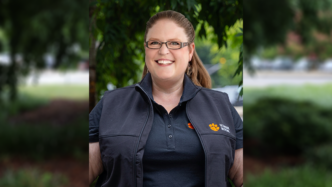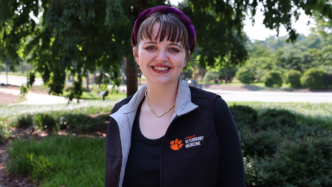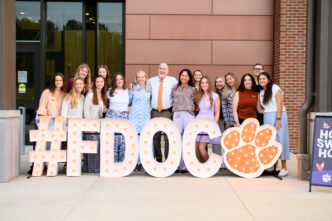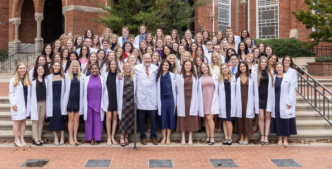
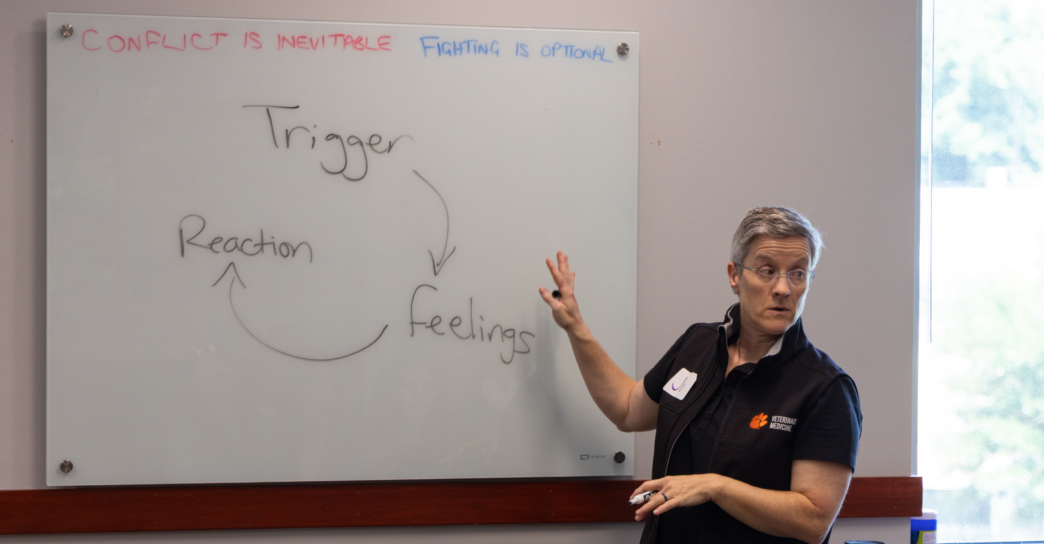
Working through a conflict can feel uncomfortable for people of all ages and experience levels. During this year’s ‘Bring Your Daughter to Clemson’ program, organized by the Clemson Women’s Alumni Council, some high school participants took part in a seminar led by Dr. Jo Smith, Professional Development Unit Lead at the PCVM. Students learned that disagreement itself is not the problem, but responding thoughtfully and constructively is what matters.
Smith led an interactive conflict resolution seminar designed to help high school students better understand communication, emotional awareness and relationship-building skills. The session served as an adapted version of a more advanced program Smith teaches to Doctor of Veterinary Medicine (DVM) students.
“The main point I wanted these young women to understand is that conflict is a normal and unavoidable part of life, regardless of the career path they choose,” Smith said. “Conflict itself is not necessarily negative. It is how we respond to it that matters.”
Throughout the session, Smith emphasized a simple but memorable theme: conflict is inevitable, but fighting is optional.
“Disagreements and misunderstandings happen in every stage of life,” Smith said. “Healthy communication, emotional awareness and curiosity can help us navigate those situations more effectively.”

The seminar was designed to keep students engaged through movement-based activities and discussion. Participants began with an icebreaker introducing themselves and sharing which animal they would choose to be for a day and why.
Students later moved to different sides of the room based on their opinions about conflict and conflict avoidance and worked through friendship and school-related scenarios that explored emotional responses. In one activity, students identified whether situations made them feel angry, sad, surprised or indifferent, sparking conversations about how people experience the same conflict differently.
“The friendship scenarios generated some of the strongest engagement because they were highly relatable for that age group,” Smith said.
The session also introduced students to concepts including conflict styles, unmet needs, assumptions and emotional identification. Smith incorporated communication tools such as reflective listening, empathy statements and “I” statements to help students practice constructive responses.

A key teaching strategy throughout the program was think-pair-share, which encouraged students to first reflect individually, then discuss ideas with a partner before sharing with the larger group.
“For many students, especially in a new environment, this approach creates a more comfortable space to engage in conversation and helps build confidence in expressing their perspectives,” Smith said.
The high school-centric seminar focused on age-appropriate examples and accessible language; however, the DVM curriculum expands these lessons into professional situations veterinary students will encounter throughout their careers.
Topics in the veterinary curriculum include workplace and team conflict, leadership and team dynamics, client communication, emotional intelligence and navigating difficult conversations in clinical settings.
“Veterinary professionals work in high-stress environments where strong communication and conflict-management skills are essential for both patient care and team wellbeing,” Smith said.

Smith noted that communication and conflict-management skills are foundational regardless of age or profession. High school students regularly navigate friendships, group work and growing independence, while veterinary students and professionals must work effectively with emotional clients, colleagues and complex situations.
“These skills influence success in nearly every environment including school, friendships, family relationships and professional careers,” Smith said.
For Smith, one of the most rewarding aspects of the session was watching students grow more comfortable sharing perspectives and engaging with one another.
“High school students are already navigating social pressures, group work, friendships and increasing independence, so learning how to respond thoughtfully rather than react impulsively can help them build healthier relationships and confidence,” Smith said. “My hope is that the students left with the understanding that communication is a skill that can be practiced and improved. Even small pauses to consider one’s response can make a significant difference in relationships and future professional interactions.”
Communications Skills Training, to include Conflict Management, will be a part of a series of courses that students will take years one-three as part of their Professional Development during the DVM program.