
A high school tennis player who had surgery on both knees, Emily DiNicola was familiar with hospitals.
She began her college career at Anderson University with plans to attend medical school to become a doctor. That quickly changed, though she still had the itch to work in health care.
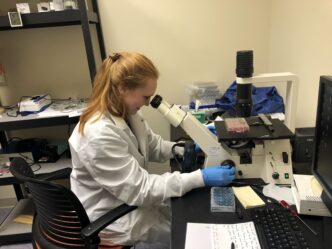
DiNicola transferred to Clemson and as a sophomore in 2019 found herself interning at CUBEInC with the Department of Bioengineering. She would provide research support, analyzing cell cultures, for example, for Clemson faculty members working at CUBEInC and had an opportunity to work on a clinical trial sponsored by Steadman Hawkins, which also has space at Prisma Health’s Patewood campus.
The research team was working on biologics, therapeutics derived from living organisms.
“It put me way ahead when I was going into graduate school because I knew how to conduct the research,” Emily said. “I had learned about tissue engineering as a sophomore at CUBEInC. That was a class you couldn’t take until you were a senior.”
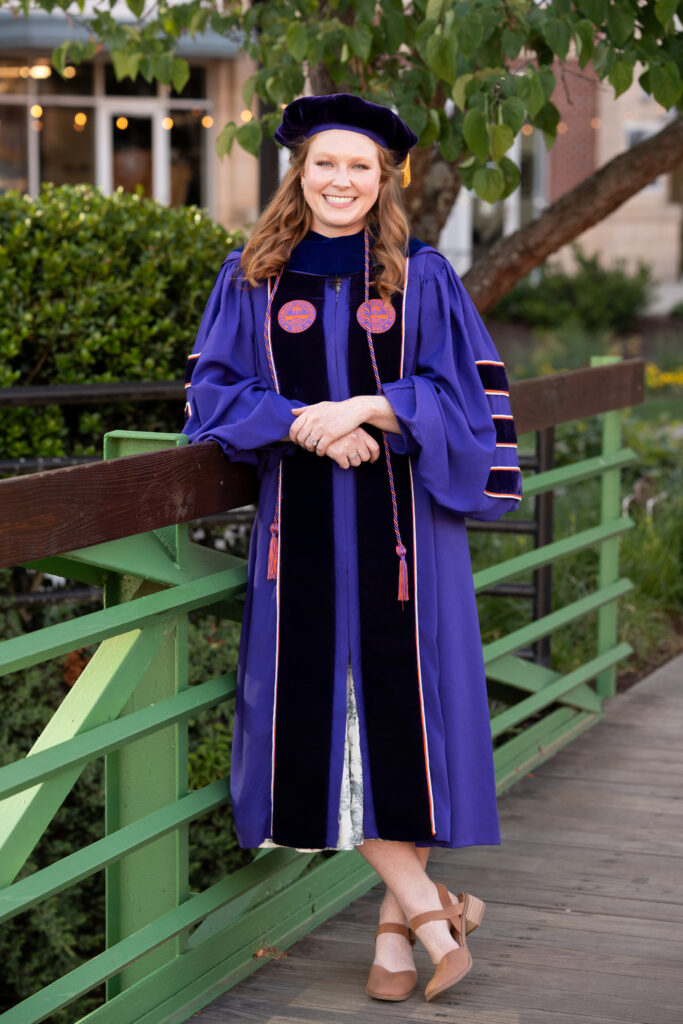
DiNicola studied under the tutelage of former Clemson professor Jeremy Mercuri, who now works as chief scientist of a startup company at CUBEInC called Samaritan Biologics. DiNicola earned her bachelor’s degree in 2021 and then her Ph.D. in bioengineering at Clemson in May 2025. She was quickly hired by Samaritan.
Samaritan develops, manufactures and distributes human amniotic allograft products for wound care and surgical applications. The young company still has a lab at CUBEInC but established an 11,000-square-foot manufacturing facility on the Clemson University International Center for Automotive Research (CU-ICAR) campus in Greenville.
“As we were searching for a home where we could build upon our research and continually develop and evolve our products, the team at Samaritan Biologics felt that CUBEInC could not have offered a more perfect space,” said CEO David Szalay.
“This research facility has helped catapult our boot-strapped startup into a successful and sustainable company, offering some of the most sought-after allograft products available today,” Szalay said. “We’re constantly inspired by the great minds who walk the halls of this building and share the same passion as us to help people through science and drive the future of biotech and medtech.”