

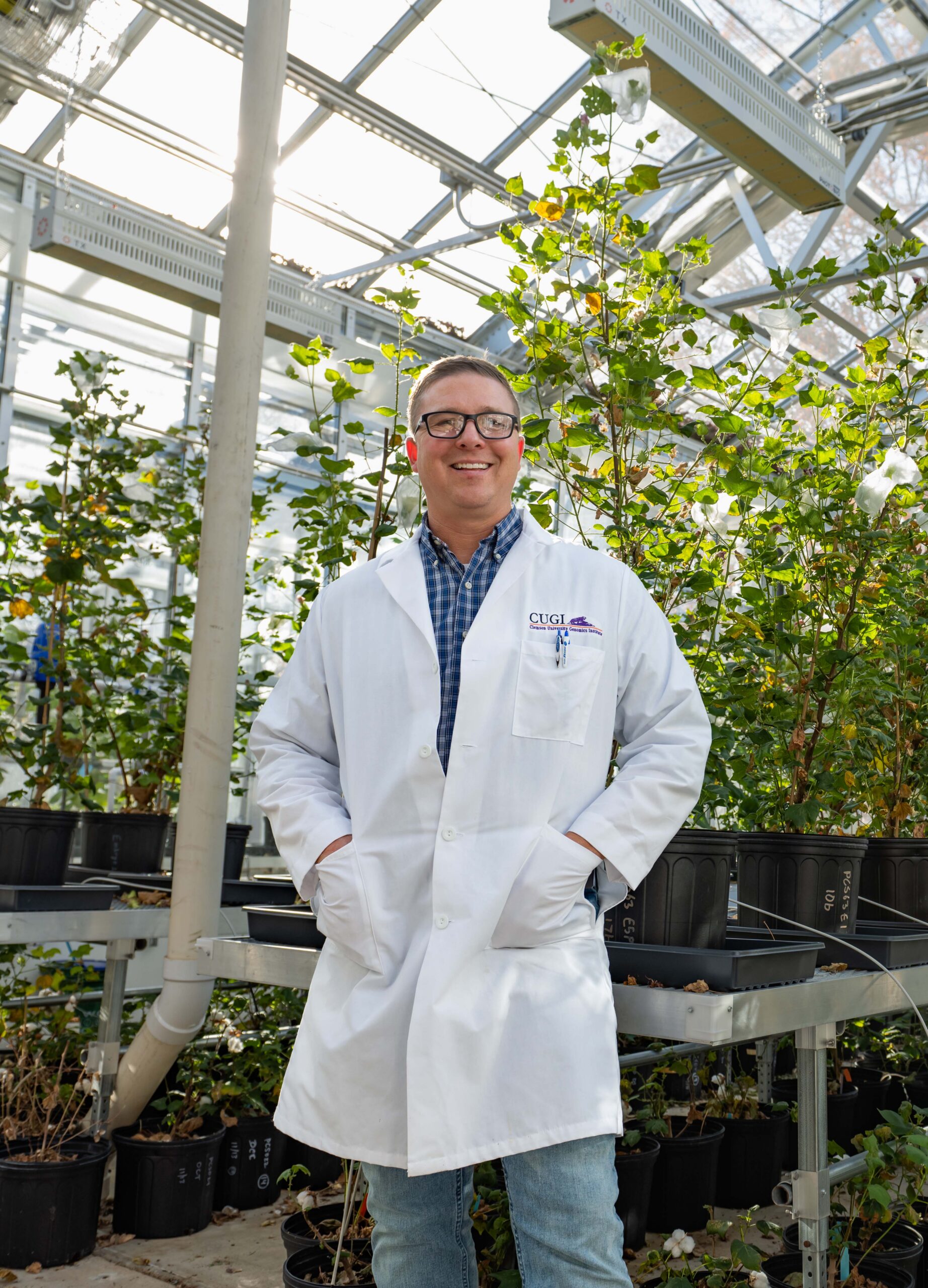
Christopher Saski
At A Glance
“The more we understand how plants function at the genetic level, the better equipped we are to develop practical solutions that benefit growers, industry and consumers.”
Bio
As a professor in the Department of Plant and Environmental Sciences, Saski’s research combines genomics, plant breeding, biotechnology and systems biology to solve high-value problems in agriculture. He works to translate discoveries about how plants function at the genetic level into practical applications that improve crop performance, strengthen disease resistance and support more sustainable production systems.
Much of his recent work has focused on cotton, one of South Carolina’s most important agricultural commodities. Saski is part of a multi-institutional team supported by an $11 million Bezos Earth Fund grant that is developing next-generation cotton varieties with built-in color and other traits designed to reduce the environmental impacts associated with traditional textile manufacturing.
Beyond cotton, Saski’s research focuses on developing innovative tools and knowledge that support healthier foods, more resilient agricultural systems and new opportunities for agricultural commercialization. He also teaches courses in plant breeding and mentors the next generation of scientists working at the intersection of agriculture and emerging technologies. He joined Clemson in 2007 after earning his Ph.D.
Highlights
- Biotechnology in agriculture
- Crop resilience
- Genetics and plant breeding
- Space cotton
Degrees, Institutions
- Ph.D. genetics , Clemson University
- B.S. microbiology, Clemson University