Clemson University’s Boone and Crockett Endowment Reaches $5 Million Benchmark
Thanks to an endowment of $5 million and growing, the newly named John P. Evans ’75 Boone and Crockett Wildlife Conservation Program at Clemson University is poised to reach ever newer heights.
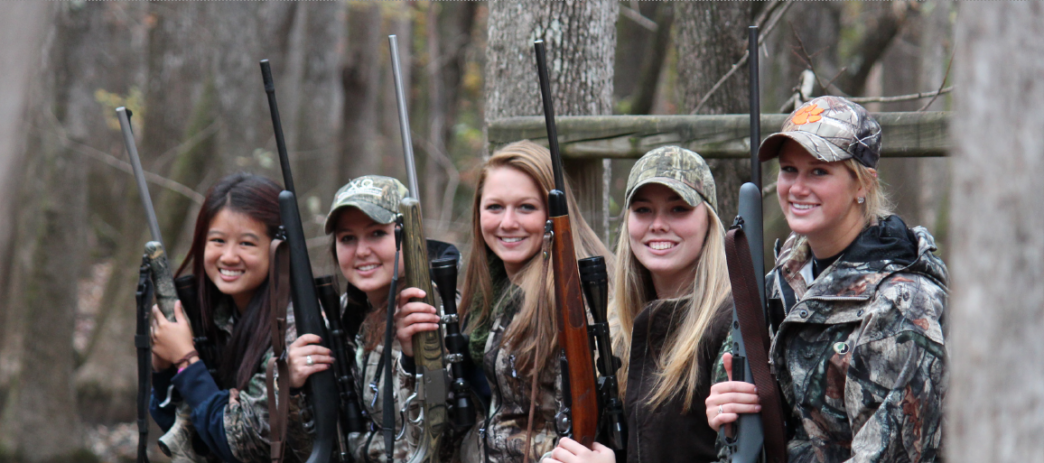
The Clemson University Boone and Crockett Program brings together students, faculty, landowners and conservation partners around a shared belief: conservation succeeds when science, stewardship and people work together. Rooted in Clemson’s land-grant mission, the program connects classroom learning with real-world impact, preparing students to address some of the most complex conservation challenges facing the United States.
Founded by Theodore Roosevelt in 1887, the Boone and Crockett Club has shaped the foundation of conservation in North America for nearly 140 years. Member accomplishments include protecting Yellowstone and establishing Glacier and Denali national parks, founding the U.S. Forest Service, the National Park Service and the National Wildlife Refuge System, and developing the cornerstones of modern game laws. Today, the Club continues that legacy by promoting wildlife conservation through science-based management and fair-chase hunting. Through its partnership with the Boone and Crockett Club, Clemson has built one of the nation’s most promising conservation programs — one designed to prepare the next generation of leaders while advancing the science needed to sustain wildlife, working lands and natural resources for generations to come.
“As a public land-grant institution, our mission has a unique focus on education, research and service to the state of South Carolina,” said Interim President Bob Jones ’79, M ’81. “The Boone and Crockett Program has made a significant impact in the lives of our Tigers over the past decade through research, experiential learning opportunities and community engagement. And now, through reaching this incredible milestone, the John P. Evans ’75 Boone and Crockett Wildlife Conservation Program at Clemson University will be able to make an even greater impact for generations to come.”
About Clemson’s Boone and Crockett Program
The Boone and Crockett Program at Clemson University has become a nationally recognized center for wildlife conservation, education and applied research. Housed within Clemson University’s Department of Forestry and Environmental Conservation in the College of Agriculture, Forestry and Life Sciences (CAFLS), the program combines academic training, field research, outreach and private-land conservation. Its mission reflects a growing need for professionals who can balance wildlife and habitat conservation, land stewardship and outdoor recreation across the United States.
The program’s impact extends well beyond the classroom and intersects all three pillars of Clemson’s strategic plan Elevate by facilitating service that builds Community, conducting research and making discoveries that drive success, and giving opportunities for students to thrive through experiential learning. The program’s excellence is reflected in the achievement of key faculty member David Jachowski who received the Godley-Snell Award for Excellence in Agricultural Research in April 2026.
“The endowment is a testament to the difference supporters of Clemson University can make in the lives of our faculty and students, and ultimately the people of South Carolina,” said Kyle Barrett, professor and chair of Forestry and Environmental Conservation department. “The John P. Evans ’75 Boone and Crockett Wildlife Conservation Program at Clemson University provides a platform for us to transform the lives of students through unique training opportunities, and it will allow us to better serve the public through research on some of our most valued wildlife species.”
Standing at the intersection of purpose, progress and possibility, this program is cultivating leaders, advancing research and creating lasting impact on the landscapes and wildlife that define our state and our nation. By investing in students, expanding scientific discovery and strengthening conservation partnerships, this program is helping shape a future where thriving wildlife populations and healthy habitats remain part of the American story for generations to come.
The Impact of Johnny Evans ’75
While Clemson’s Boone and Crockett program has been strengthened by many supporters, it would not be at this milestone without the dedication, leadership, and vision of Johnny ’75 and Kristen ’73, M ’77 Evans, who have given of their time, talent and treasure to bring this program into being. Generations of students, faculty, staff, and South Carolina landowners will benefit from their persistence, passion and perspective.
“Some of the most important lessons of my life have come from time spent outdoors — on the land, around water, watching wildlife, and learning that what we enjoy is also something we are called to care for,” shared Johnny Evans. “Clemson helped shape that sense of responsibility in me, through the friendships, values and spirit of service I found there as a student. Kristen and I are deeply grateful to Clemson University, the Boone and Crockett Club, the faculty and students, landowners, conservation partners, and the many families and individuals whose generosity helped bring this program to life. My hope is that this program will give students not only knowledge, but a lasting respect for the land and wildlife they will help steward — and that it will bring people together around the shared responsibility of conserving the natural world for generations to come.”
In July of 2017, Johnny Evans ‘75 brought the Boone and Crockett Club to Clemson University for a meeting at the Madren Center to explore the possibility of a partnership between Clemson and Boone and Crockett. Evans, the past Chair and Vice Chair of the South Carolina Department of Natural Resources Board, Vice Chair of the Boone and Crockett Club, and as a highly respected commercial contractor throughout the Southeast, had a bold vision and a strong ability to bring people together. Present from day one was Bill Demmer, Past President of the Boone and Crockett Club, and his wife Linda. The Demmers, who endowed the Boone and Crockett program at Michigan State University, were critical champions on Clemson’s journey to reach the $5 million endowment goal.
A 2021 Academic Cornerstone Partner gift to CAFLS from Micky and Amy J. Scott ’75 bolstered the program through the provision of fellowships. In 2024, the Evans made a $1 million gift strengthened the Boone and Crockett Program and helped expand educational opportunities for students pursuing careers in conservation. The Evans’ gift, which brought their total giving to Clemson’s Boone and Crockett program to over $2 million, supports scholarships, student experiences and program growth — ensuring that Clemson can continue attracting talented students interested in wildlife ecology, habitat management and natural resource stewardship. Dr. David Jachowski became Director of Clemson’s Boone and Crockett Program in 2024 to steward the growth of the program and bring on our first group of Boone and Crockett Fellows.
From the beginning, the program was built around several key principles that still guide the program today:
- Establishing a $5 million endowment for a Boone and Crockett Professorship
- Advancing wildlife conservation on private lands
- Remaining deeply student-centered in both mission and impact
“Johnny’s leadership in helping to establish the program between the Boone and Crockett Club and Clemson University has provided exceptional opportunities for our students to get real-world wildlife conservation experience on private lands, which comprise the majority of the land base in South Carolina,” stated Greg Yarrow, Associate Vice President for Strategic Initiatives for College of Agriculture, Forestry, and Life Sciences (CAFLS). “Students can translate what they learn in the classroom into practical applications in the field, preparing them for the job market and leadership opportunities in conservation. The program also supports graduate students investigating wildlife conservation challenges and the needs of private landowners. This makes our program one of the most unique and impactful programs in the country.”
Since 2018, the program has produced outstanding research, educated new Boone and Crockett Fellows, and strengthened collaboration across Clemson University research efforts have focused on wildlife species such as white-tailed deer, coyotes, wild hogs, bobcats, elk, beavers and bobwhite quail — all while supporting private landowners and conservation across the region.
Meet Two of Clemson’s Boone and Crockett Fellows

John Nettles, Ph.D. ’27 is a Micky S. Scott ’75 and Amy J. Scott Boone and Crockett Fellow studying wildlife and fisheries biology. Nettles hopes to provide the state of South Carolina through his research with not only an updated black bear population estimate, but also a more efficient way of doing so. By trialing camera-based density estimation methods, Clemson can look to provide agencies like SCDNR with a cost-effective way to passively monitor population size of multiple species at once. Two articles about Nettles’s research were recently posted on the Boone and Crockett website, which is an opportunity few students get outside of a fellowship like this.
“I am honored to be one of Clemson University’s first Boone and Crockett fellows,” emphasized Nettles. “Even in its early years at the University, the program provides me and the other fellows with amazing support, both financially and professionally. It’s an incredible network of wildlife professionals, both managers and researchers, that I am very grateful to be part of. I can’t wait to see the program continue to grow and develop here at Clemson.”

George Goto, Ph.D. ’30 is a Micky S. Scott ’75 and Amy J. Scott Boone and Crocket Fellow studying wildlife ecology. Goto’s research focuses on the interactions between invasive mammal species, specifically feral pigs and coyotes, and the United States’ predominant game species, white-tailed deer. Goto examines the interactions between species around experimental predator exclosures developed in collaboration with Dr. John Kilgo, USDA Forest Service, at the Savannah River Site in southeast South Carolina.
“Ever since my undergraduate education, I hoped to pursue a career in wildlife research, and it is a privilege to be able to achieve this goal as a Boone and Crockett Fellow,” recounted Goto. “I believe that this project is an incredible opportunity for an aspiring wildlife professional, such as myself, to learn from experts in the field while extending my network via outreach opportunities at conferences, in public articles, through podcasts, etc. However, none of these opportunities would be possible if not for the support from the Boone and Crockett Conservation Program here at Clemson. I am incredibly excited and grateful for this opportunity, and I look forward to the next several years of research.”
Bright Future Ahead
The John P. Evans ’75 Boone and Crockett Wildlife Conservation Program at Clemson University represents a convergence of philanthropy, science and education. By combining the legacy of the Boone and Crockett Club with Clemson University’s strengths in forestry, wildlife ecology and applied conservation, the program is helping conserve wildlife habitats, advance research and educate the next generation of conservation professionals. The program champions practical, science-based conservation that balances human needs with wildlife sustainability, supports balanced land stewardship, healthy ecosystems, and the long-term productivity of our natural resources. This program is shaping the future of wildlife conservation in our state and far beyond.

“What excites me most about this milestone isn’t where the program has been — it’s what is yet to come. Every dollar of this endowment translates into research that South Carolina’s landowners, agencies, and conservation partners will rely on for decades,” explained Matt Holt, Dean of Clemson University’s College of Agriculture, Forestry and Life Science (CAFLS). “That’s the real measure of this program’s impact: not just educating the next generation of conservation leaders but giving them the scientific tools to lead with.”