When somebody suffers a stroke, the race is on to get them to the hospital so they can be administered clot-busting drugs, known as thrombolytics, to restore blood flow to the brain.
But many questions about thrombolytic drugs remain.
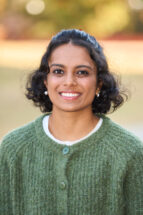
Yashvi Patel, a Clemson University senior double majoring in biochemistry and psychology, completed a clinical research internship this past summer at the Mayo Clinic in Jacksonville, Florida. Patel, who plans to take a gap year before attending medical school, reviewed patient data in neurocritical care to analyze patterns related to stroke treatment under the guidance of Dr. William Freeman.
Stroke recovery
Patel’s project focused on how a particular thrombolytic affects patients who have suffered from a stroke. She analyzed how soon patients can begin physical movement such as sitting on the edge of the bed, standing or walking after having a stroke and receiving the drug. Patel also compared data to identify trends in age, gender, stroke recurrence and cognitive function before the stroke.
In addition to her research project, Patel was able to experience other aspects of the Mayo Clinic. She spent 20 hours a week working on her project and the rest of her time shadowing and exploring other departments. Patel shadowed neuropsychological testing, a double-liver heart transplant, radiation oncology, cutting-edge MRI and radiation therapy machines, and ion therapy.
“It’s such a different environment and the caliber of research is incredible,” she said.
The Mayo Clinic is moving towards the use of artificial intelligence to facilitate simpler procedures in rural areas. During her internship, Patel worked on a clinical trial developing artificial intelligence that can help guide people of all backgrounds through medical procedures — such as inserting an IV or drawing blood — to help train phlebotomists.
DNA research
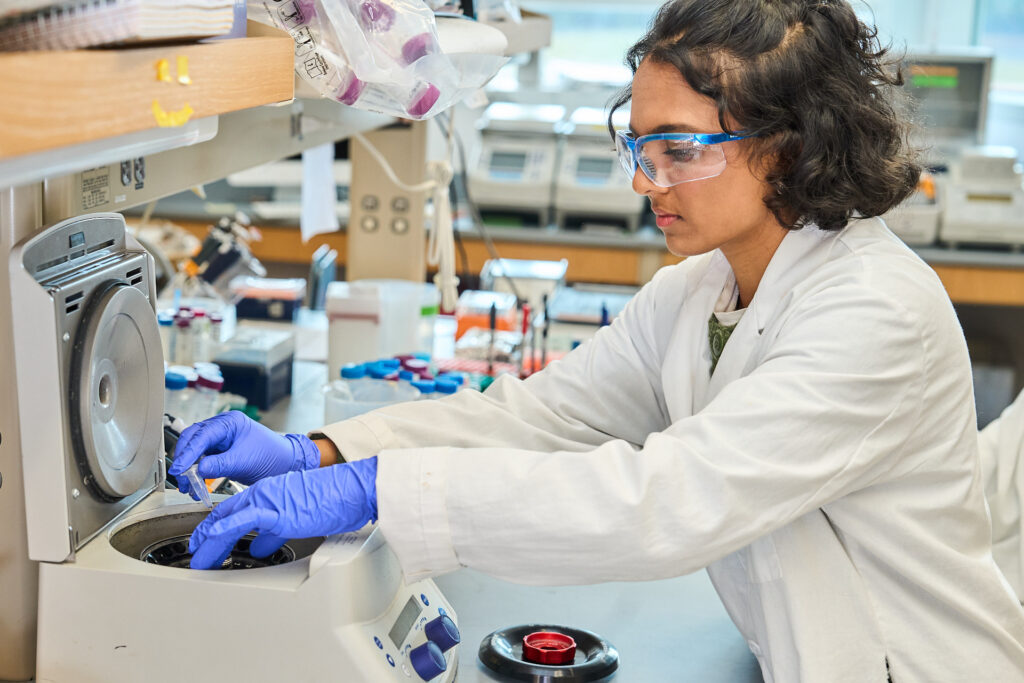
Her time at Mayo Clinic wasn’t Patel’s first real-world research experience. During the summer between her sophomore and junior years, Patel completed a research internship at the Medical University of South Carolina where she worked in a yeast genetics lab studying DNA repair. She studied how acetaldehydes, a byproduct of the body’s metabolizing alcohol, mutates DNA. She compared yeast treated with and without acetaldehyde to determine the impact on growth. This study was part of a larger project which was later published.
Her time as an undergraduate has equipped her for both meaningful summer learning experiences and the interpersonal, human-centered aspects of a medical career — opportunities she discovered throughout her time at Clemson.
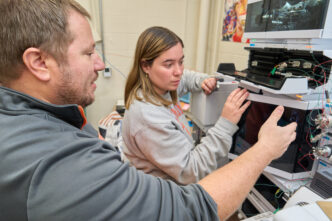
She researches DNA repair and homologous recombination in the lab of Michael Sehorn, an associate professor in the Department of Genetics and Biochemistry. Since her first year at Clemson, she has focused on the BRCA2 tumor suppressor gene, exploring how it binds to DNA. Working in a research lab taught Patel not only experimental techniques but also how to collaborate with a team on long-term projects.

Patel has participated in Clemson’s Clinical Undergraduate Research Experiences in Surgery (CURES), a clinical research and shadowing class, for four semesters as a teaching assistant. CURES class members shadow at Greenville Memorial Hospital and help physicians with clinical research. One of Patel’s most formative shadowing experiences was in the trauma bay, where three ATV accidents occurred on the same day.
Each student is paired with a medical student as a mentor to connect with and learn from. “Medical students at the hospital also organize lectures for us every other week, like ultrasound workshops, suture clinics, emergency room testing, interviewing and more,” Patel says.
She said CURES presents the perfect opportunity for pre-medical Clemson students to gain clinical and shadowing hours. Students are also assigned a surgical clinical study to review patient charts and assist with data input. Two projects that students worked on have been published as research papers, with additional papers forthcoming.
Involved on campus
Patel volunteers with Every Campus a Refuge (ECAR). This organization brings together students to resettle refugees from all over the world on Clemson’s campus and assists in their integration into a new life. Patel notes, “College campuses are a perfect hub for people to move to when they’re coming to the United States because there’s so much support already built into them.”
Patel works with a family of five from Afghanistan. The father is a Ph.D. candidate here at Clemson and the mother is studying for her GED so that she can attend nursing school.
She is also a member of Phi Delta Epsilon’s chapter at Clemson, a co-ed pre-medical professional fraternity, and serves as assistant director of the Council of Diversity Affairs (CODA), a branch of the Undergraduate Student Government focused on promoting inclusion at Clemson. CODA works to ensure that every student feels welcomed on campus through the celebration of heritage months and other events.
Patel said her experiences at Clemson demonstrated to her that entering the medical field is more than just science; it also requires the ability to connect with patients on a personal level through empathy and compassion. She added that her experiences helping people with diverse worldviews or those who may not feel comfortable in specific spaces will translate well when working with patients who might not feel supported or who come from entirely different backgrounds.