The Clemson University Forest is opening a new digital window into one of the University’s greatest natural assets.
The newly launched Clemson University Forest Data Hub brings together decades of forest data, mapping tools and management resources into a single online platform designed to improve recreation, strengthen forest management, support scientific research and encourage public stewardship of the 19,200-acre forest surrounding Clemson’s campus.
Forest Director Rob Baldwin said the project grew out of the Forest’s strategic planning efforts focused on improving communication, research infrastructure and public engagement.
“We realized that we had really rich, inaccessible data on the Clemson Forest,” Baldwin said. “Good data, but super unorganized. People would ask us for it, and our reply was a Box folder or an email with an attachment, instead of, ‘Hey, go explore this site and try to find what you need.’”
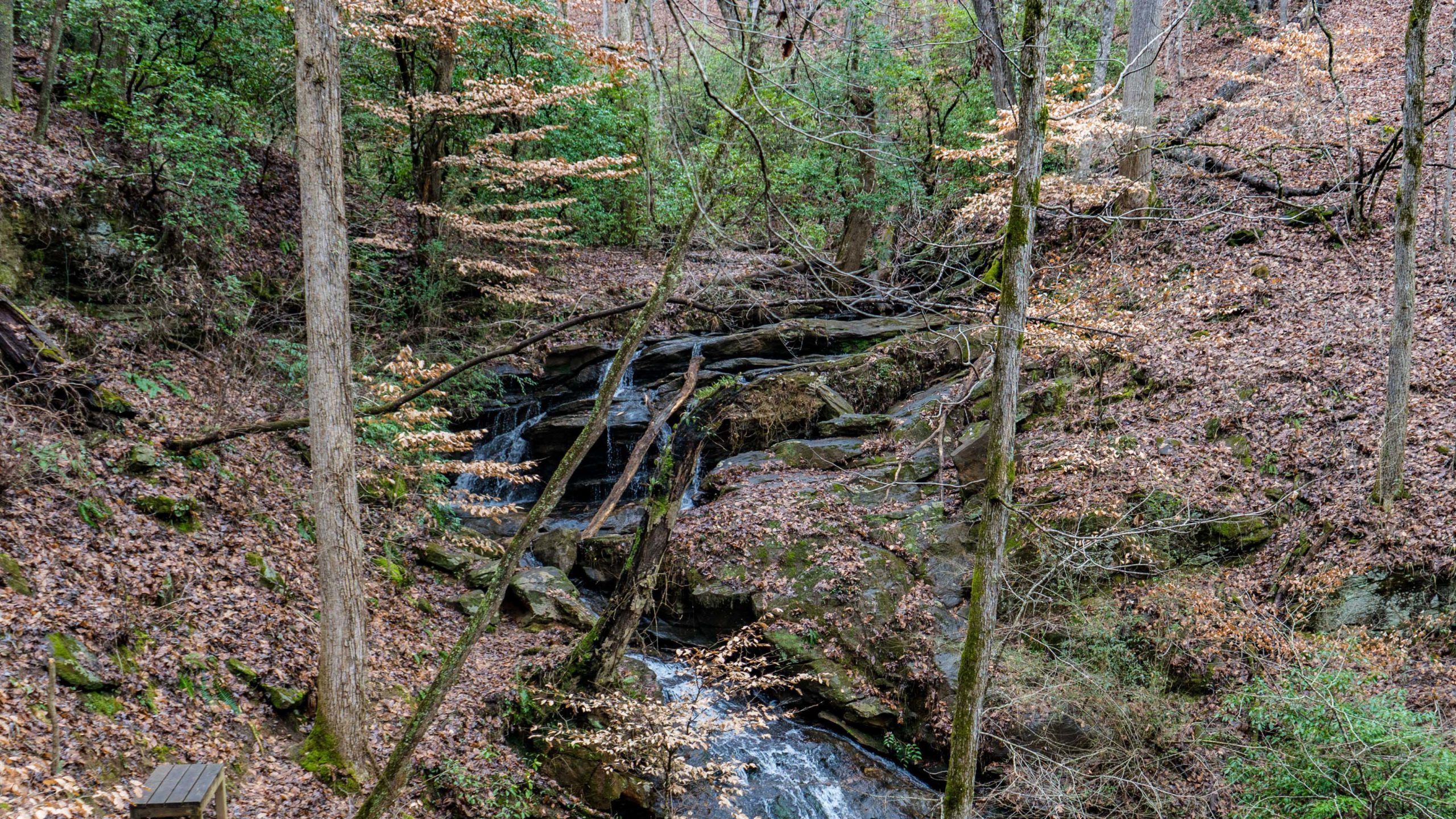
The Clemson University Forest is the largest university-managed forest contiguous with its campus in the United States. The landscape includes 100 miles of shoreline, rivers and streams, scenic trails, working farms, diverse ecosystems and historic sites ranging from Cherokee settlements to plantation-era homes and cemeteries.
Now, much of the information connected to those resources will be accessible through a centralized public portal.
The Data Hub includes interactive mapping tools, downloadable datasets and geographic information system resources used by Forest staff for planning and management. It also provides Clemson faculty, students and outside researchers with access to data that can support teaching, research and service projects within the forest boundary.
For recreational users, the platform offers tools that can help hikers, cyclists, birdwatchers, hunters and other visitors better understand and navigate the forest.
That stewardship component is especially important as recreational use of the forest continues to grow.
One of the hub’s centerpiece features is an interactive “Explore with Awareness” map that allows users to view trails, management zones and recreation information in real time.
But Baldwin said the long-term value of the Data Hub extends far beyond recreation.
The platform is designed to support forest and natural resources research by giving scientists centralized access to data layers that previously existed in scattered locations or isolated systems. Researchers can use the hub to identify study sites, analyze land-use patterns, examine ecological conditions and integrate Forest data into broader environmental studies.
Because the forest contains diverse ecosystems and active management zones, Baldwin said the hub creates opportunities for research in forestry, wildlife biology, hydrology, ecology, recreation management and conservation science.
“We wanted to create something that would help inform science and research at Clemson and elsewhere,” Baldwin said. “The forest is already being used for a great diversity of research projects, but this gives people a much better starting point and a much clearer picture of what resources are available.”
The Data Hub can also support long-term monitoring and planning efforts by helping researchers and managers compare conditions over time. Forest staff can use the system to track management activities, visualize infrastructure, monitor recreation pressure and better coordinate decisions across the landscape.
Baldwin said that having centralized, organized data improves the University’s ability to make informed management decisions and increases transparency about how the forest is being managed.
“We started putting a little more energy into making data more accessible and more useful,” Baldwin said.
The project was developed by Dr. Bart Swecker, senior analytics manager in Clemson’s Office of Institutional Effectiveness, who helped build the architecture and analytics framework behind the platform.
Swecker said one of the central goals was creating a system that could serve many different audiences simultaneously, from researchers and forest managers to recreational visitors and community members.
“We wanted to build something that wasn’t just a static map,” Swecker said. “We wanted a living system where people could interact with the forest in meaningful ways.”
Swecker said the Data Hub allows users to layer information together spatially, helping researchers and managers identify relationships that might otherwise be difficult to detect.
“If you’re studying wildlife movement, timber management, water resources or recreational impacts, having all those datasets connected geographically creates a much richer understanding of what’s happening on the landscape,” he said.
The system also improves operational efficiency for Forest staff by reducing duplication, improving coordination and making information easier to update and share internally.
“In the past, a lot of this information lived in different places with different people,” Swecker said. “Now there’s a common platform that creates consistency and helps people work from the same information.”
Jeremy King, associate provost for Institutional Effectiveness, said the project reflects Clemson’s broader effort to use data and analytics beyond administrative operations to directly support the University’s public service mission.
“One of our aspirations in Institutional Effectiveness has been to extend the value of our data and analytical tools beyond the classroom and the lab as part of administrative decision support,” King said. “This hub is a first visible fulfillment of the aspiration to make high-quality information available in ways that support public service, land stewardship and broader community impact.”
King said the project challenged the team to think differently about how institutional data resources can serve the state and its residents.
“Doing so provided us the opportunity to think about data not just as something we generate or govern, but as something we actively deploy to serve the state and its stakeholders,” he said.
King added that the Data Hub reflects both the significance of the Forest and the collaborative expertise required to build such a system.
“The Forest is a unique resource grounded in Clemson’s mission to educate, discover and serve, so it was important to us that a CU Forest Data Hub be similarly grounded,” King said.
He said the resulting platform rivals systems used by major private-sector forestry and land management organizations. “The Forest Data Hub rivals or exceeds the kinds of data environments you would find in private-sector forestry and land management organizations,” King said. “This reflects the kind of innovative work that is possible for an Institutional Effectiveness team at Clemson to be doing in collaboration with our faculty and staff.”